
Zack Backs: Bets, Debts and Corruption
Inside the four-day economy that turned an Outer Banks bachelor party into a labor market, a casino, a counterfeiting crisis, and a legend.
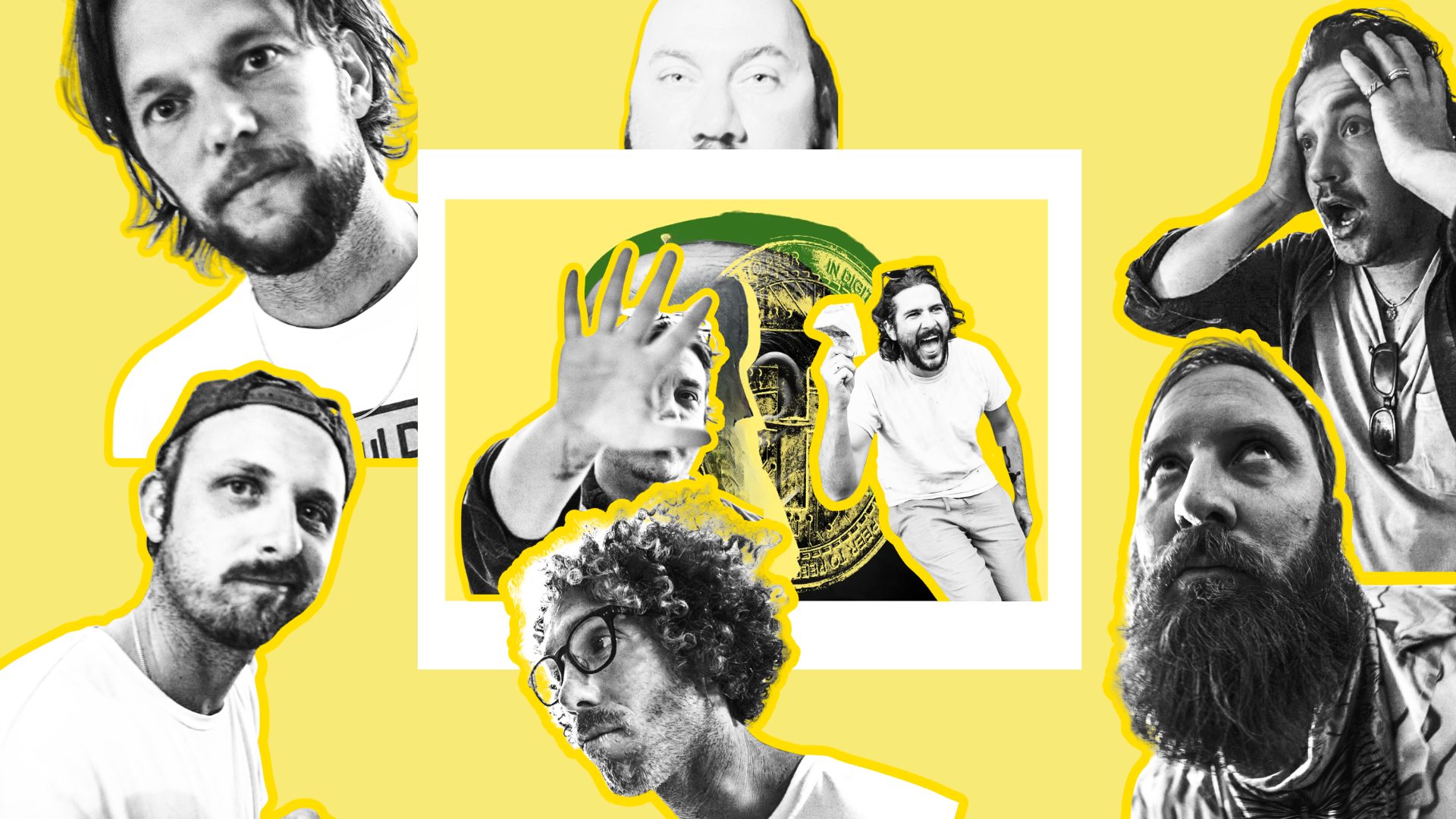
“I don’t think we can fully understand the impact this will have on the economic and political state of the world.”
— Bryant Nardozzi, post-market commentary
Photographic Dossier
The Artifact
The note, the portrait, and the iconography that made a private joke feel official.
Kill Devil Hills, North Carolina
The Closing Bell
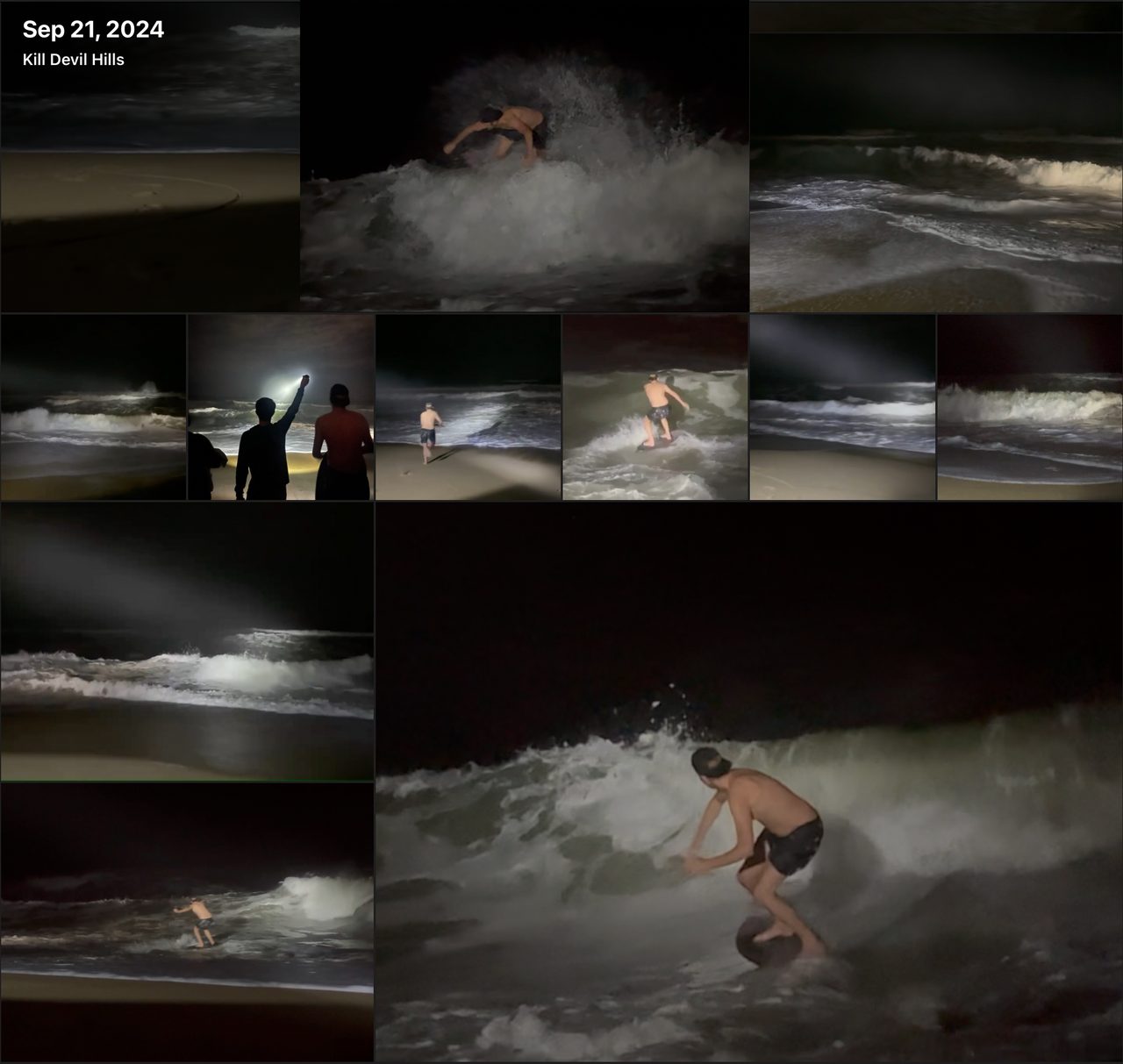
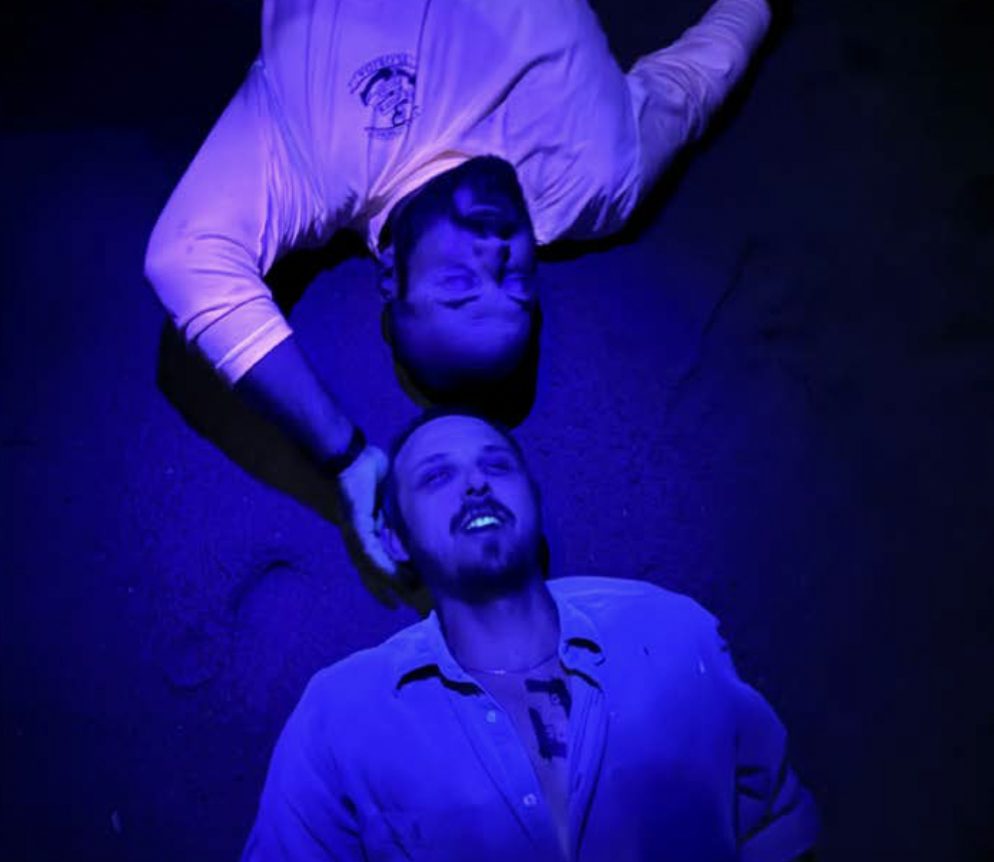
At roughly 2 a.m. on September 21, 2024, the Atlantic Ocean was black except where a handheld light cut across the shore break. Zack Hoag, the face printed on a privately issued currency, ran into the surf with a skimboard. A few hours earlier, his portrait had been piled in uneven stacks on a gaming table inside a three-story rental house in Kill Devil Hills. The notes had financed drinks, admissions, favors, loans, bets, silence, and at least one small political crisis. Now the books were closed.
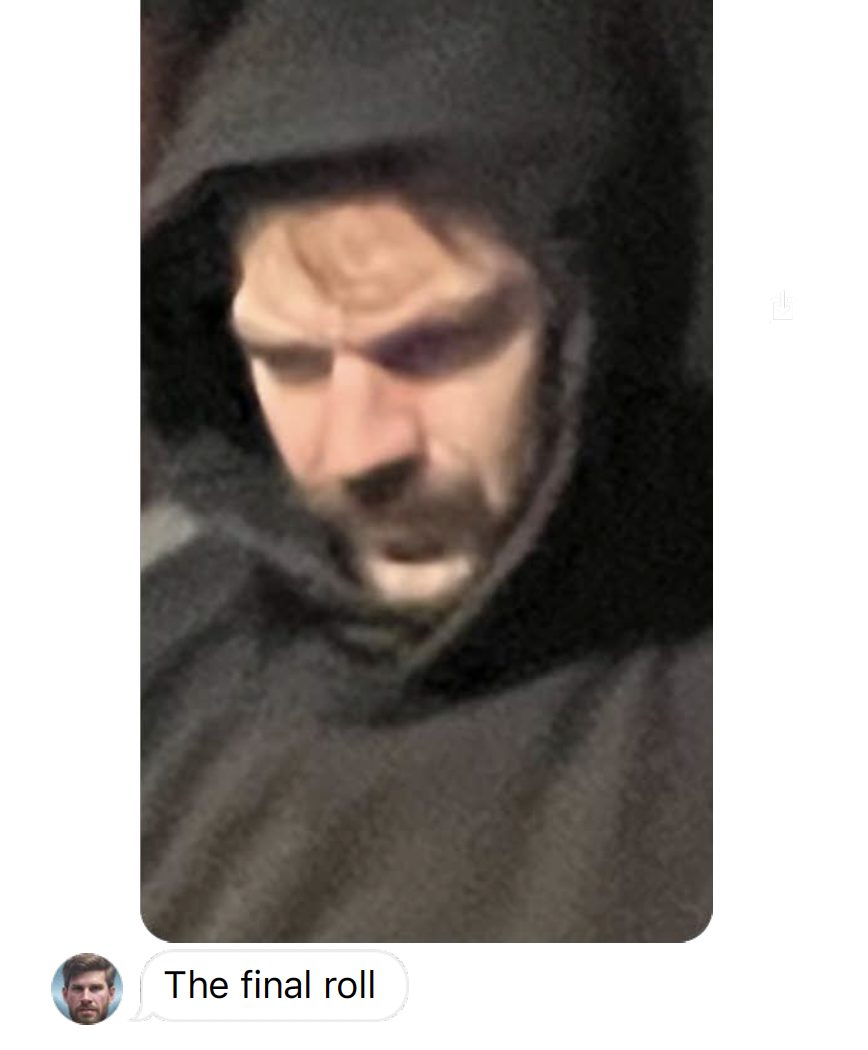
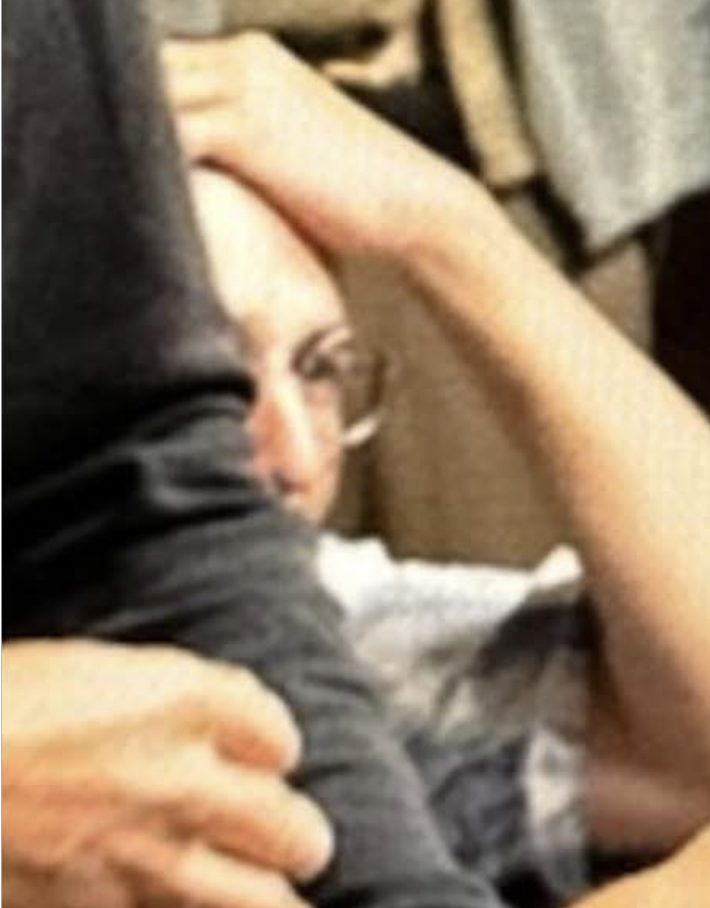
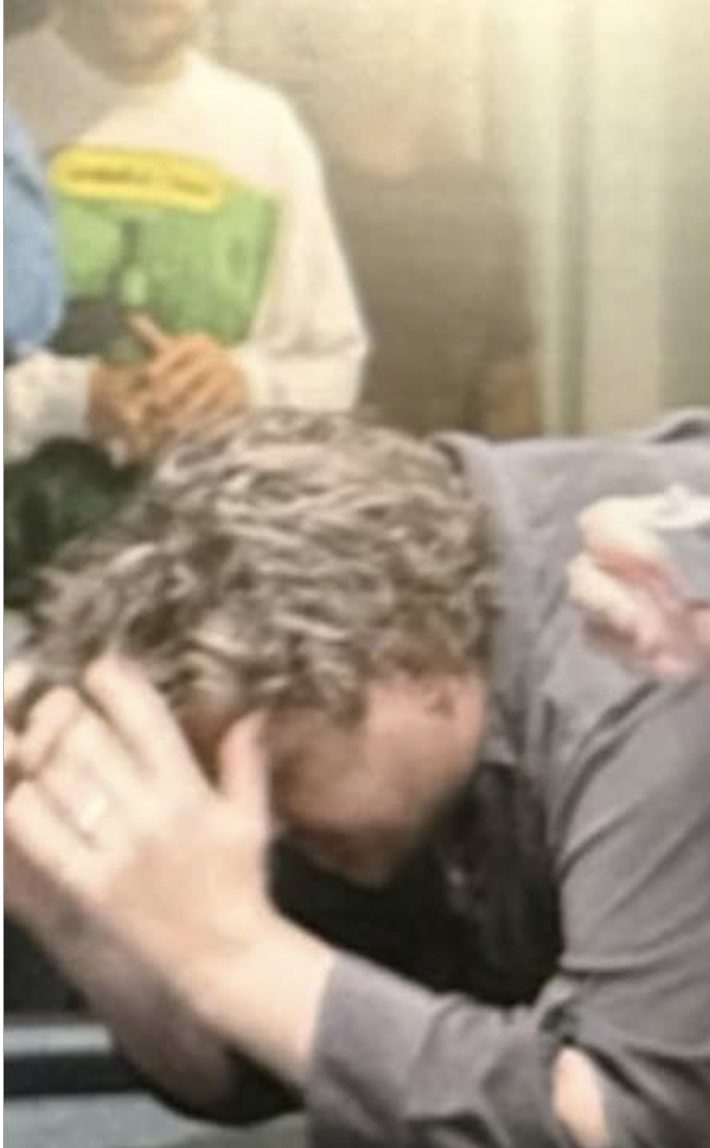
The final hours had contained the whole experiment in miniature: concentrated wealth, desperate credit, a public reckoning, and a last impossible roll. Bryant Nardozzi had materialized for one more hand of CeeLo. Adam Winn rolled three ones, a result that, under the rules and mood governing the table, appeared untouchable. Then Zack answered with three sixes. The room detonated. By final settlement, Austen held the largest verified reserve of Zack Backs and became the official winner of the weekend.
Then the sovereign went to the beach.
The Zack Back economy lasted only a few days. It had no charter, no enforceable laws, no declared exchange rate, and no assets behind it beyond a shared willingness to behave as though it mattered. It was created for a bachelor party, destabilized by professional counterfeiting, rescued through improvised monetary policy, and liquidated at midnight. Yet nearly two years later, its language still clears in the group chat. Men still price favors in backs. Old notes remain in drawers and wallets. The tattoos were advertised as temporary, which turned out to be an elastic term.
This is the story of how a group of friends built a country inside a beach house, and what happened when its citizens discovered leverage, corruption, and central banking before they had finished unpacking.
Photographic Dossier
The Atlantic Bookends
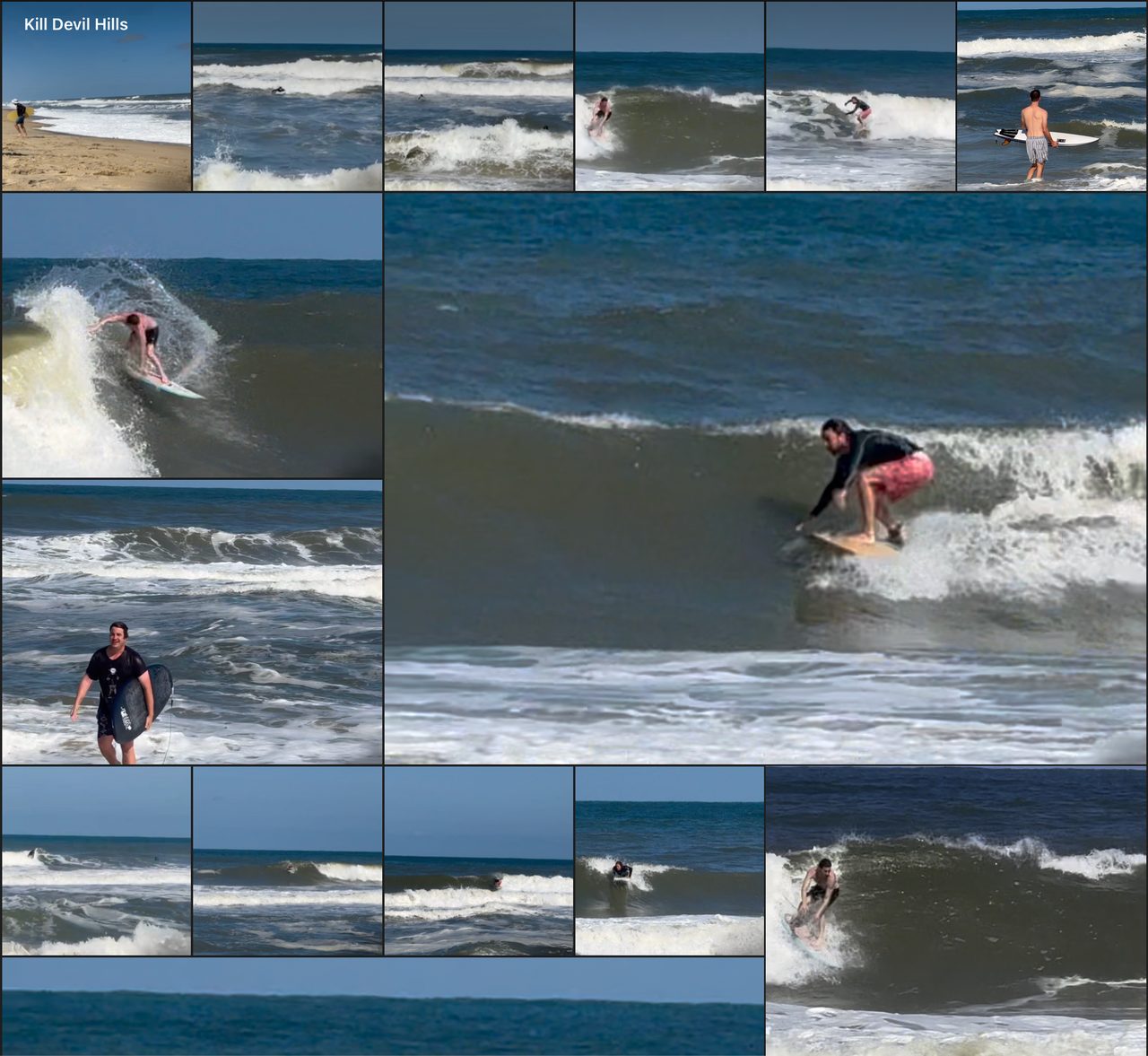
The ocean opened the weekend, absorbed its pressure, and became the market’s final closing bell.
Founding Conditions
I. The Convergence
The founding conditions were visible before the founders reached North Carolina.
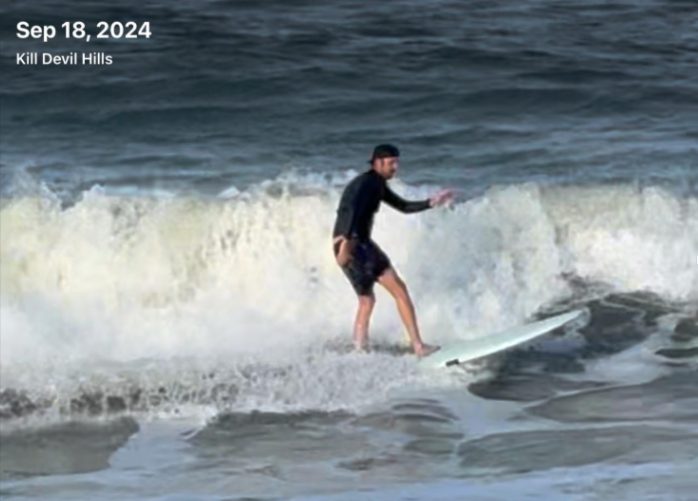
On September 17 and 18, the group chat tracked multiple caravans and flights converging on the Outer Banks. Surfboards were strapped to roofs. A field recorder was packed. The routes bent north through Florida and Georgia, while others moved through airports and rental counters. The tone was less logistical planning than rolling live commentary on a controlled accident.
When one vehicle's load appeared questionable, Greyson Charnock offered the weekend's first statement of governing philosophy: “In a vacuum it holds up.” A moment later he refined the risk assessment. “If everything goes perfect there's a chance it could work.” Zack supplied the forecast: “We're donating boards all down the highway.”
They made it.
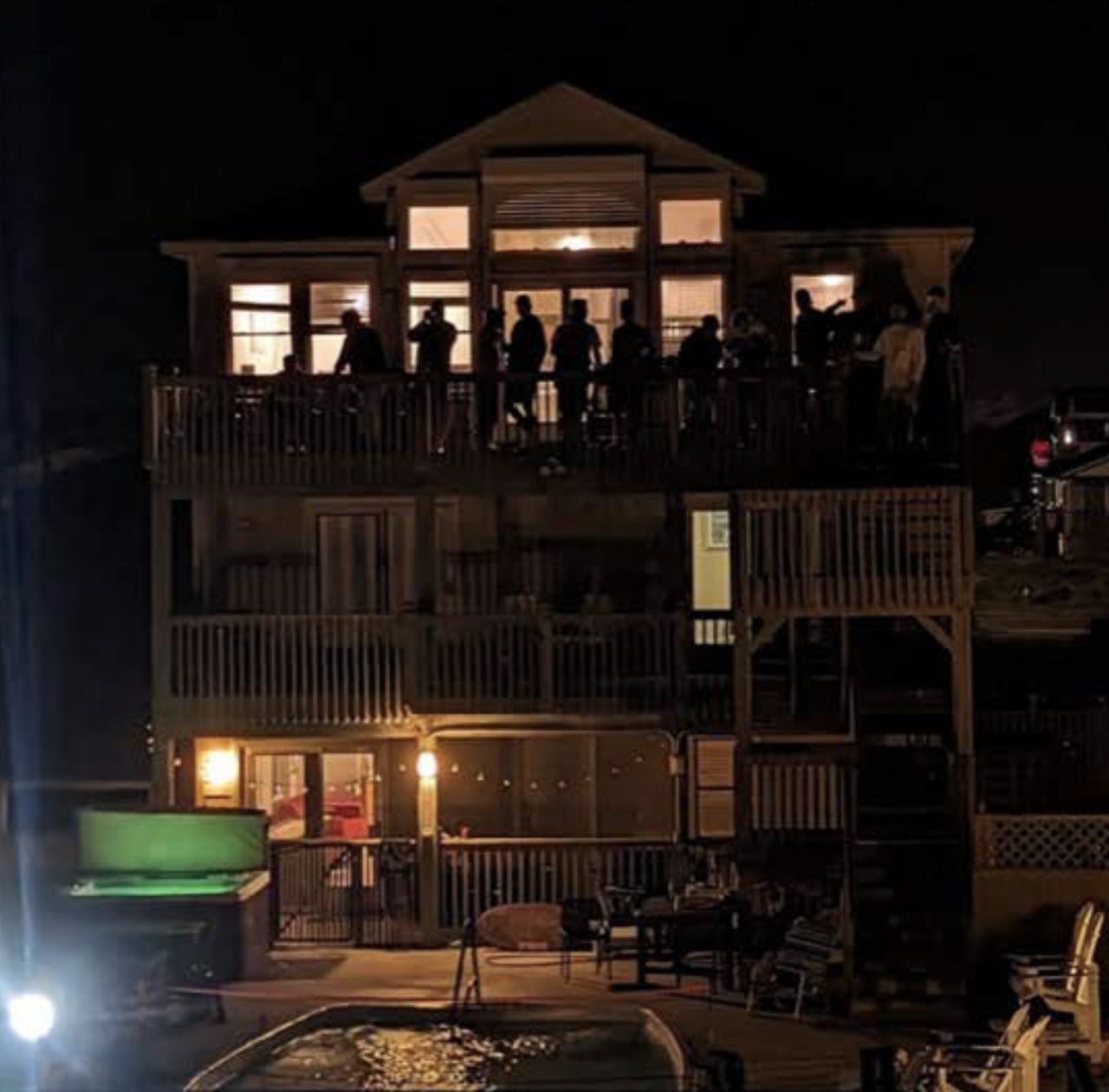
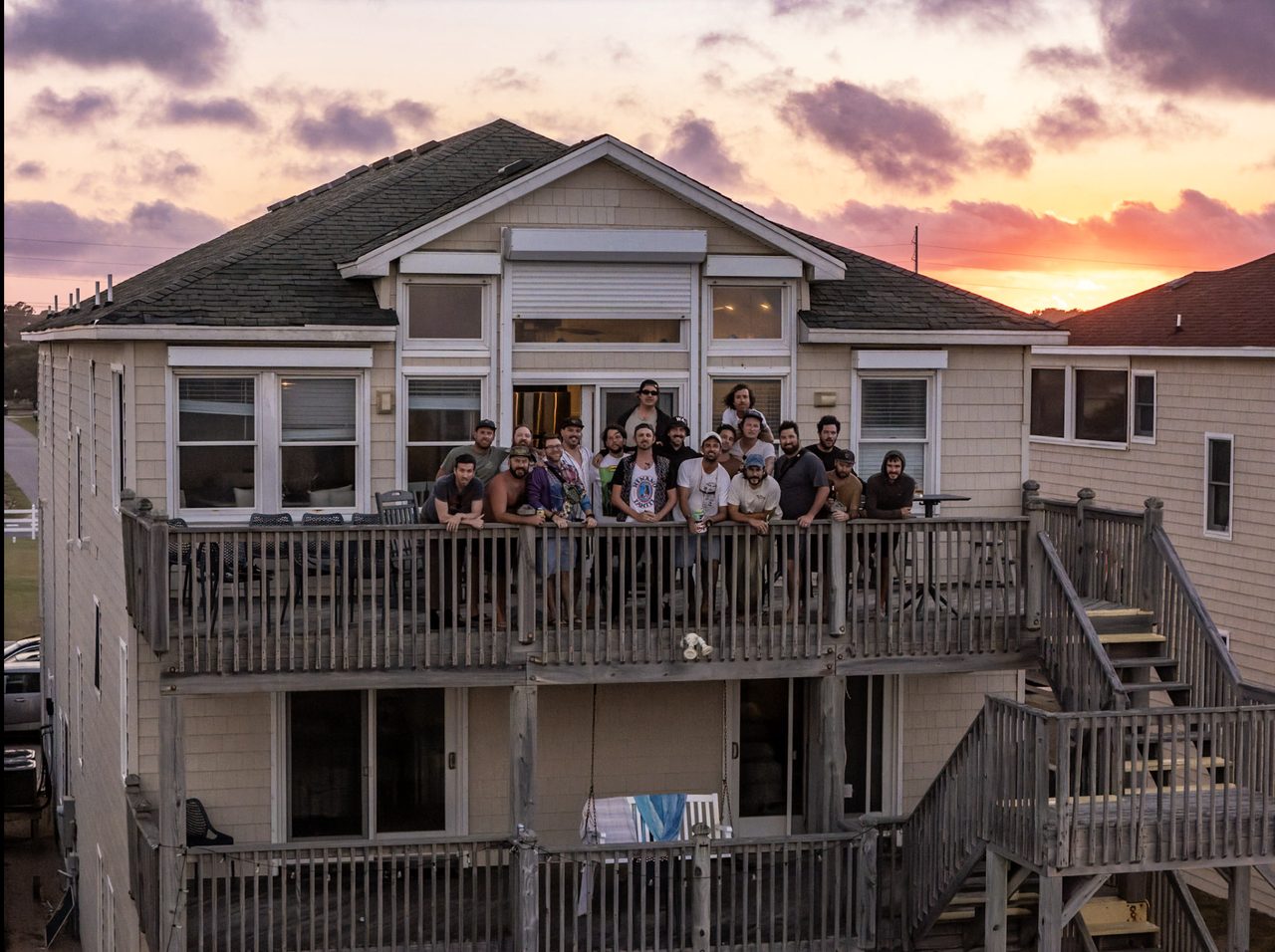
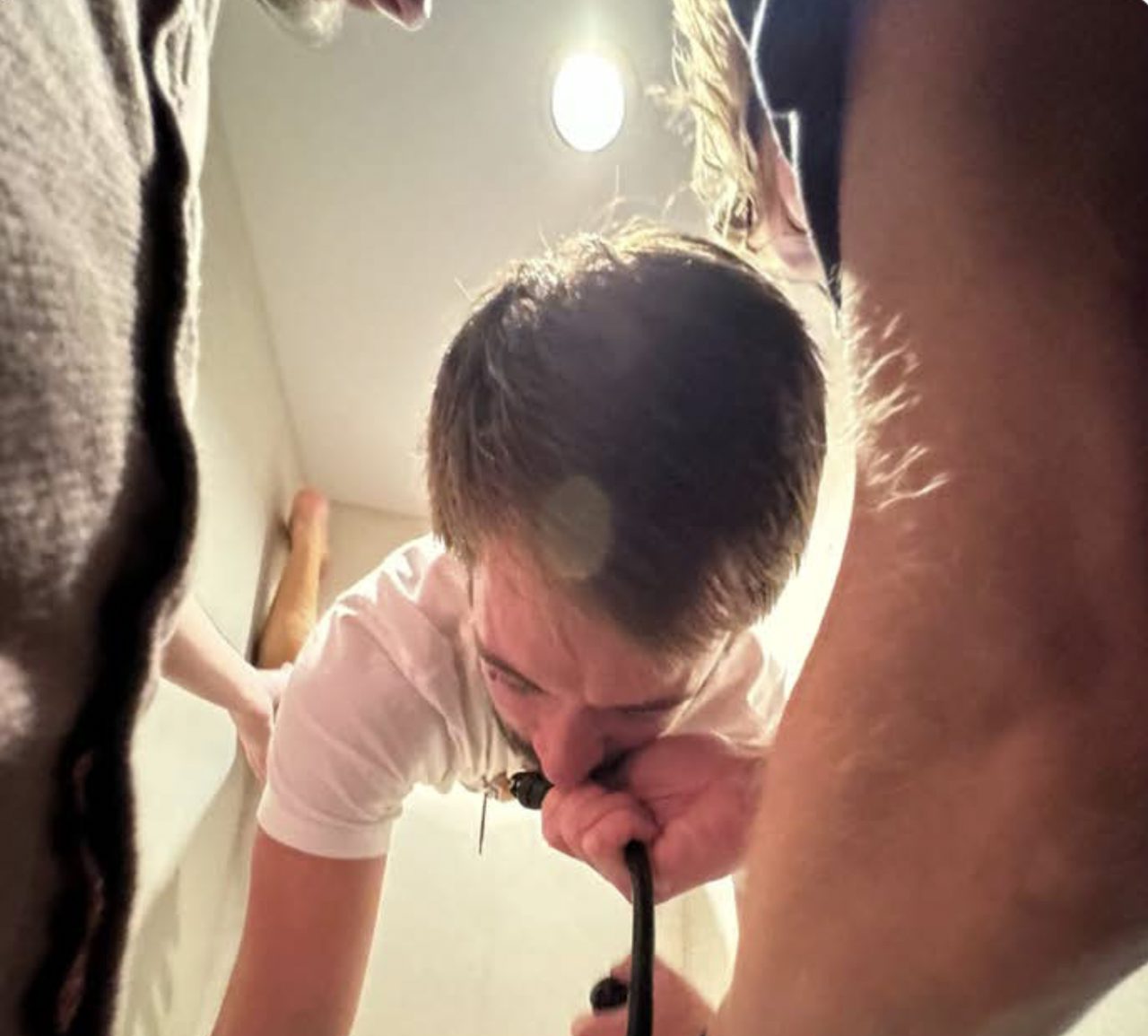
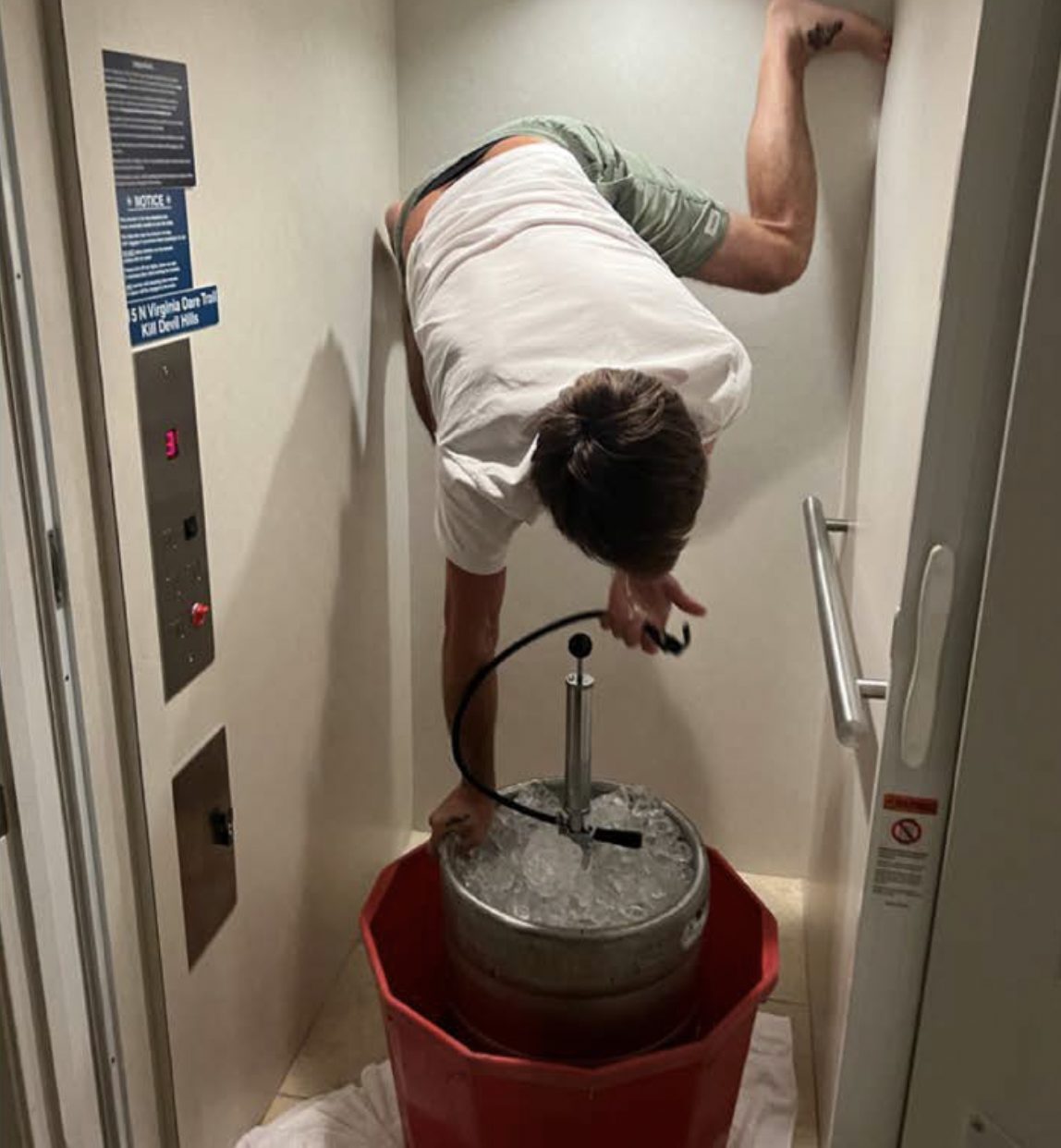
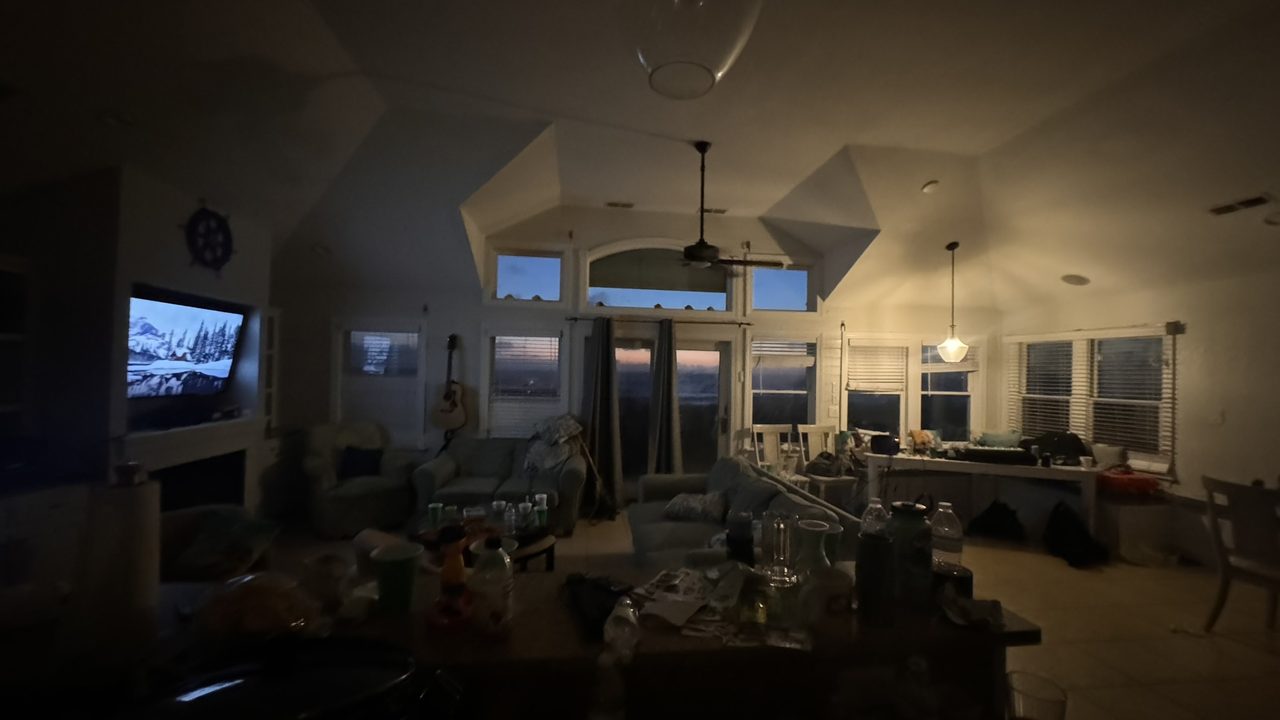
The destination was a three-story house at 1415 N. Virginia Dare Trail in Kill Devil Hills, close enough to the Atlantic that the beach functioned as both recreation and horizon line. The house had an elevator, an amenity that immediately became freight infrastructure. Kegs went up before the social order had stabilized. Someone had to text upstairs to ask that the elevator doors be closed. Others were already paddling into rough water.
The ocean was not background scenery. It was where the trip opened, where it repeatedly reset, and where it would close. Daytime images show heavy shore break and riders being swallowed by whitewater. Night footage later shows men as silhouettes, a flashlight beam scanning the waves as though searching for a missing asset.
“If everything goes perfect there’s a chance it could work.”
— Greyson Charnock, pre-arrival risk assessment
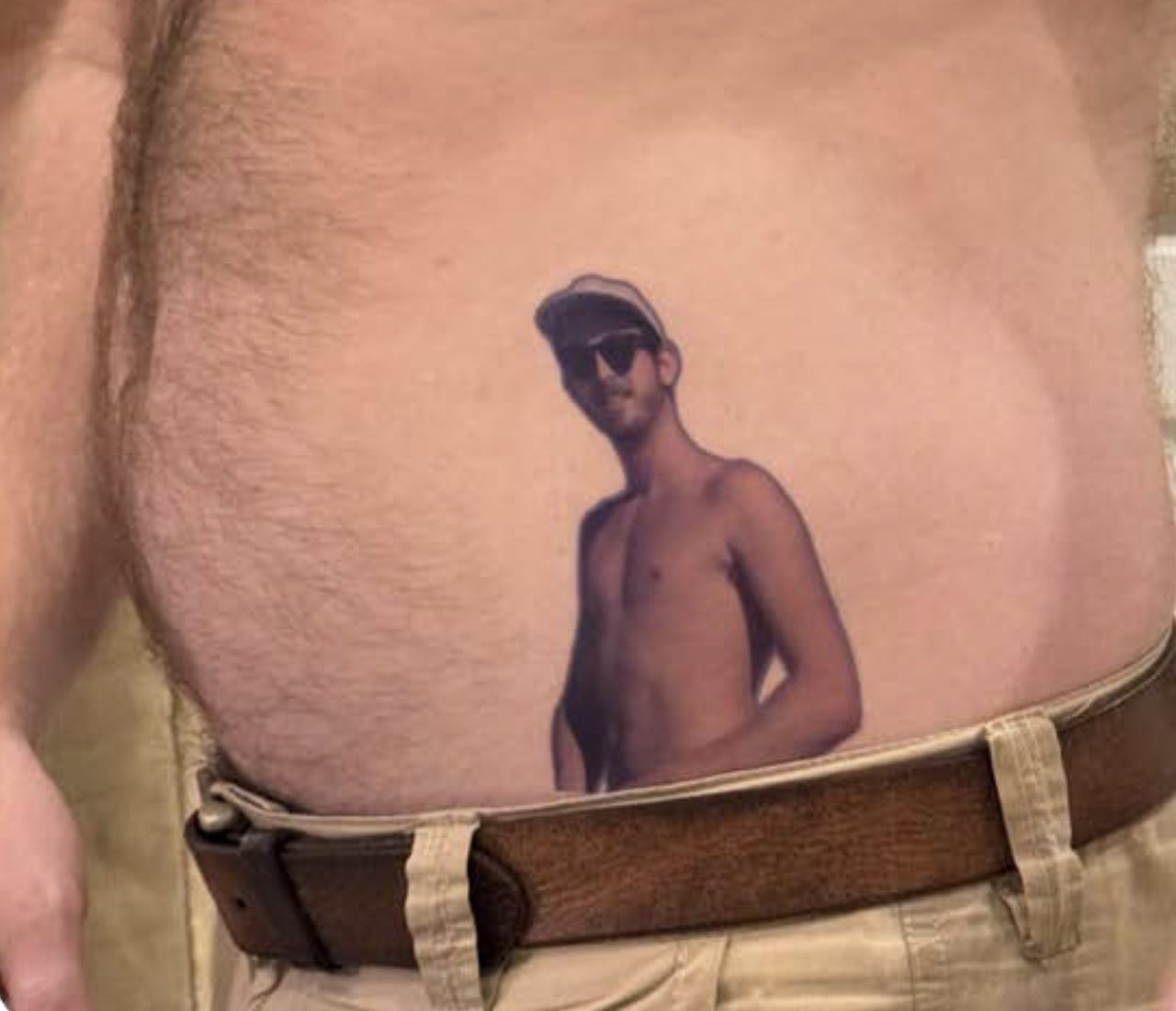
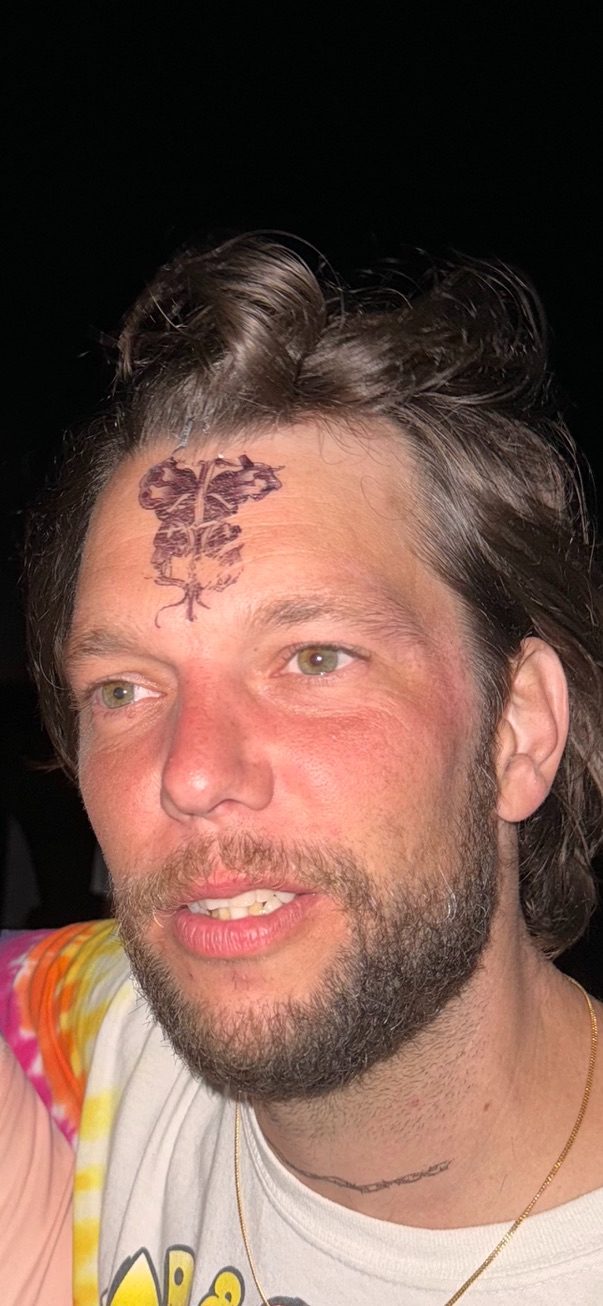
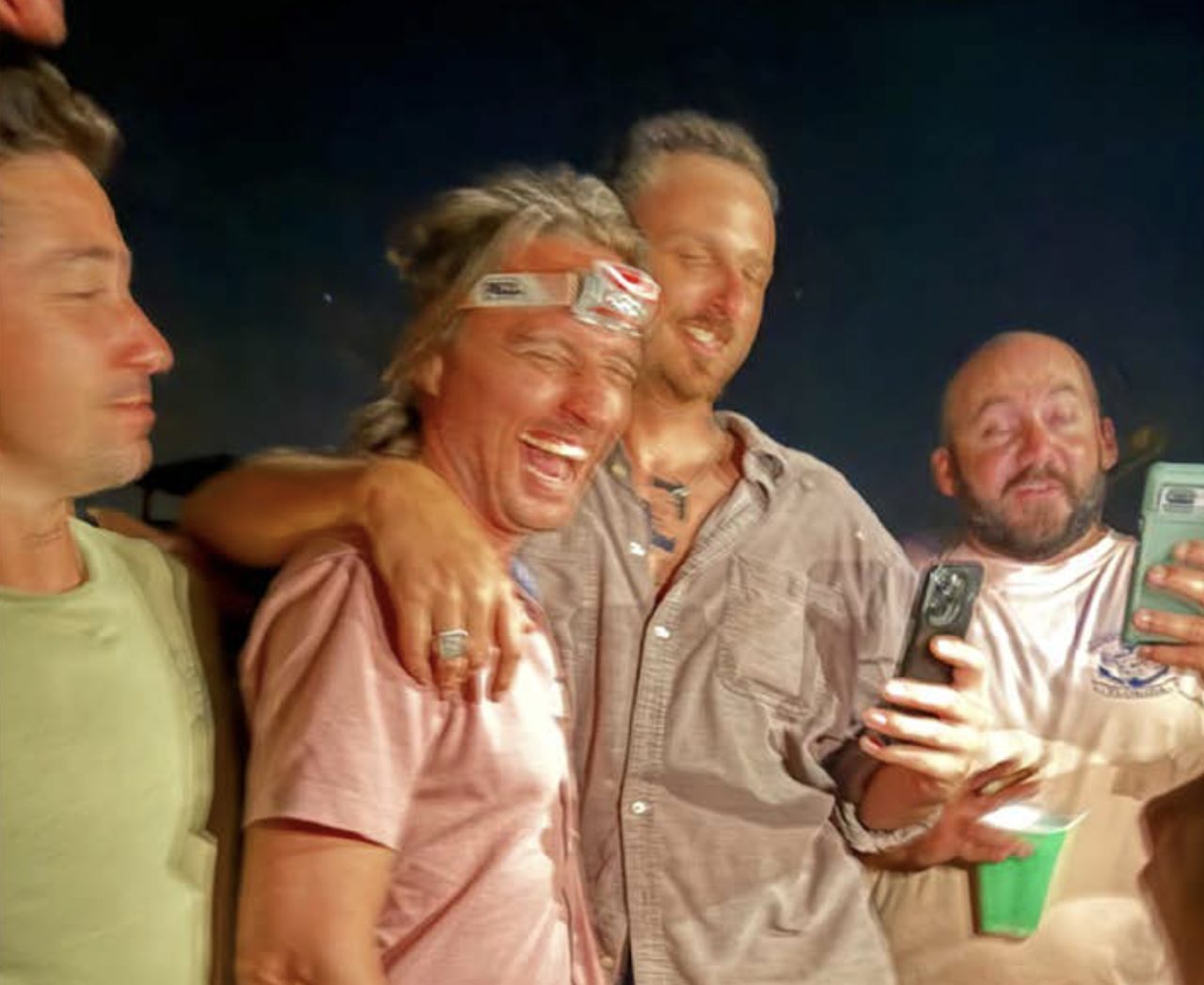
Inside, the house developed its own iconography. Temporary tattoos depicted Zack in sunglasses, Zack in profile, symbols, suns, flowers, and other marks applied to chests, necks, foreheads, arms, and faces. The images operated as branding, war paint, and proof of citizenship. “Chess board is set,” Greyson wrote on September 19. Zack responded: “My pawns.”
Then came the money.
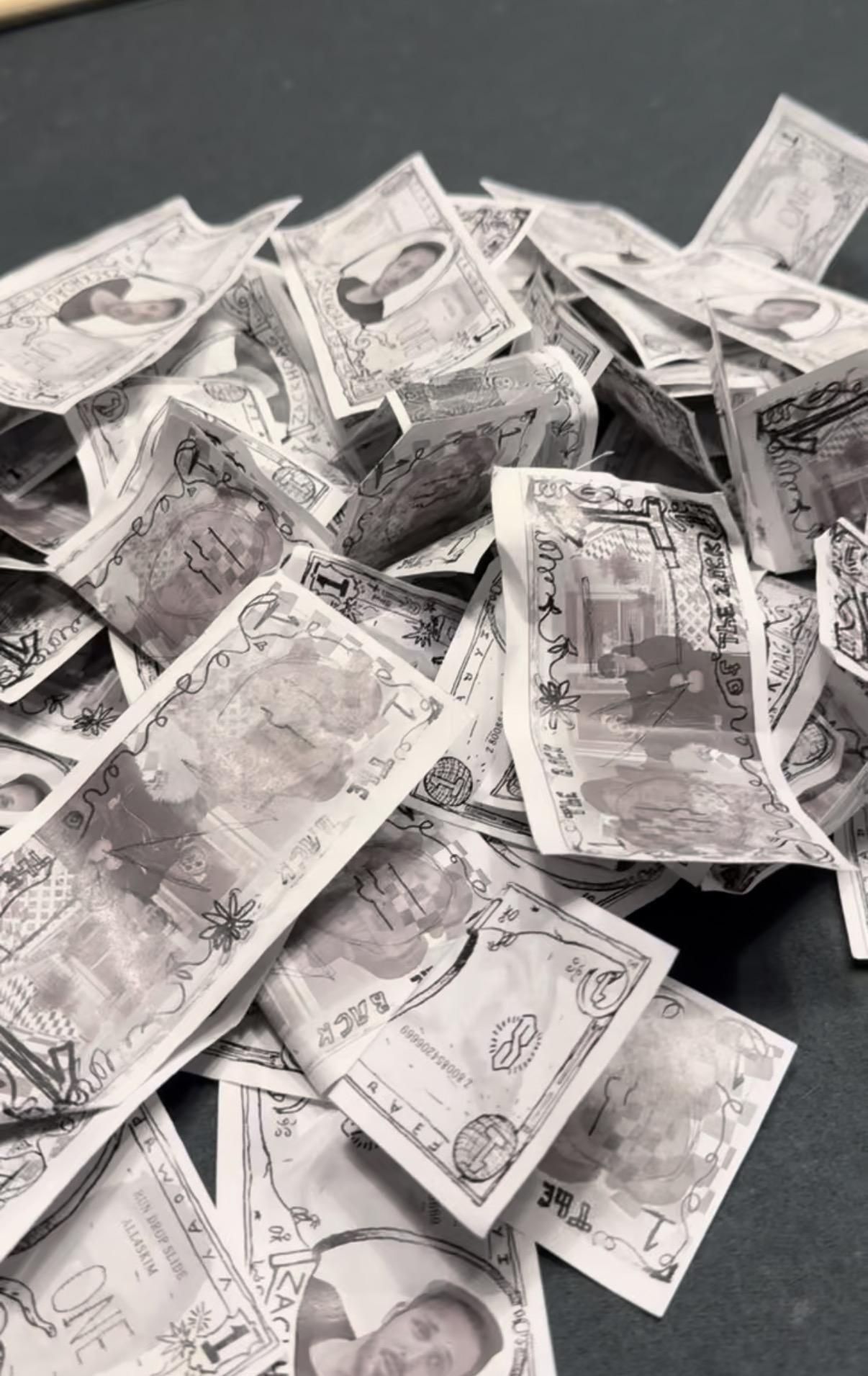
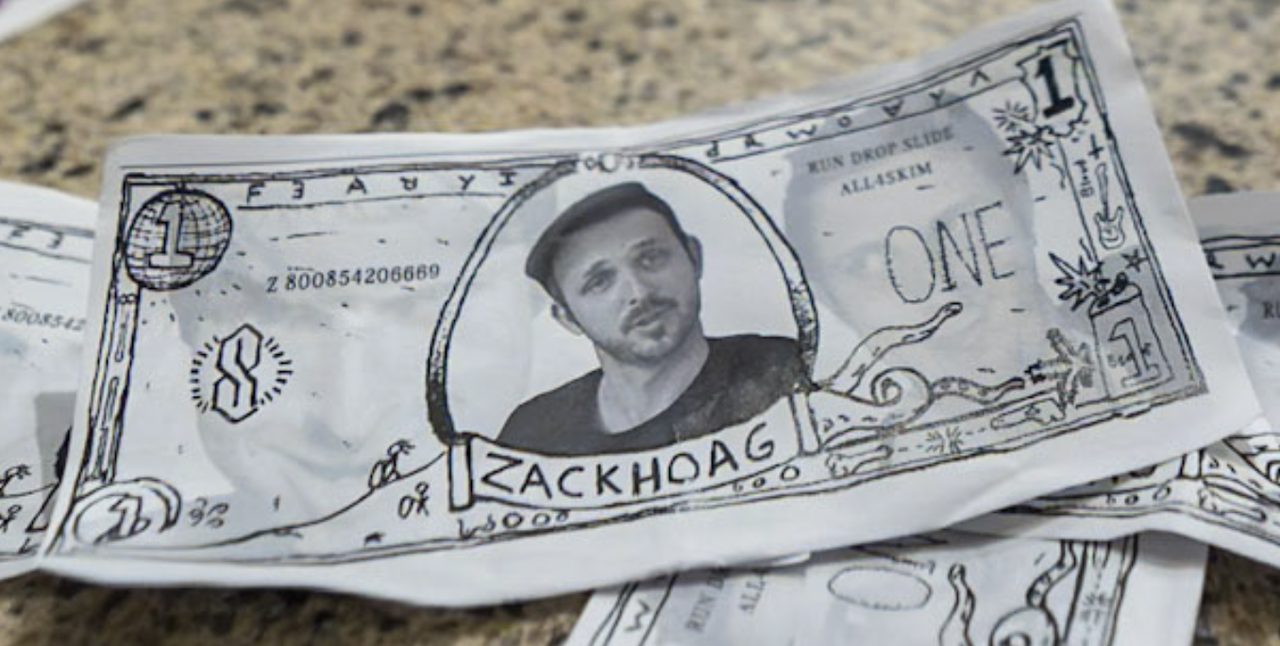
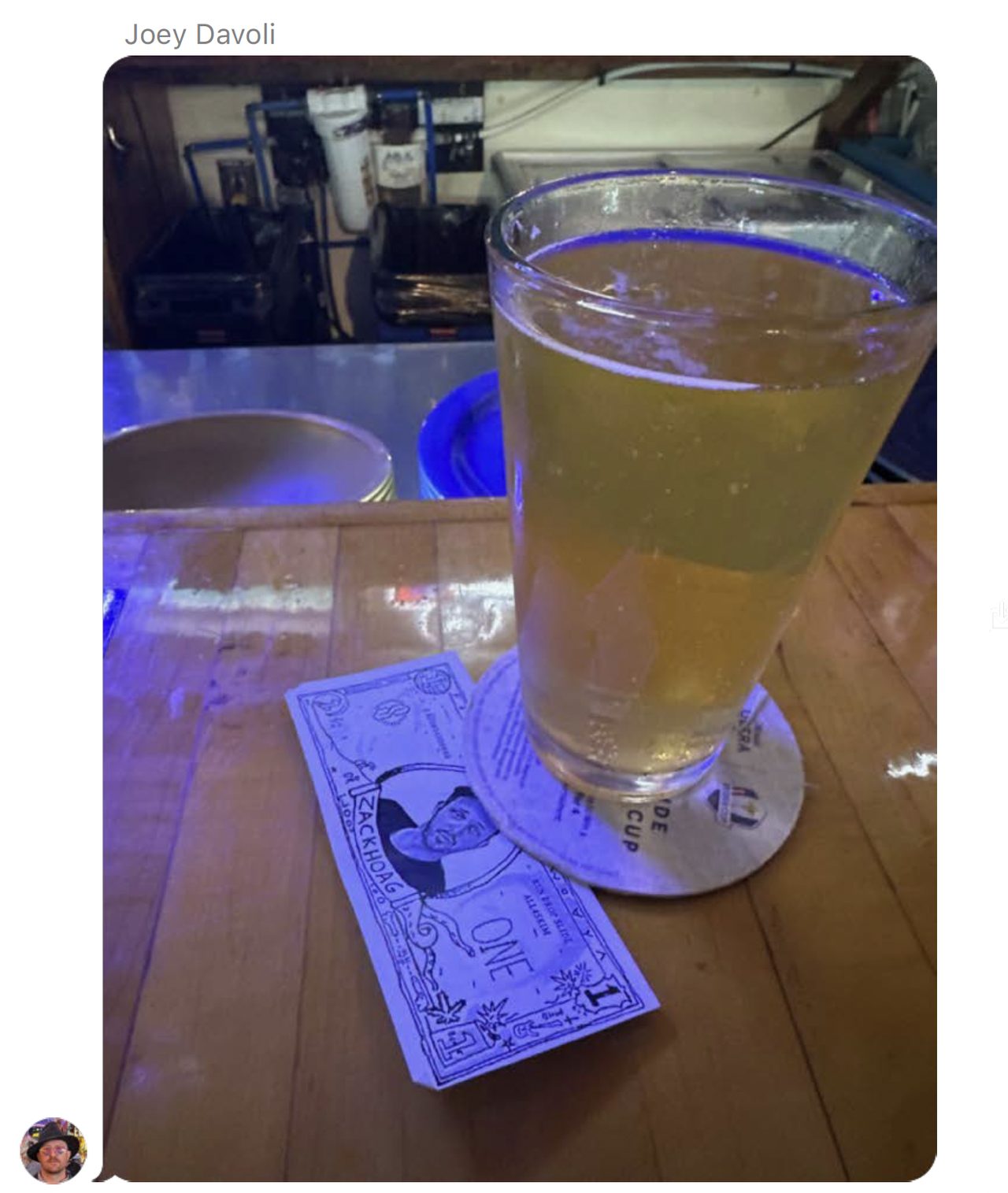
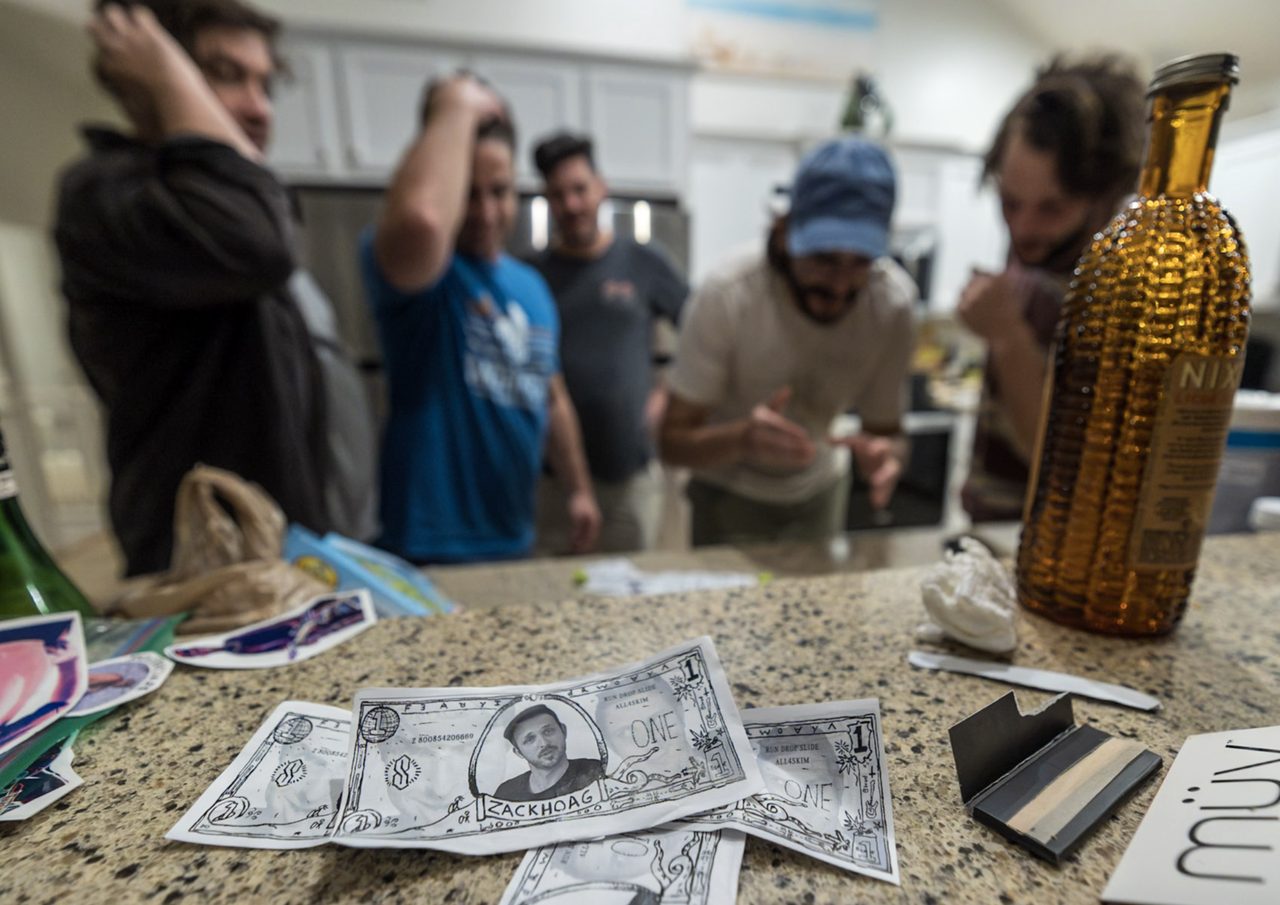
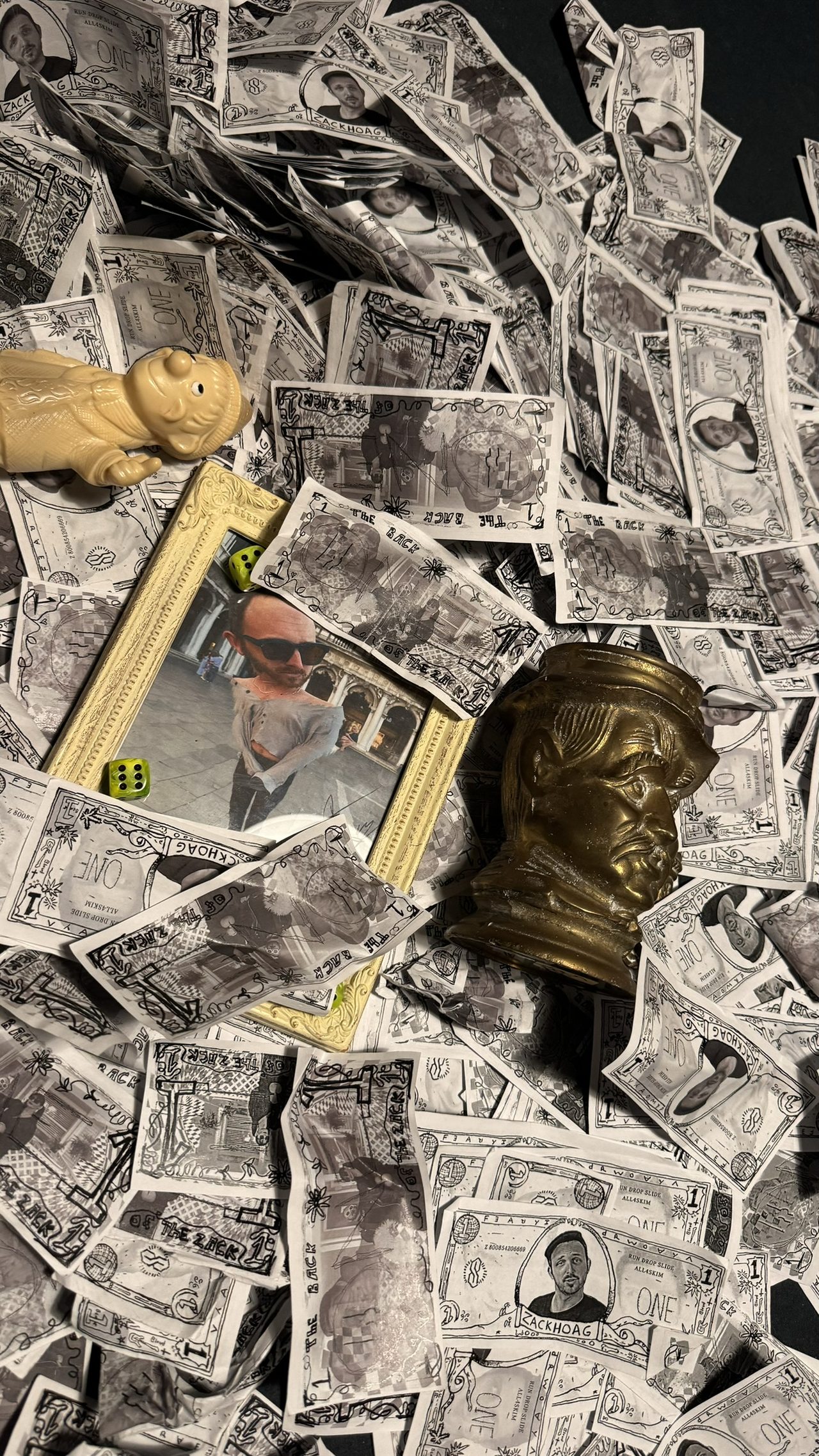
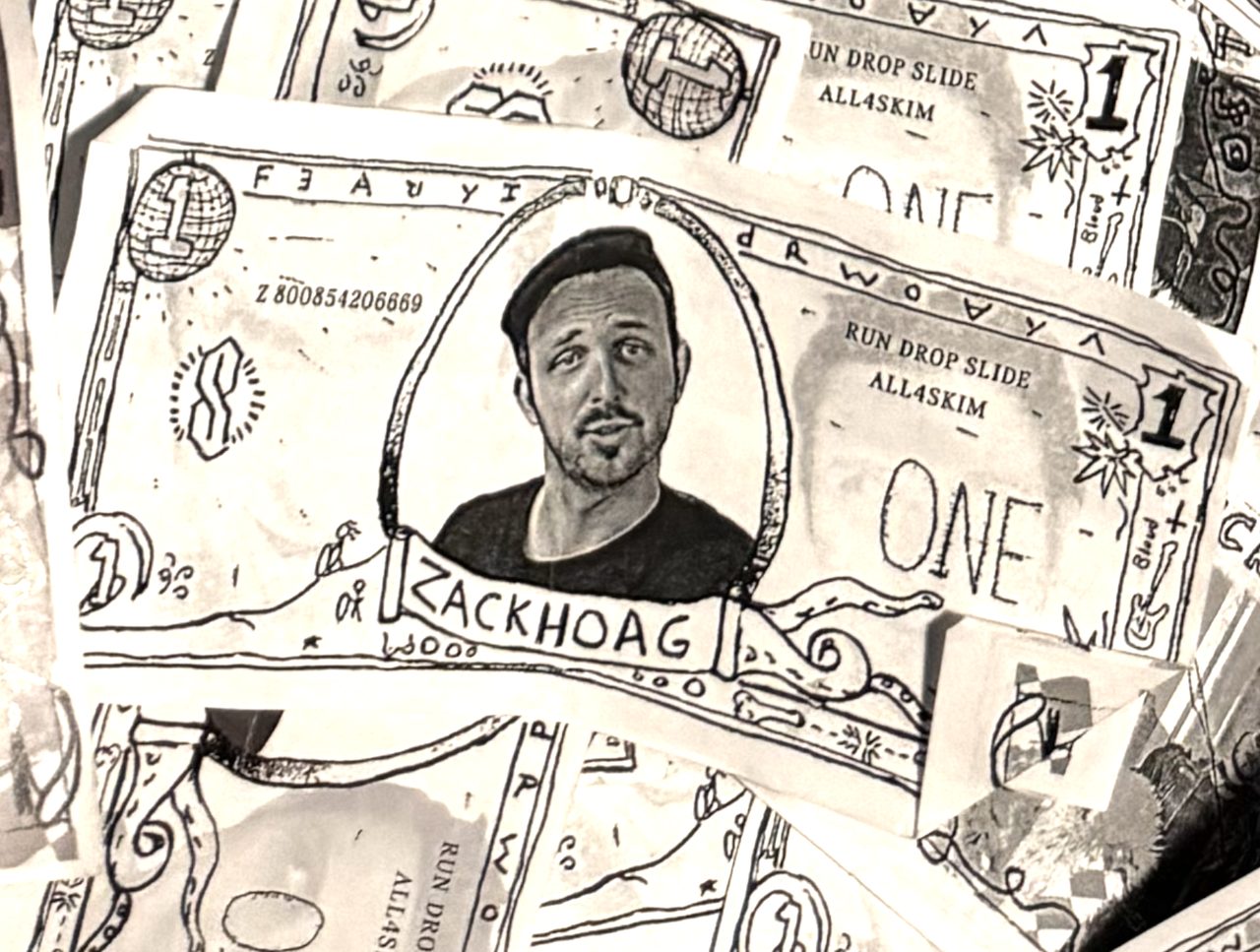
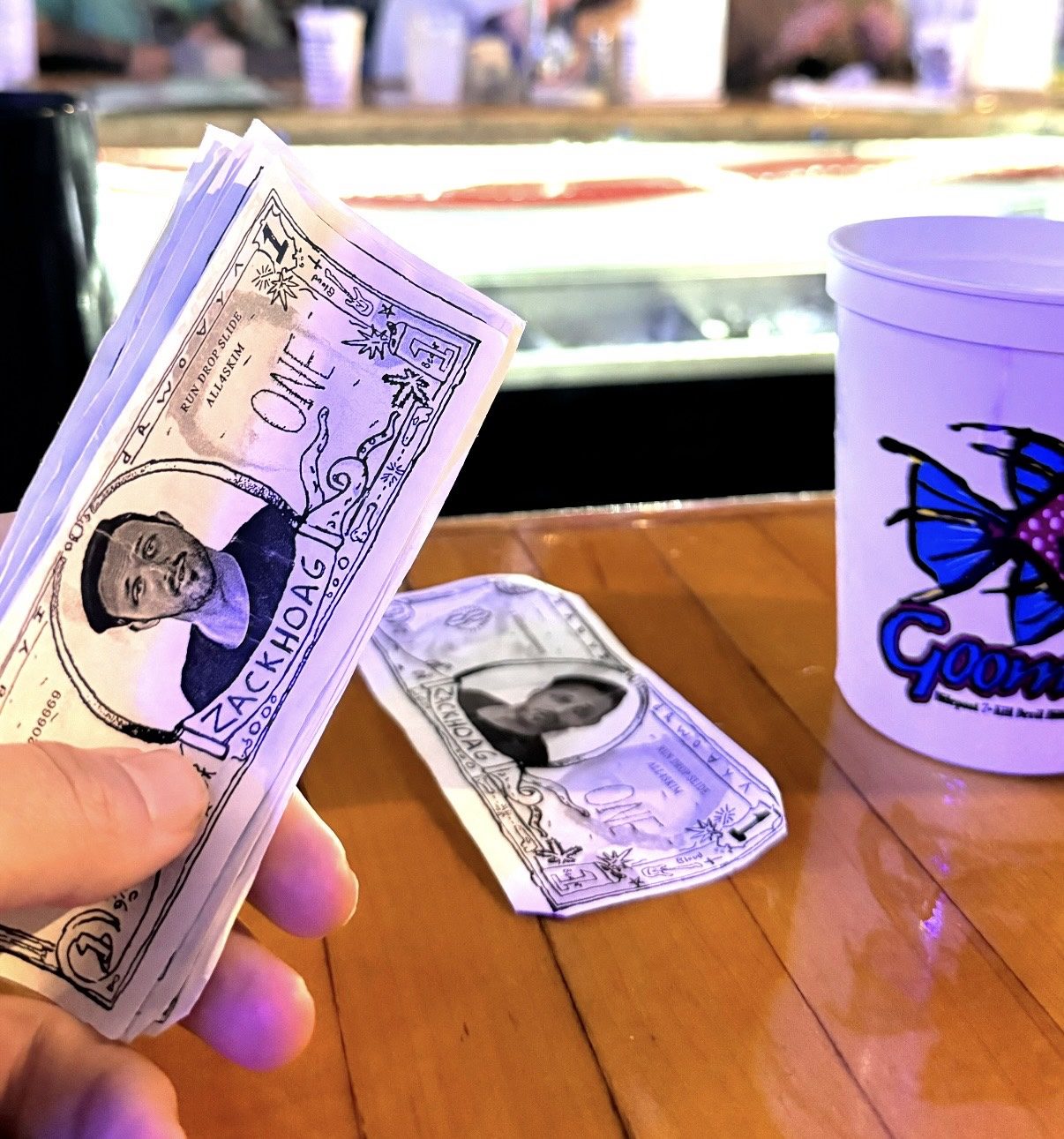
The Zack Back was a one-unit note bearing Hoag's portrait and a hand-drawn border. Its design was crude enough to feel intimate and elaborate enough to suggest authority. Each participant received the same opening allotment. There was no conventional conversion mechanism and no replenishment by request. A person who wanted more had to create value for someone else, trade, borrow, or wager.
That rule transformed the house. A joke became a closed economy because scarcity made every interaction legible. The group had accidentally created a unit of account for attention, effort, appetite, access, and risk.
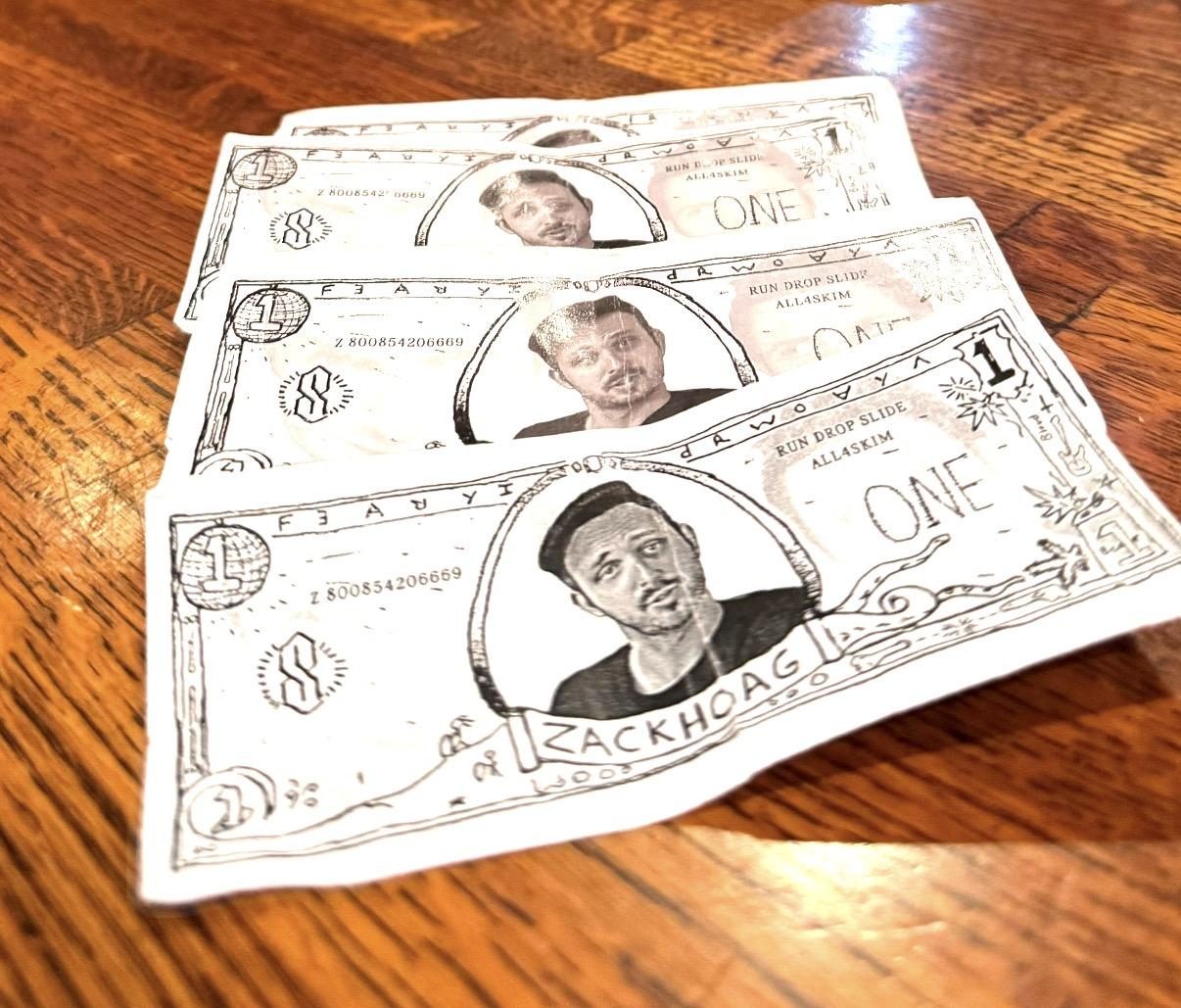
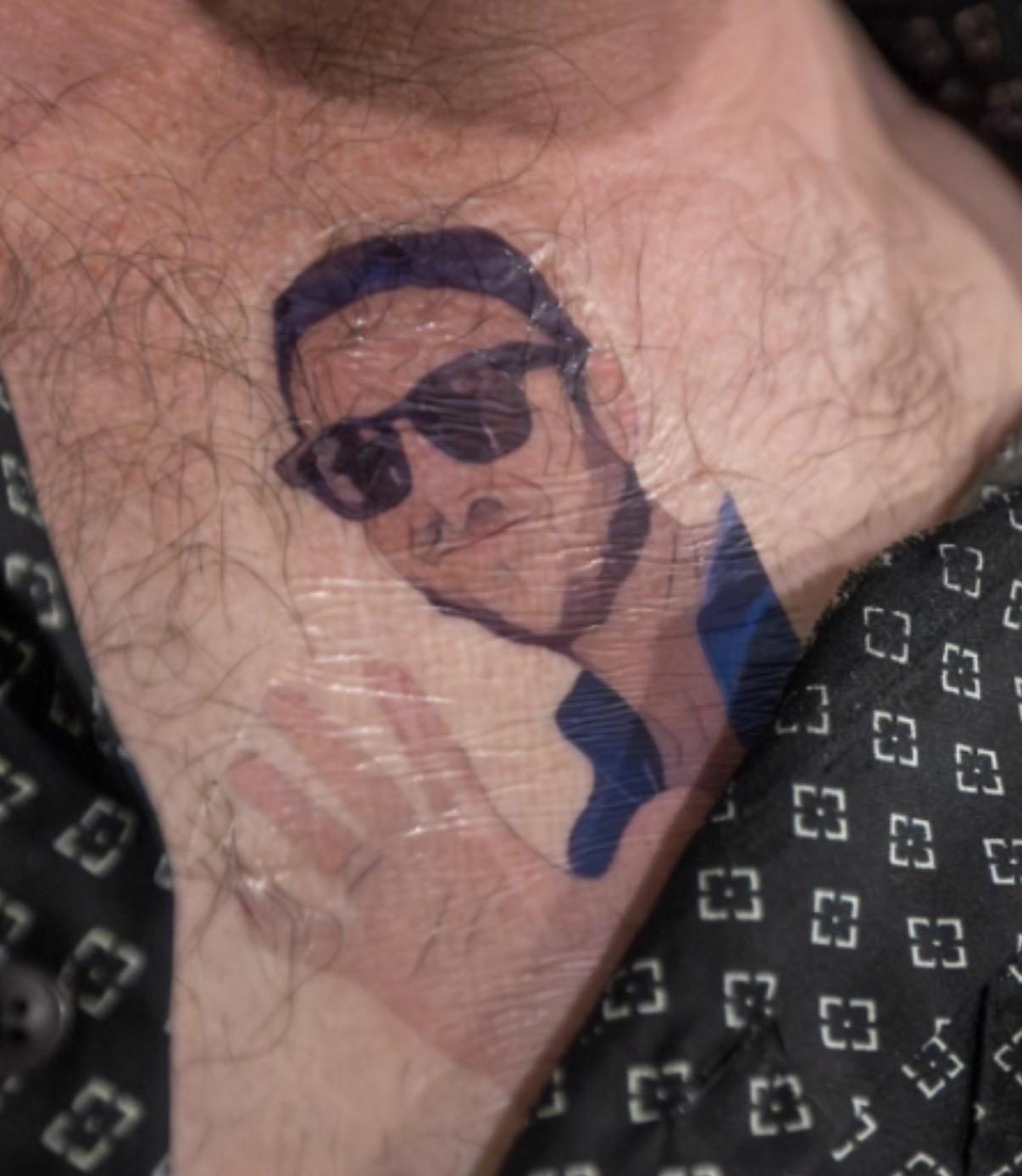
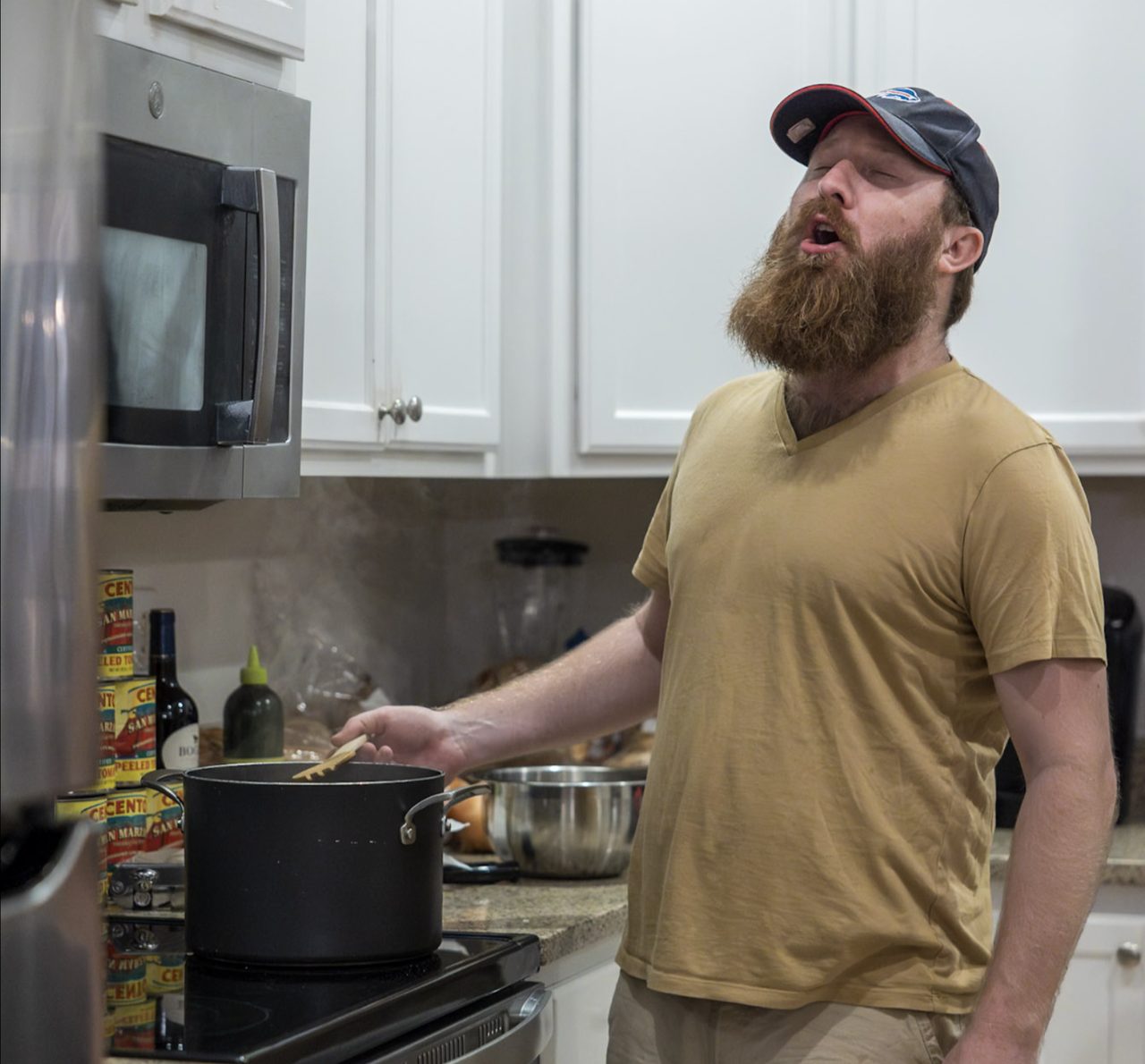
The house was also on a bachelor-party bender. Beer moved constantly. The chat referenced gummies, high-dose chocolates, and a psychedelic atmosphere that participants later associated with Melt Mushrooms. Karaoke equipment stood ready. Guitars and keyboards appeared in the living room. Joey Davoli maintained a pot of “stock” that simmered for nearly three days, accumulating ingredients and mythology in equal measure.
None of this weakened the monetary experiment. It accelerated it. The less conventional the environment became, the more useful a common language of exchange proved to be.
Photographic Dossier
The State Takes Shape
Caravans, a three-story house, an elevator keg, and temporary portraiture established a jurisdiction before the market had rules.

The Service Economy
II. Labor, Access, and the Velocity of Money
The most important rule of the Zack Back was also the simplest: running out was not an excuse.
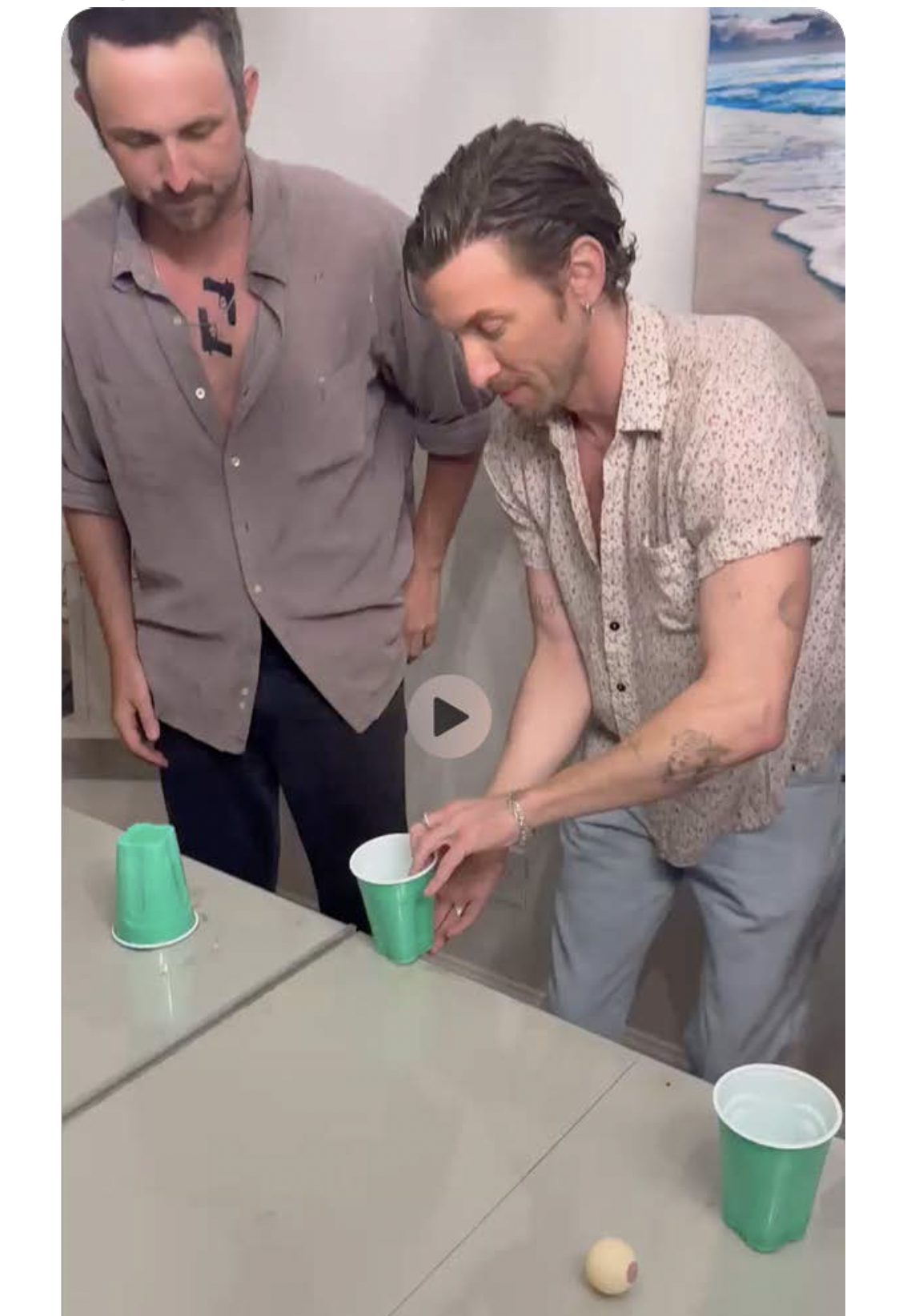
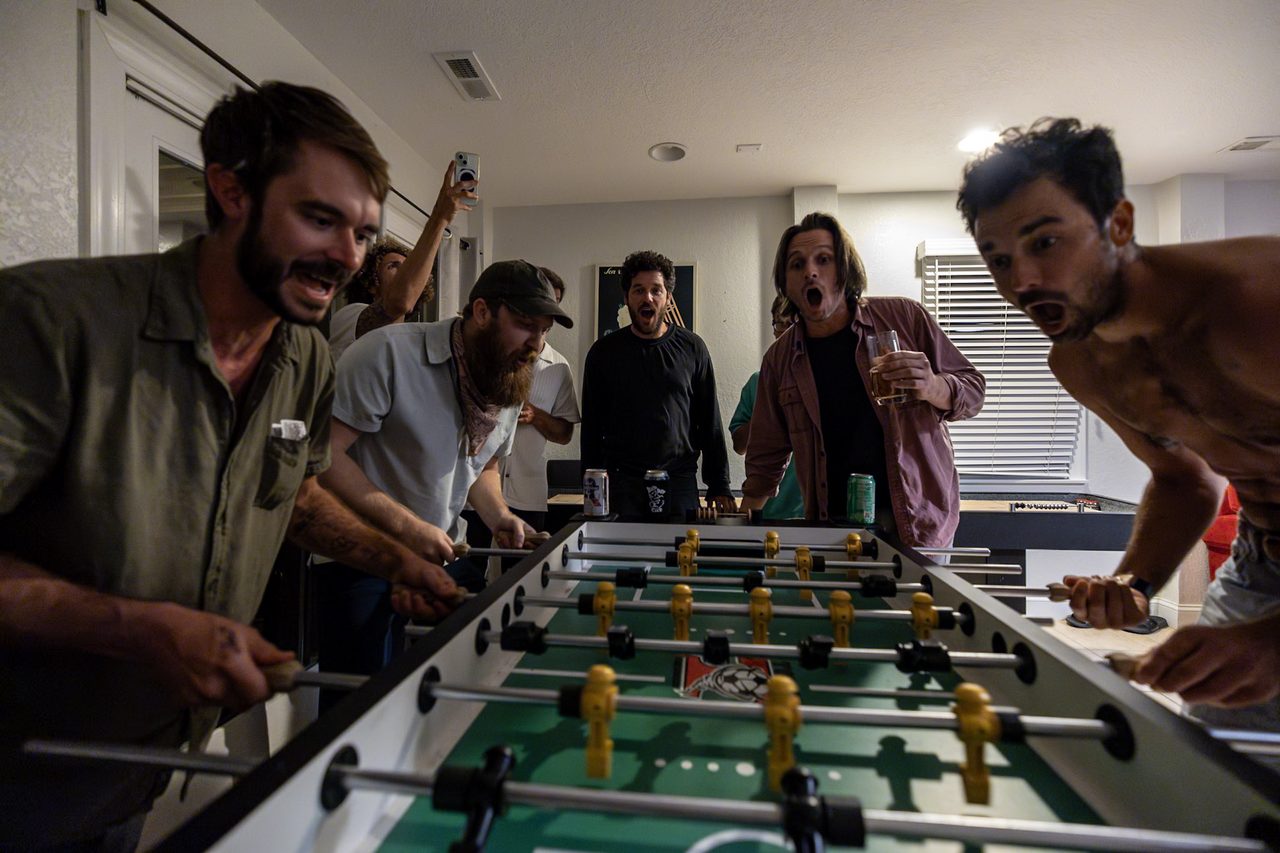
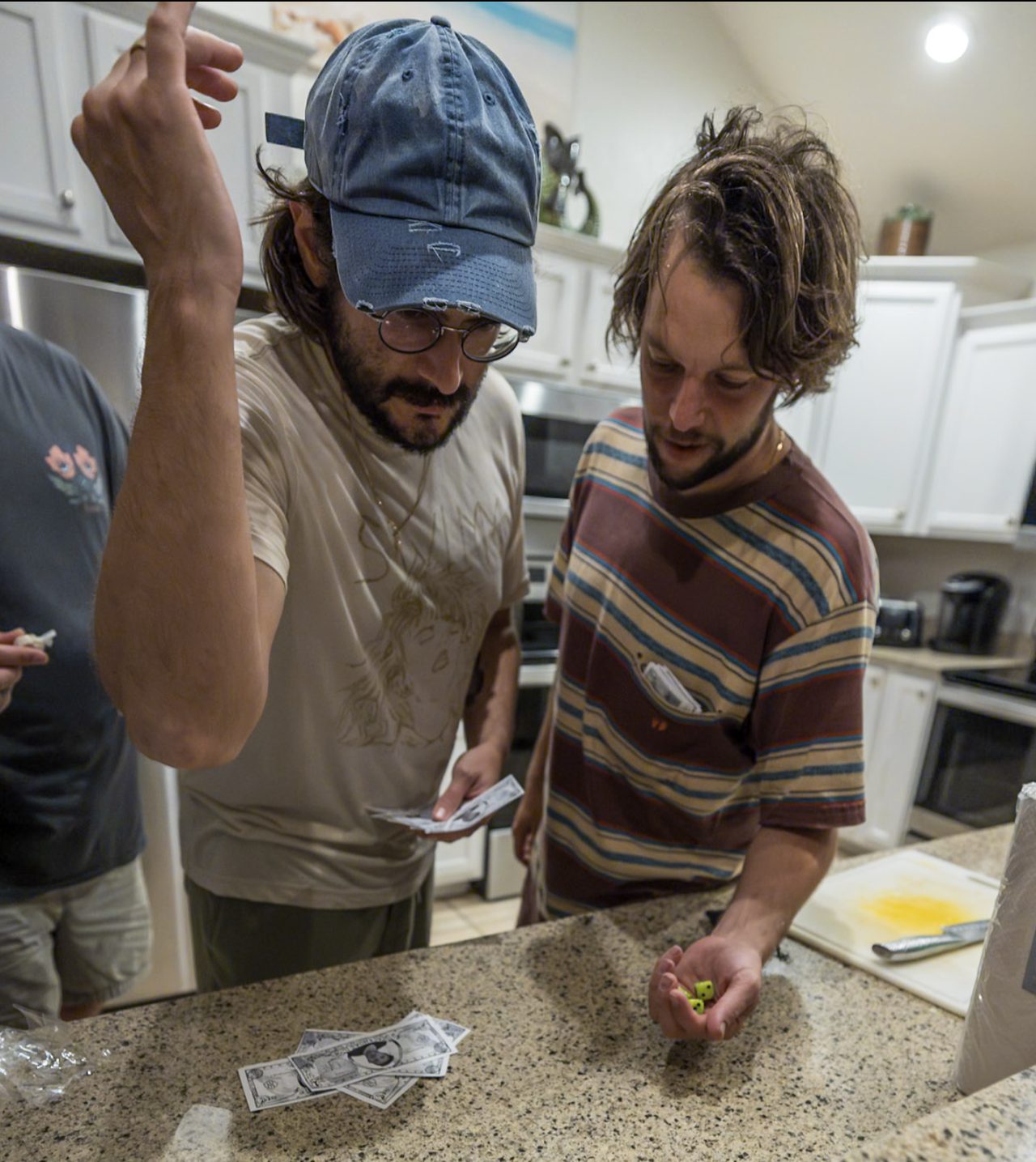
The house casino consisted of games invented, adapted, or disputed in real time. There was CeeLo, table action, side bets, drinking games, and whatever else could move notes from one pile to another. A player who lost his stake could not visit an ATM. He had to reenter the economy through labor.
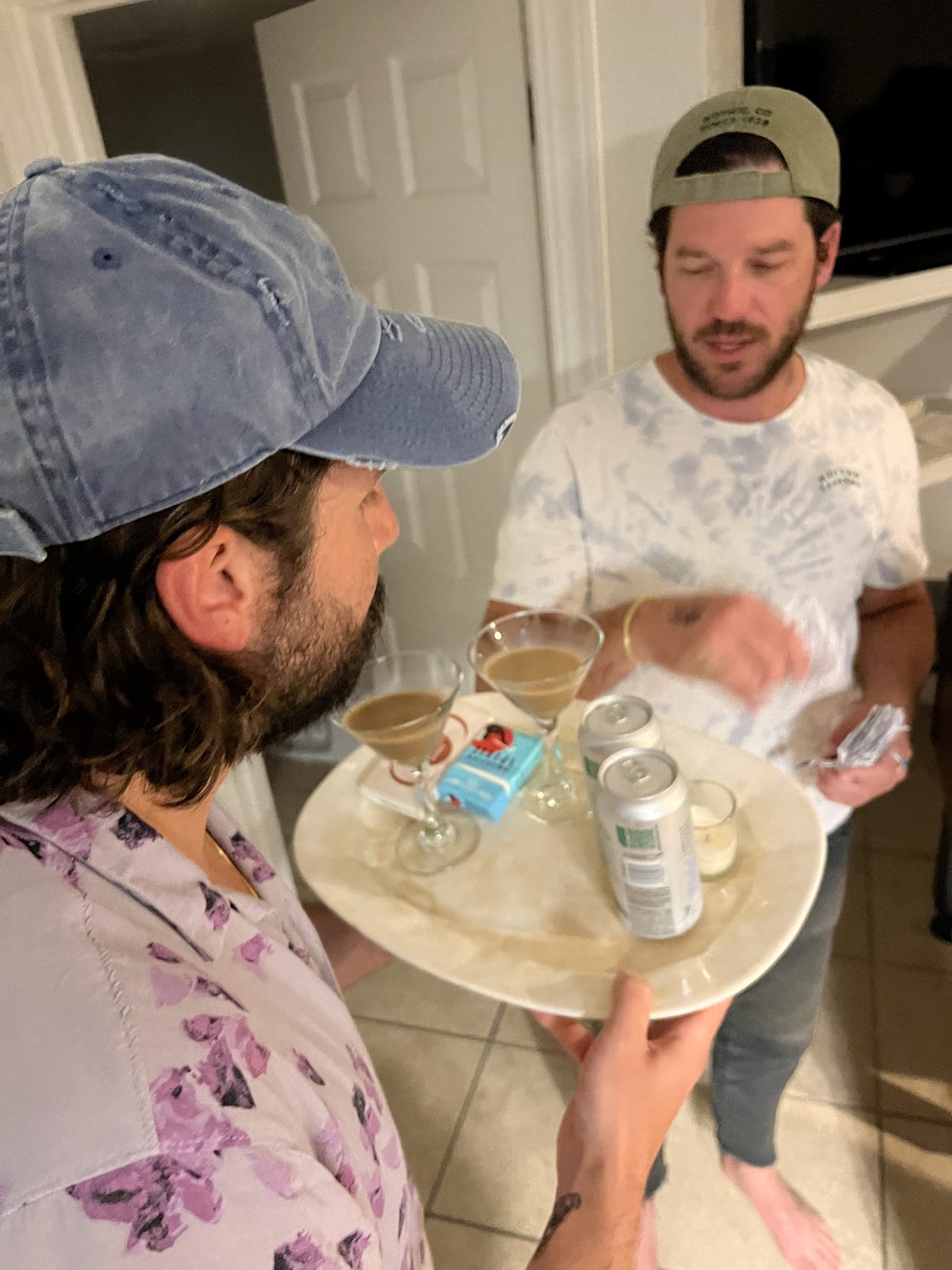
One participant, Blade, responded to insolvency by becoming a roaming service business. He mixed drinks, balanced them on a tray, carried cigarettes, and collected one- and two-back tips. The revenue did not sit idle. He would immediately return to the CeeLo table, try to double the small stack, and use the proceeds to buy his way back into larger action.
This was the Zack Back cycle at its purest: work, earn, risk, repeat.
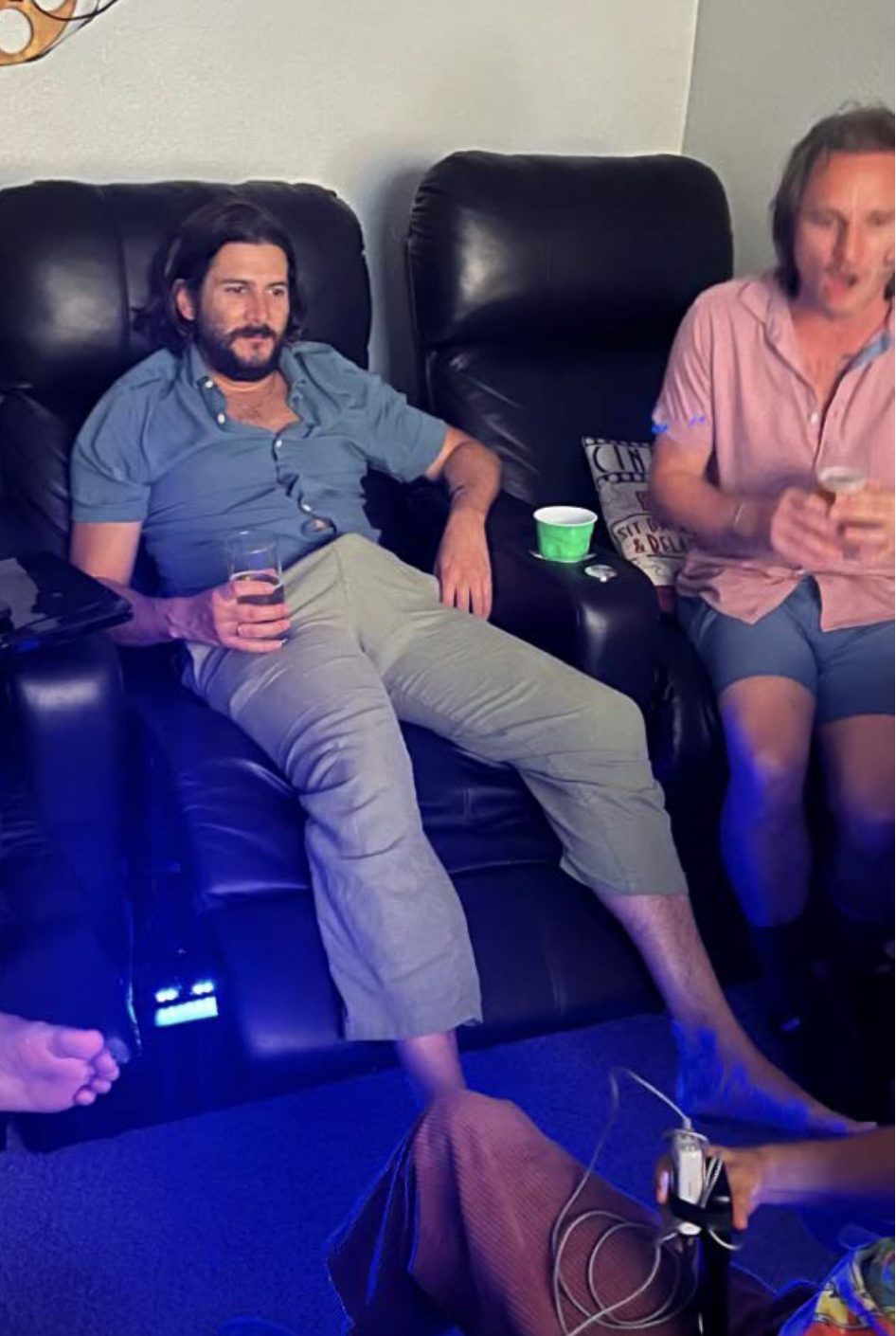
The same logic spread throughout the house. Drinks had prices. Favors had prices. Entry had a price. On September 20, the chat announced “2$ entry tonight,” a reference to an admission-based experience operating from the media room. The room had theater seating and a controlled door. Patrick Dunn served as attendant, admitting a few guests at a time to view a rotating selection of 1990s amateur content. The scarcity was part of the product. Payment was collected in backs.
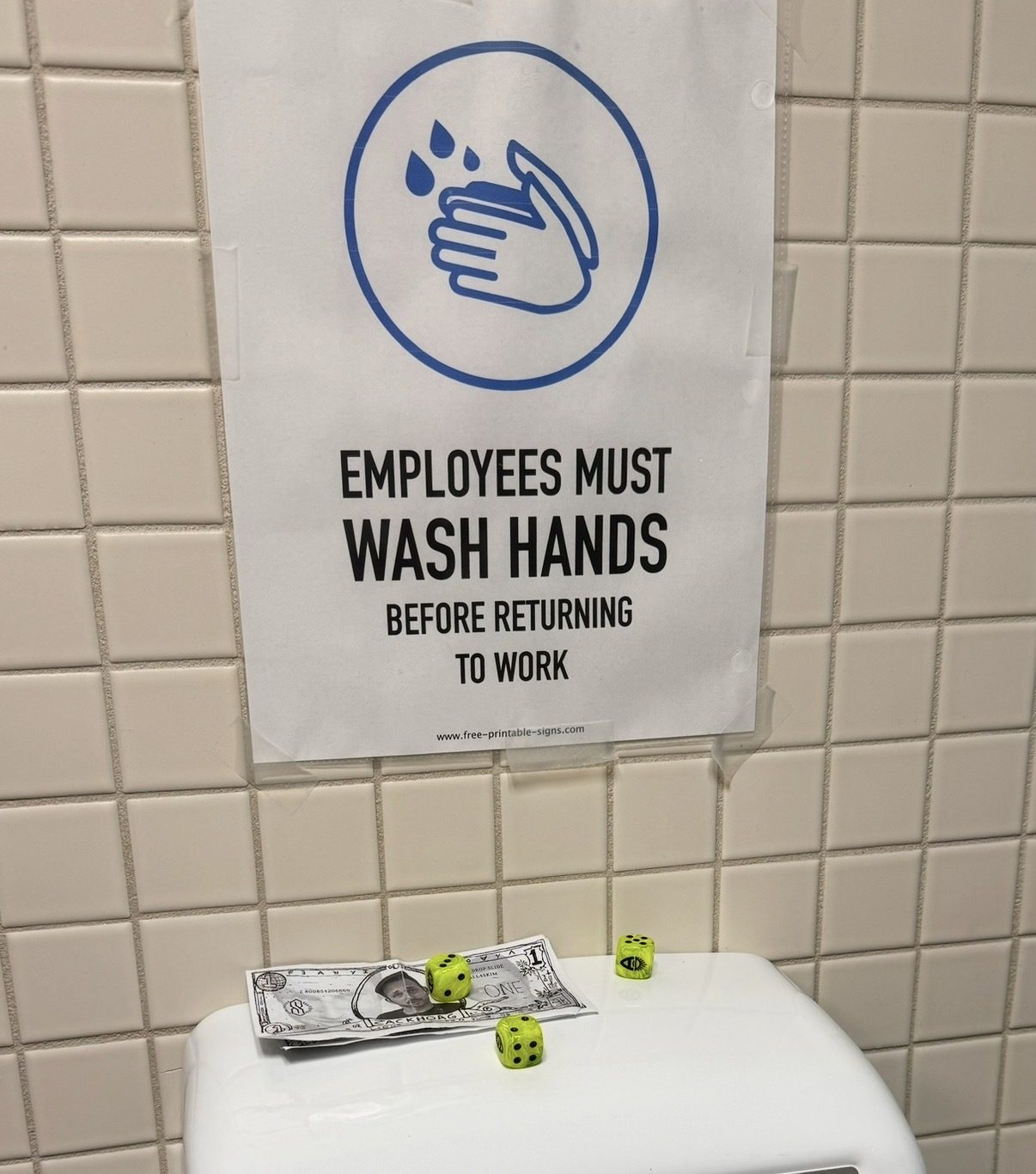
The peep room was absurd, but economically coherent. Pat controlled capacity. The content created demand. The door created exclusivity. The currency cleared the transaction.
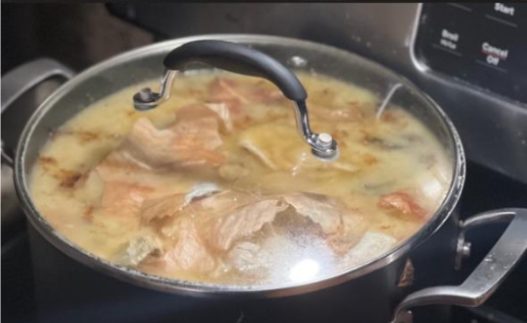
Elsewhere, Joey's stock pot remained at a low boil. No participant has produced a definitive inventory of its contents. Contemporary images show a large covered pot filled with meat and broth-like liquid. Joey's original reserve was part kitchen project, part public utility, and part ritual object.
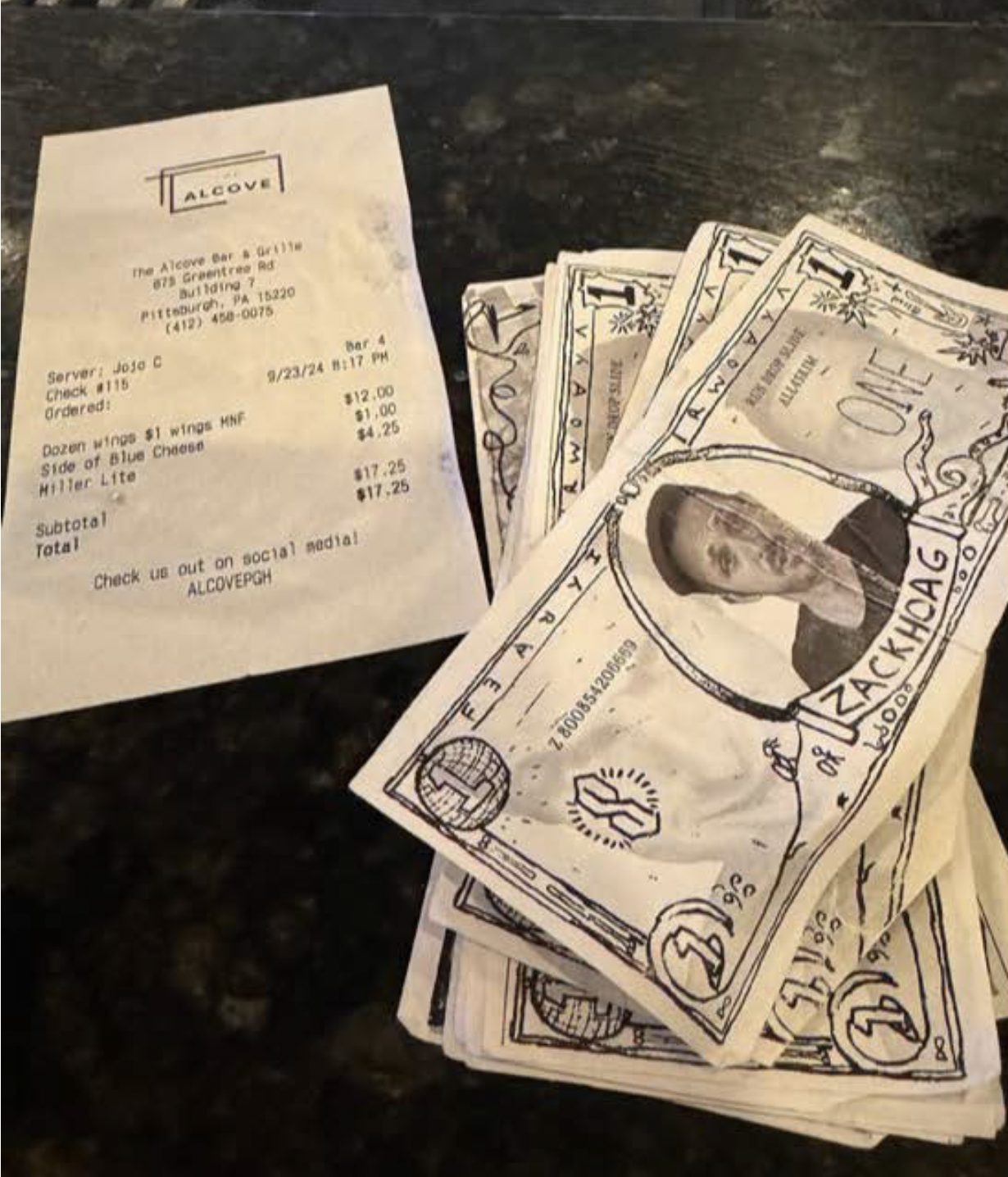
The Zack Back also escaped the house. Participants carried stacks to local bars, held them beside branded cups, presented them to bartenders, and tested whether the notes could enter commercial systems never designed to recognize Zack Hoag's face. One later account described a bartender studying the stack and saying, “Man, I don't know if I can take those.” The answer was functionally no, but the attempt mattered. The local economy had been offered a currency backed by nothing except confidence and beach-house insistence.
By September 21, the denomination had become mentally automatic. Rob Hill asked the group to reimburse a real bar tab from Goombois after he covered food and drinks. Bryant's immediate response was not to ask for a Venmo handle. “Can you give me the price in backs?” Rob replied: “271.83.”
That exchange marked the Zack Back's transition from party prop to unit of account. It could now express a value even when no one expected the transaction to settle in that currency.
“Can you give me the price in backs?”
— Bryant Nardozzi, after a $271.83 bar tab
After the trip, the language persisted. When the group discussed gummies and chocolates, Steve proposed buying from Adam and reselling to Rob at a markup. Dan Graves asked, “How many Zack backs for a choco bar?” At a gas station, one participant watched strangers gamble and wrote, “These Zack backs are burning a hole in my pocket.”
The market had begun to follow its citizens home.
Photographic Dossier
Commerce After Dark
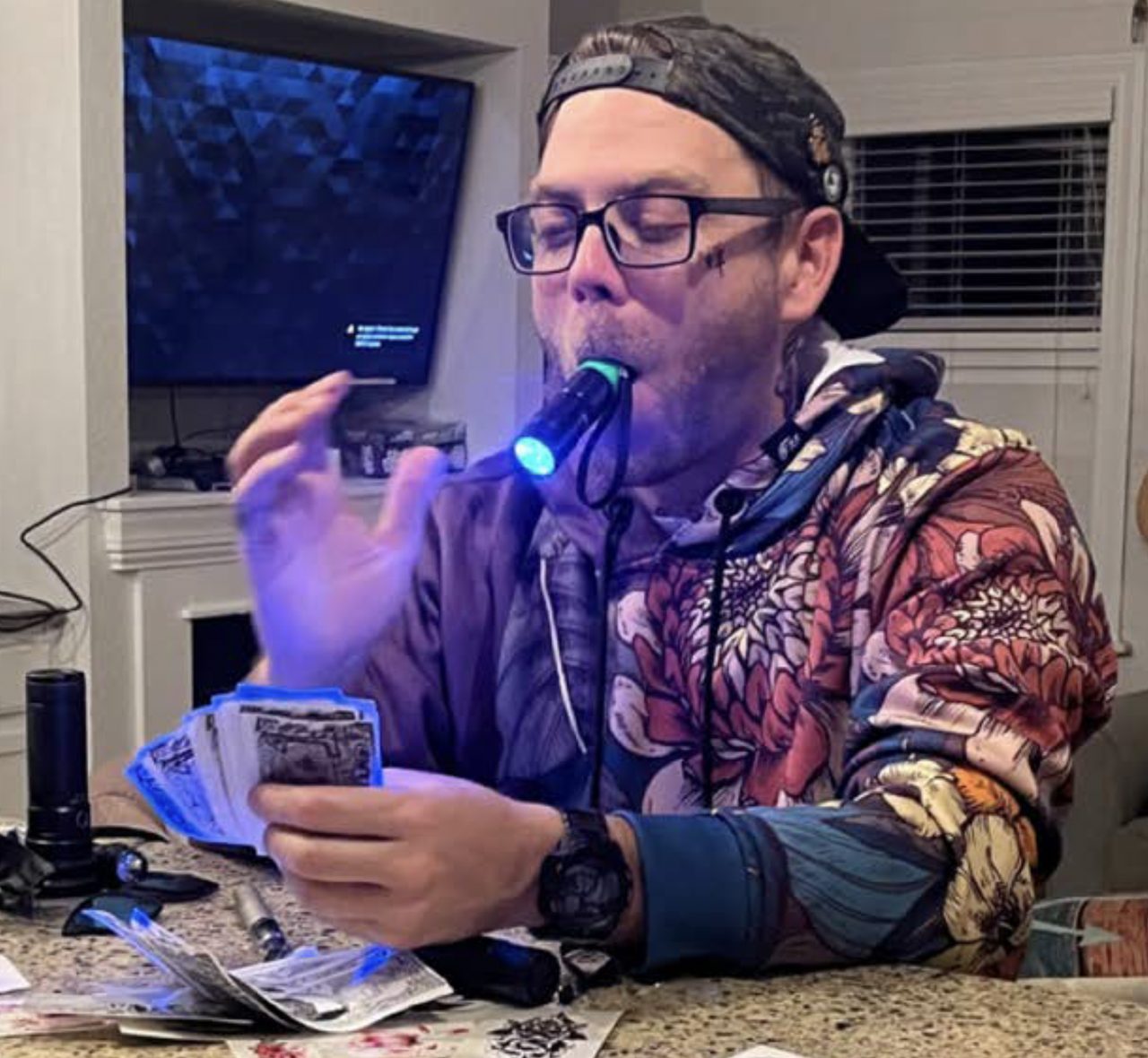
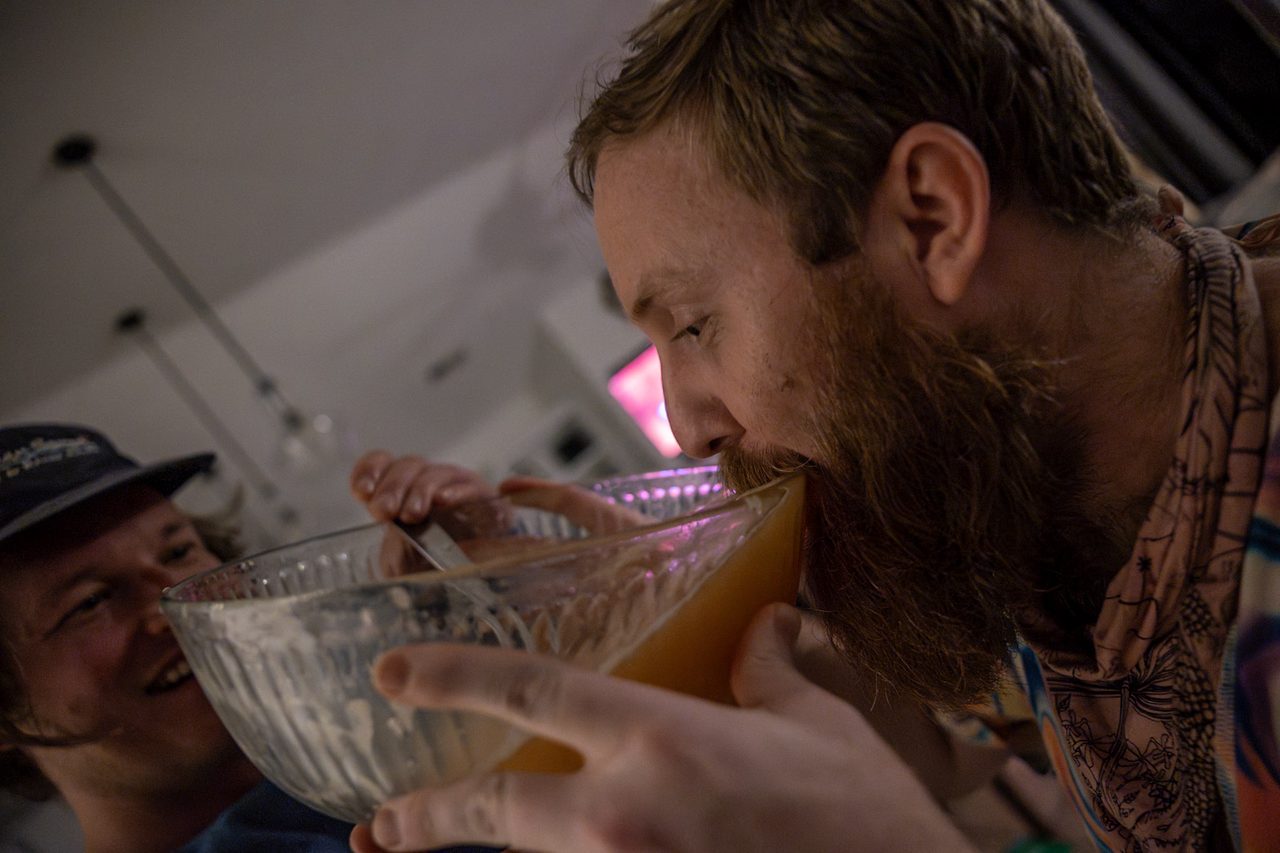
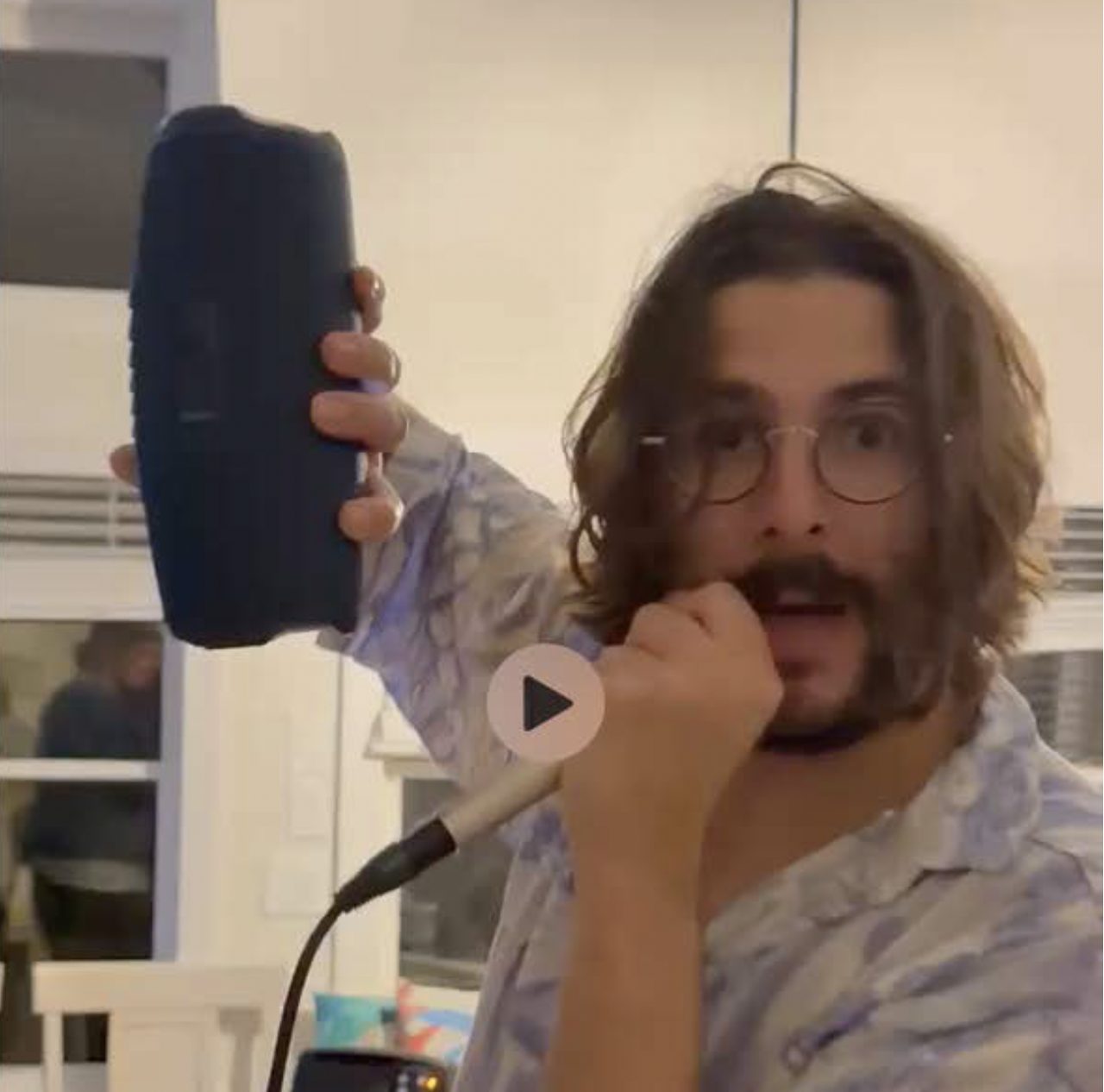
Labor, admissions, bar tests, games, and hospitality converted nearly every social interaction into a transaction.
Credit Markets
III. Leverage Comes to the Beach
Scarcity produced labor. Gambling produced winners and losers. By the second night, credit produced everything else.
The Zack Back economy developed microloans, informal guarantees, claims on future earnings, and concentrated ownership. Greyson later described himself as “basically a lender/bail bondsman.” Dan Graves surveyed the wreckage and offered the concise postmortem: “So many defaulted loans.”
Bryant, who was also known in the chat as Dozzi and Nardwhale, became one of the market's most powerful balance sheets. Joey claimed that Bryant “didn't gamble once and had 1/4 of all bills after night 2.” Whether the fraction was exact hardly mattered. The perception of concentration had become political fact.
Zack summarized the mood in a sentence that could have appeared in any inquiry into financial power: “As it's always been, there's only a few people who control everything.”
Credit turned social trust into collateral. Participants lent money to busted players, financed reentry into high-stakes hands, and accepted promises against earnings that did not yet exist. Bryant condemned the most aggressive version of the practice. “You can't gamble with money that's tied up in microloans,” he wrote. “Made me sick to watch some of you go back on your word.”
“You can’t gamble with money that’s tied up in microloans.”
— Bryant Nardozzi
Dan then disclosed another layer of the capital structure: “Bryant owns 50% of Alec's future earnings.” Chris Hess supplied the moral-hazard footnote: “It's wild how okay I felt losing other people's money.”
This was no longer simply gambling. It was leverage.
The house had recreated a familiar financial sequence at extraordinary speed. Equal initial distribution gave way to uneven performance. Uneven performance created borrowing. Borrowing created dependency. Dependency concentrated power in the hands of those with liquidity. Every loan altered not only the borrower's chances, but the lender's control over the remaining weekend.
There were also accusations of hustling. Players disputed whether loans were gifts, investments, or traps. Promises made in the urgency of a game became difficult to enforce when the borrower lost again. In a normal financial system, contracts and courts perform this work. In Kill Devil Hills, enforcement consisted of memory, public ridicule, and the threat of having screenshots displayed on a television.
Months later, the language still had purchase. When a joke about a buyout surfaced, Bryant wrote: “I have a structured settlement but I need backs now.” Another exchange offered “10 Zack backs” for a service and was met with the diagnosis: “Liquidity collapse lol.”
The Zack Back did not survive as money. It survived as a complete vocabulary for debt, bargaining, and bad faith.
Photographic Dossier
The Balance Sheet
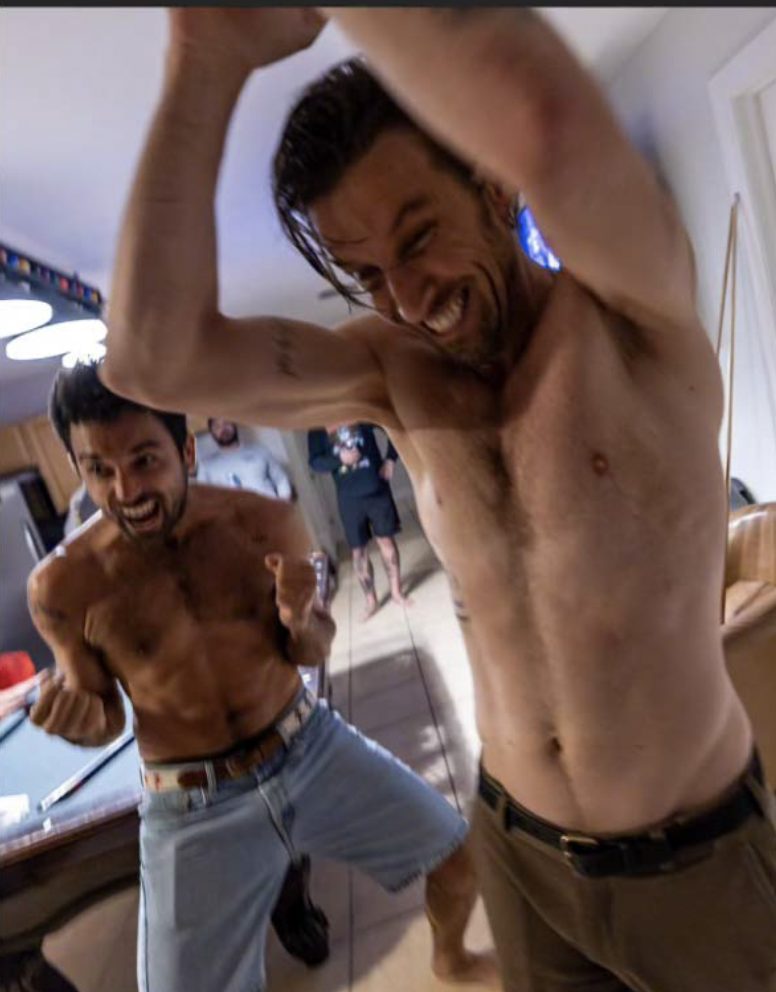
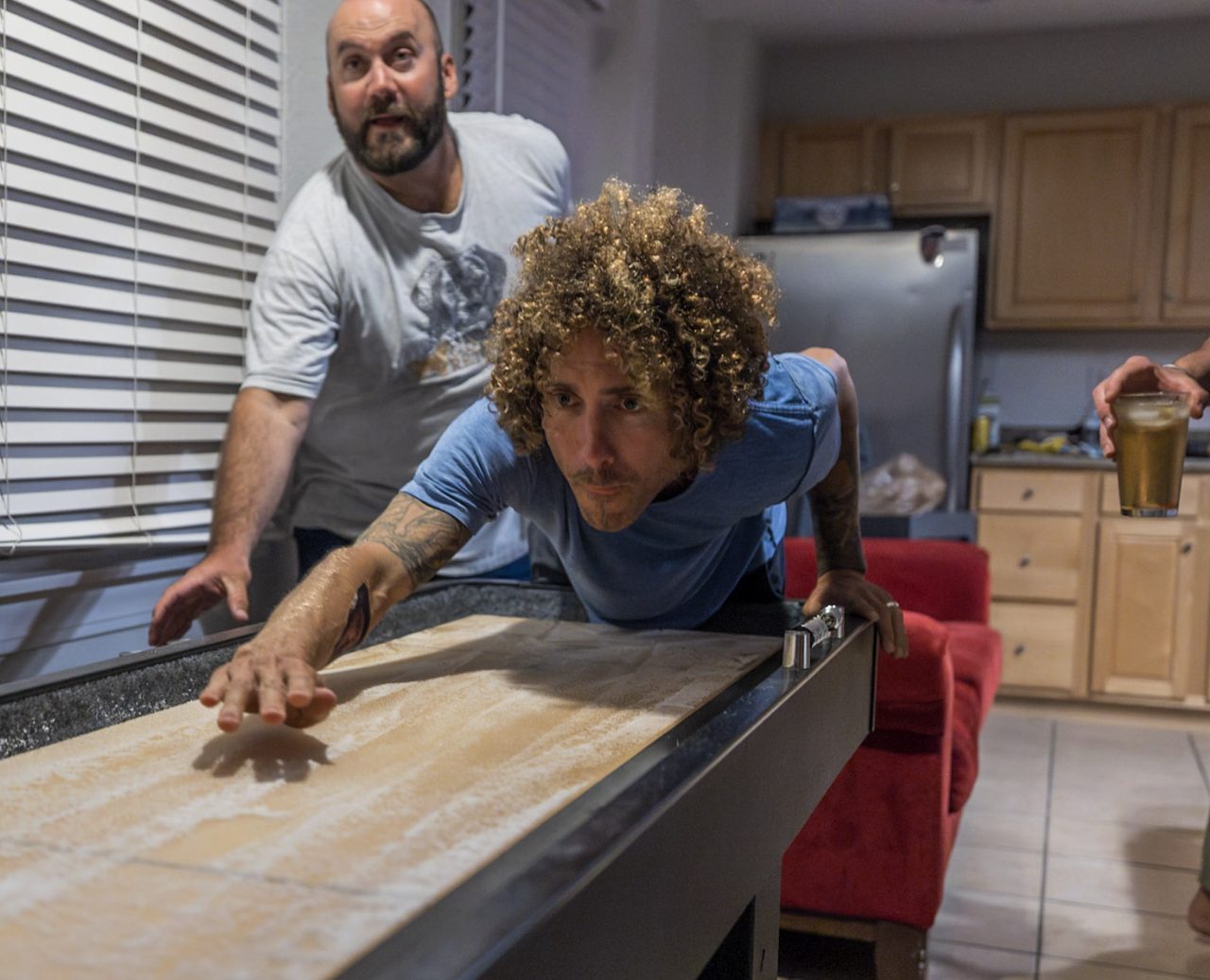
Tips gave way to wagers, concentrated reserves, and visible classes of winners, creditors, and busted players.
The Counterfeit Crisis
IV. The Print Shop Operation
The counterfeiting crisis began with access to the original file.
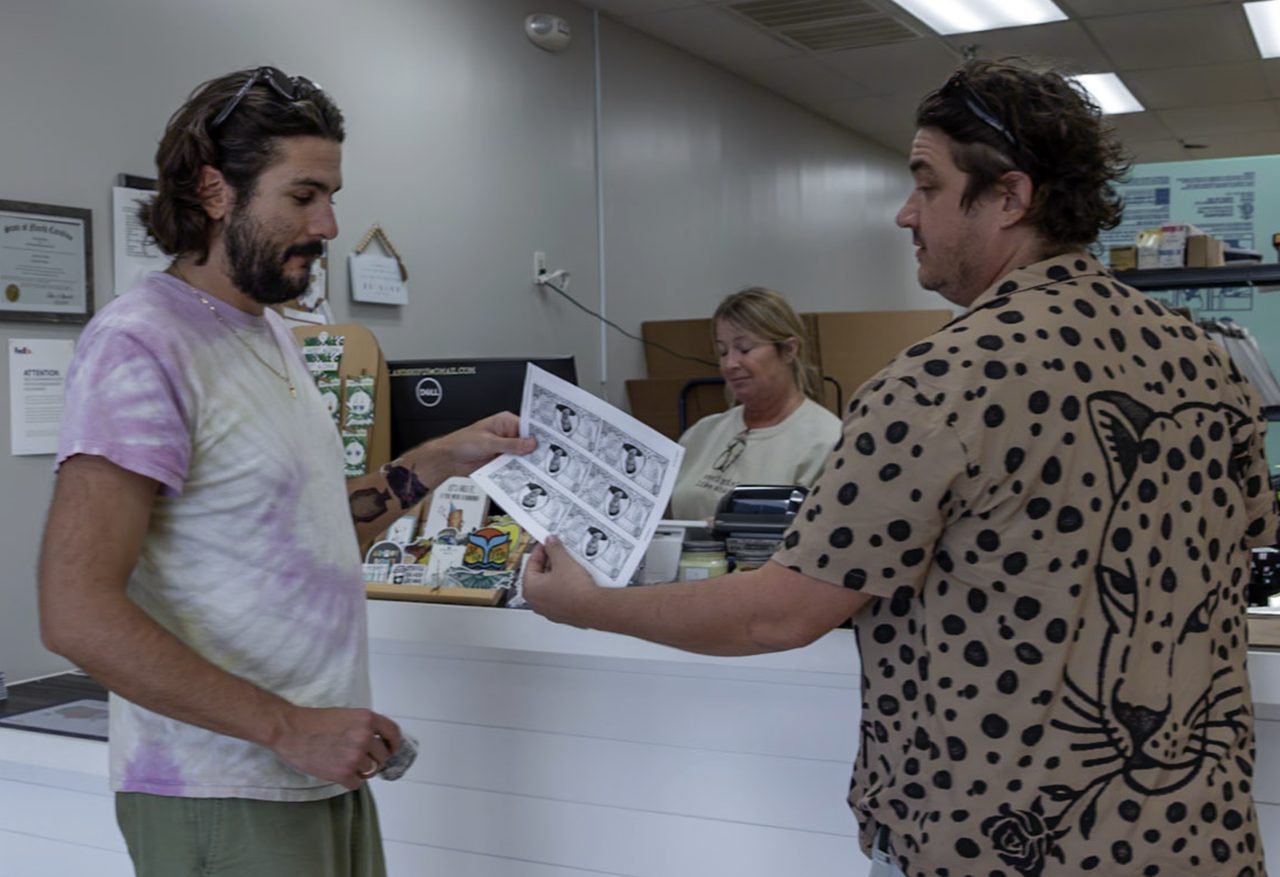
While most of the group was at the beach, Blade and Grey left the house and drove to a local print shop. They brought the Zack Back artwork with them. The employee at the counter printed full sheets and Grey cut the notes professionally. The new bills were cleaner than anything a home printer might have produced and close enough to the original issue that the differences required attention.
The operation created a supply shock. Every participant had begun with the same amount, and that equality was the foundational promise of the weekend. The counterfeiters had not merely made extra money. They had privately rewritten the starting conditions.
At first, the notes entered circulation gradually. A fake could be slipped into a drink tip, a small wager, or a stack changing hands quickly. The differences were minor: a small design shift, a border inconsistency, a print characteristic visible only to someone who knew where to look. Once the bills moved through the casino, provenance disappeared.
Then the conspirators became more ambitious. According to participant accounts, they tried to clean the new supply through high-volume games, wagering counterfeit notes and collecting legitimate payouts. The house casino became both market and laundromat.
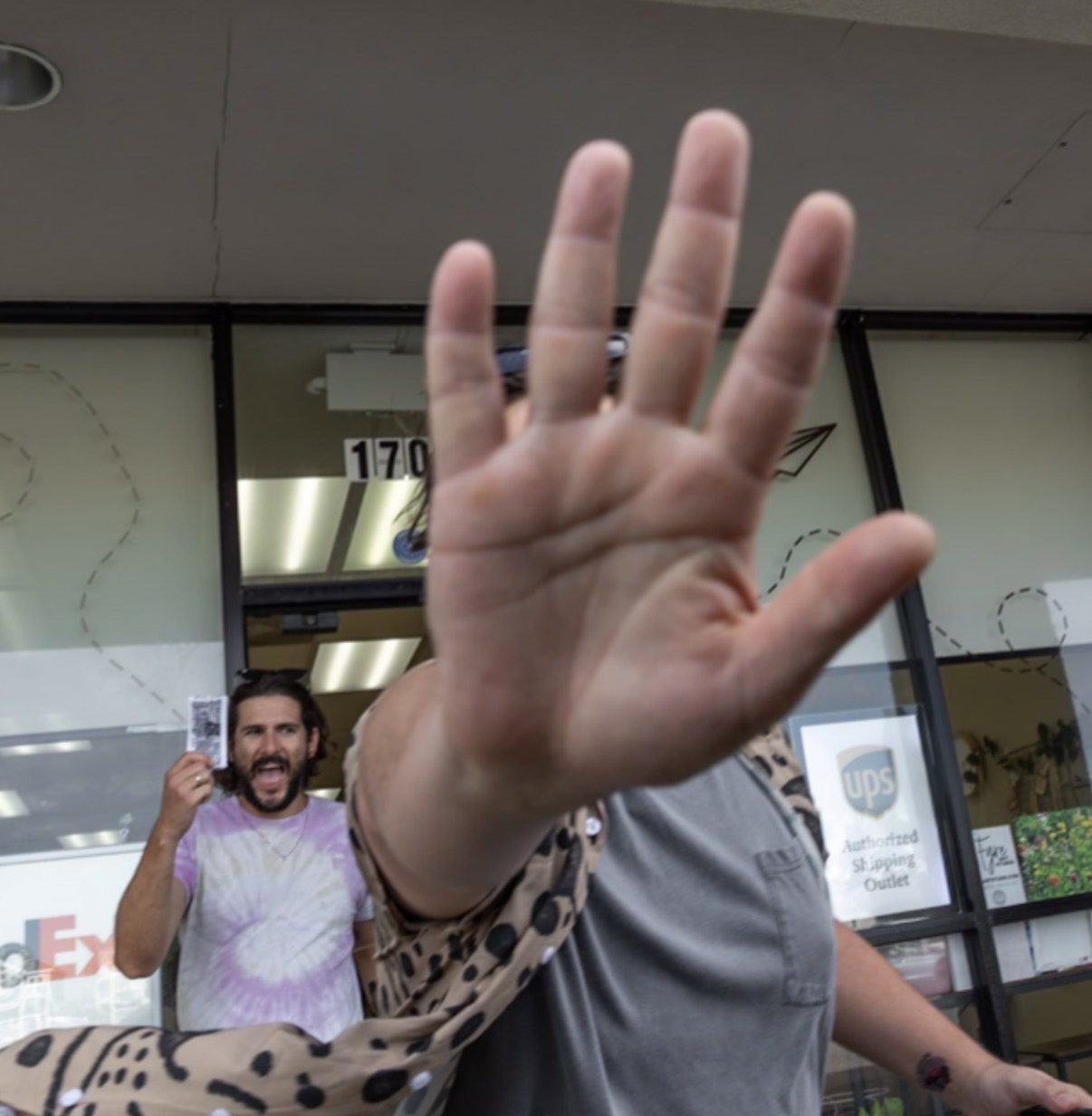
Josh Given was documenting the trip as a kind of resident paparazzo. His camera had already been treated as both entertainment and threat. During the print-shop excursion, he captured images outside the storefront. One of the most famous frames shows a hand thrust toward the lens while a participant in a tie-dye shirt stands in the background holding a stack of new notes. The image looks less like a bachelor party photograph than a surveillance still from a low-budget financial crime.
The politics grew more complicated by the hour. People who knew about the operation were offered hush money. Joey and Josh were among those accused of accepting payment to remain quiet. Others began watching their stacks with suspicion. If counterfeit notes had entered the supply, no one could be certain that his apparent wealth still represented the same share of the economy.
The crisis was no longer about whether two men had printed money. It was about whether any account balance could still be trusted.
Photographic Dossier
Evidence File
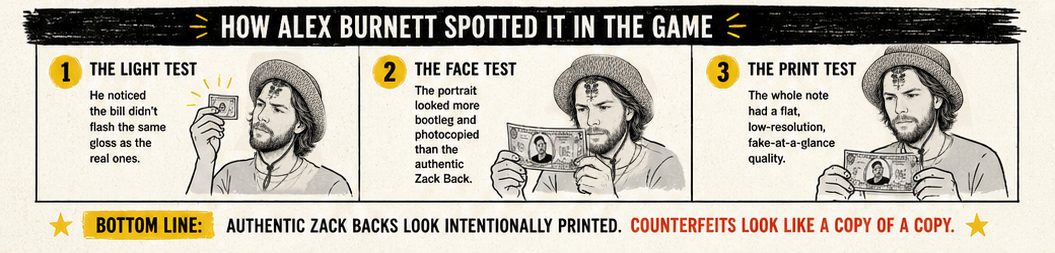
The print-shop record, forensic comparisons, and the first official response to a compromised money supply.
Institutional Capture
V. The Fed Loses the Room
Alex Burnett did not initially know how deep the counterfeit operation ran.
He was the house's central banker, an office that began as theater and became real the moment confidence started to fail. According to participants, Alex examined a suspicious note, looked at its print and design, and reached the conclusion the room had been avoiding: “This is fake. What's going on here?”
By his own later account, his first theory was not conspiracy. It was insanity. The system he administered had exactly one authorized print run, so a note that failed inspection meant either that the money was lying or that his eyes were. An organized operation — original file in hand, professionally cut, already laundering itself through the casino — was not yet imaginable. Neither was its scale.
Convincing the room was its own operation. Alex had to loop people in one at a time, note in hand, walking each new witness through the tells until they saw it too. The audience divided into two camps: the clueless, who had never thought to inspect their money, and the quiet, who had — and who had reasons to keep the results to themselves.
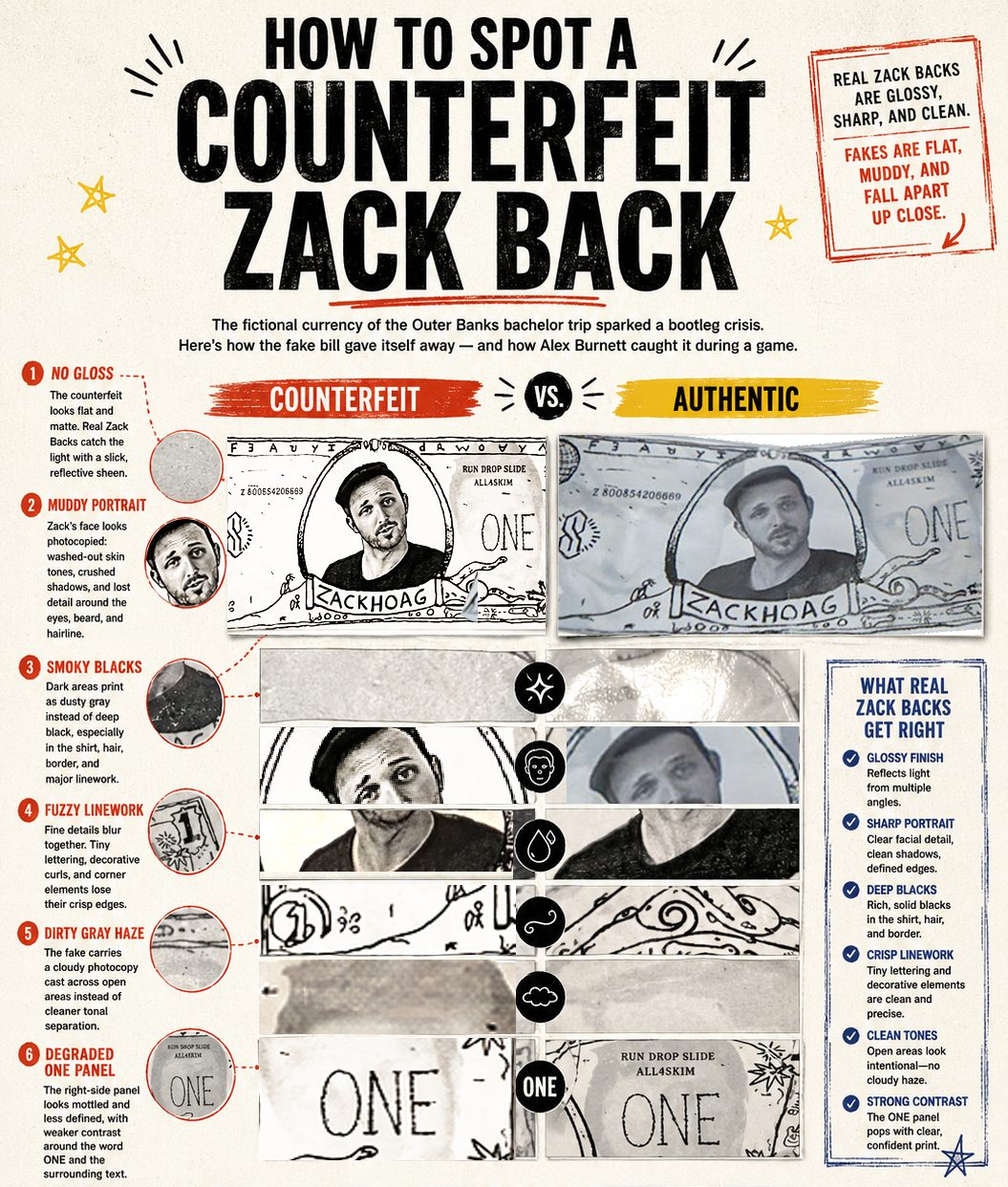
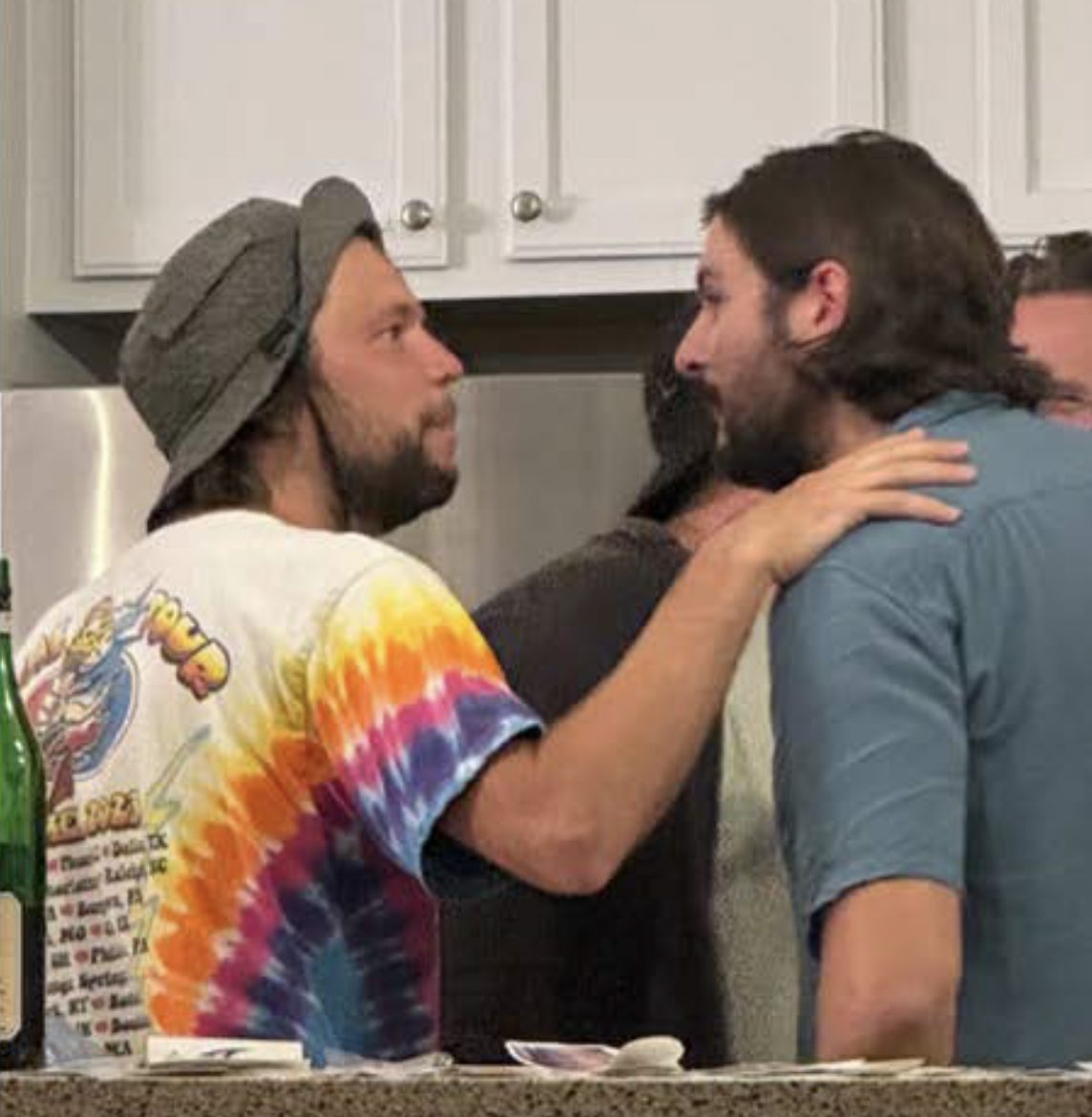
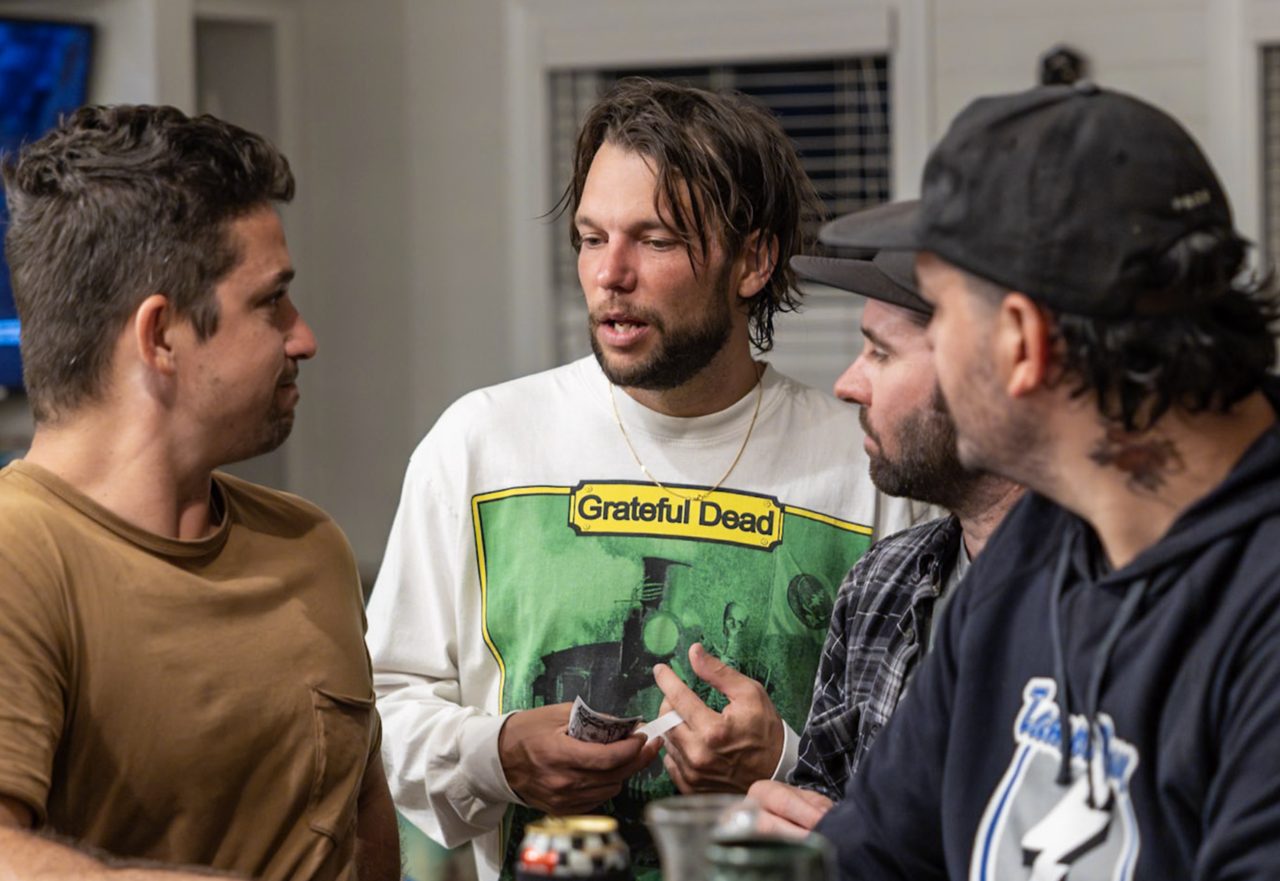
By then Alex had a hunch with names attached: Blade and Grey. The cuts were too professional and the supply too deep for anything homemade, and the pair's print-shop errand had not gone entirely unnoticed. But a hunch was not a case. Confronted quietly, the operators conceded nothing, and a central bank that accuses its own citizens without proof spends the last of the confidence it exists to protect.
The chat later recorded a terse institutional update: “Central bank met earlier today.”
The meeting took place in a house already wired for performance. A microphone had been used for karaoke throughout the weekend. Now it functioned as a gavel. Participants demanded answers. Evidence circulated. The accused negotiated with the regulator. Backroom conversations preceded public statements. The entire proceeding had the visual language of a congressional hearing and the procedural safeguards of a drinking game.
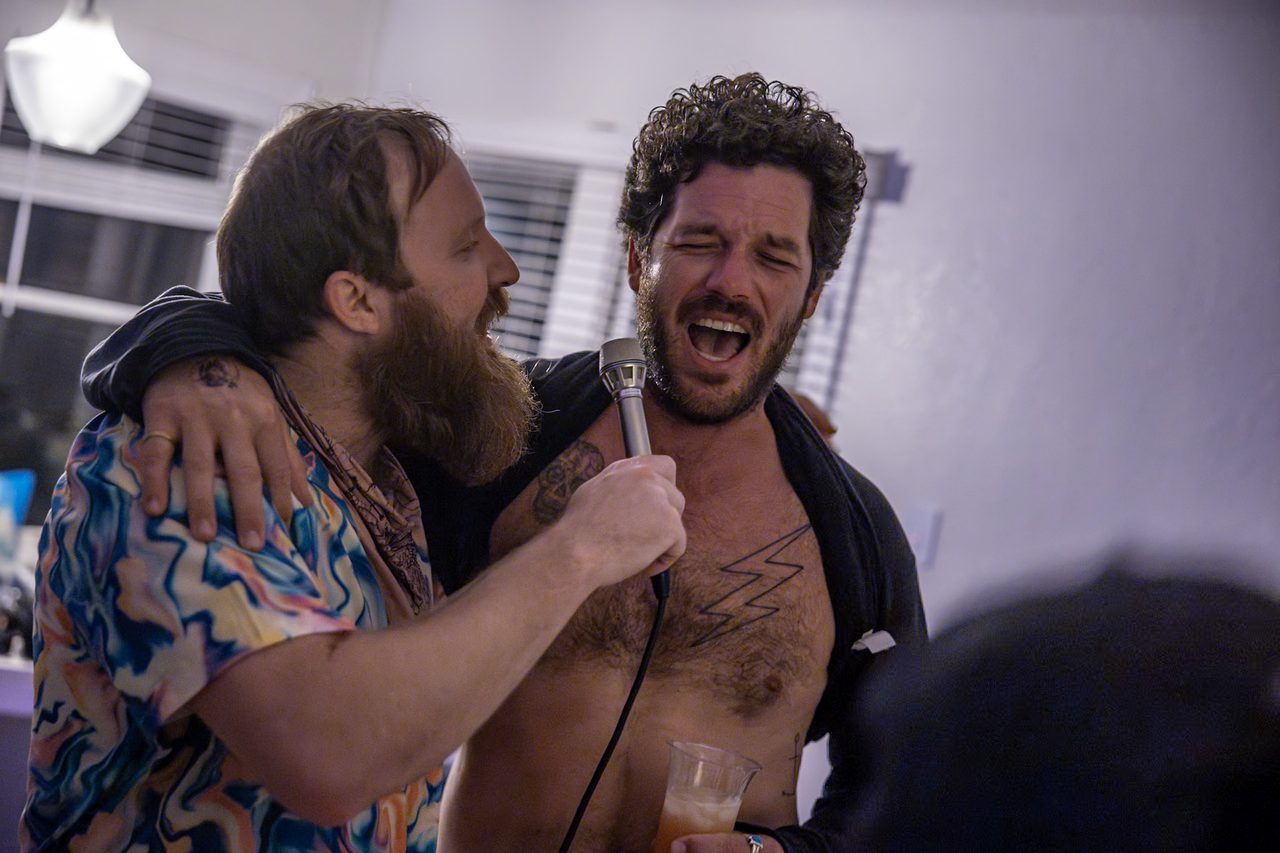
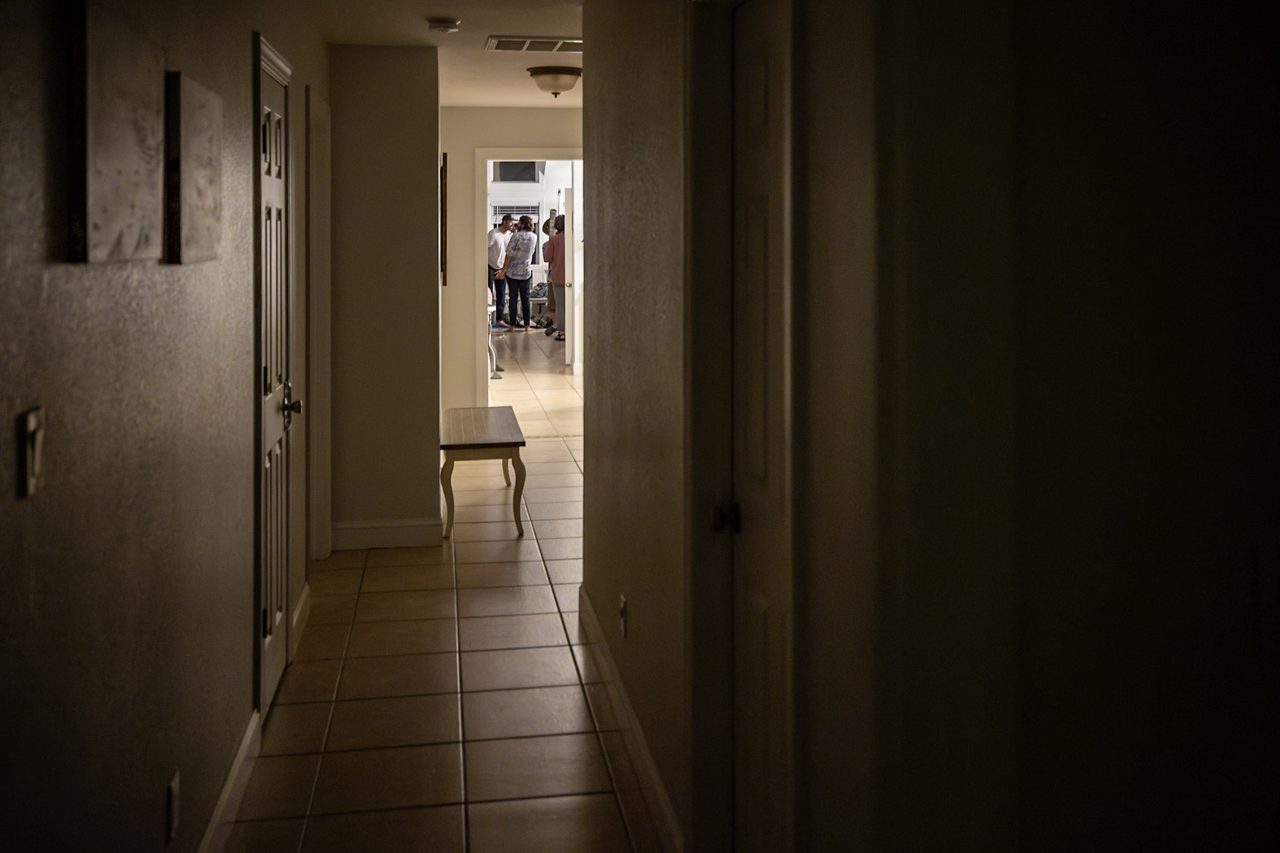
The closed session was where the case finally broke. According to later accounts, Blade and Grey came clean to Alex in the backroom: the print shop, the sheets, the professional cut, the laundering already under way. The chairman at last had his proof — and understood in the same moment that he could not use it. A public confession meant panic. Every stack became suspect, every settled hand reopened, the currency finished by dinner.
So Alex made the quiet calculation available to any central banker who learns the rot runs deeper than the public could bear. He kept it hushed. When he returned to the room, he announced that nothing out of the ordinary had occurred. The statement did not calm the market. It confirmed the suspicion that the regulator had been captured — though what looked like capture from the floor was, in the backroom, something closer to crisis management.
Adam Winn accused him of being bought off. Others used the word collusion. The group had moved from a counterfeit crisis to a legitimacy crisis. An honest central bank could withdraw bad notes. A compromised central bank made every note political.
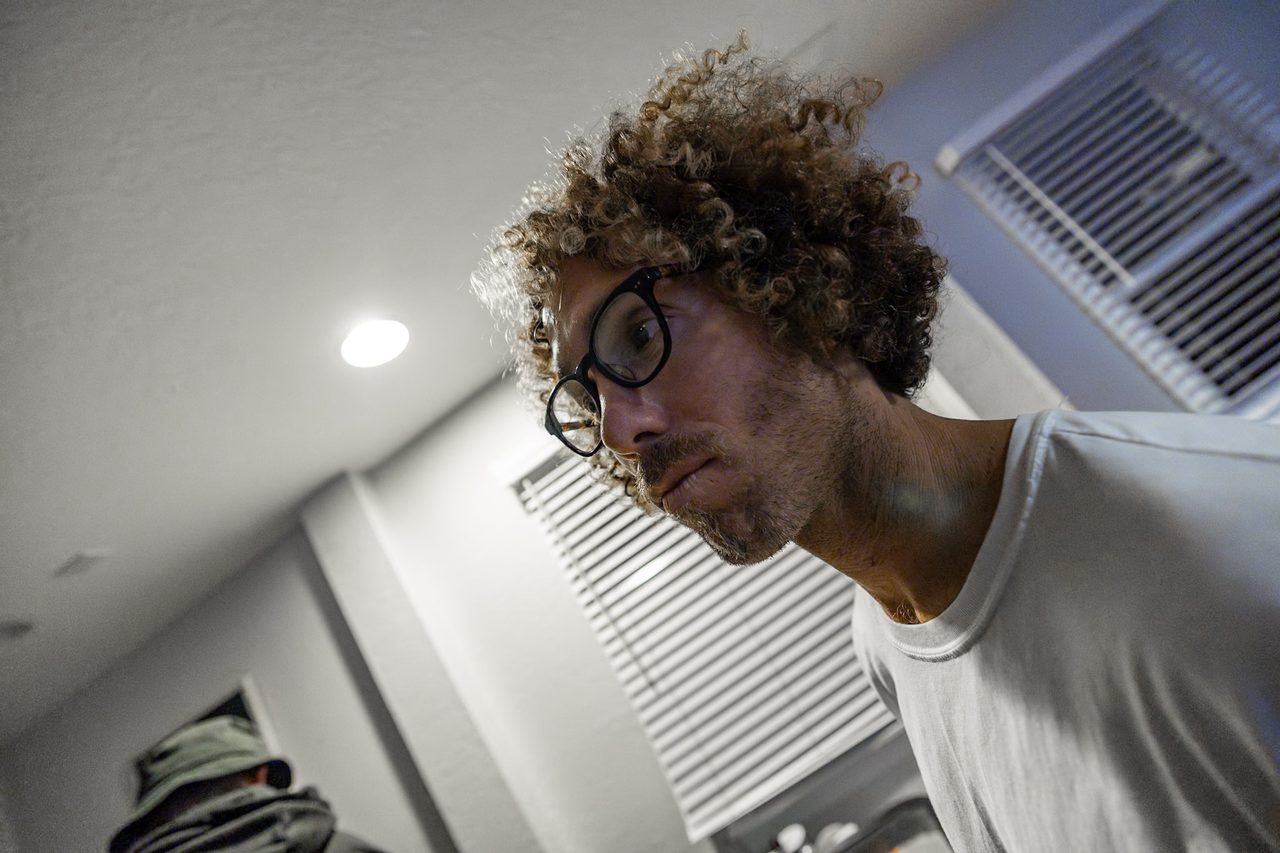
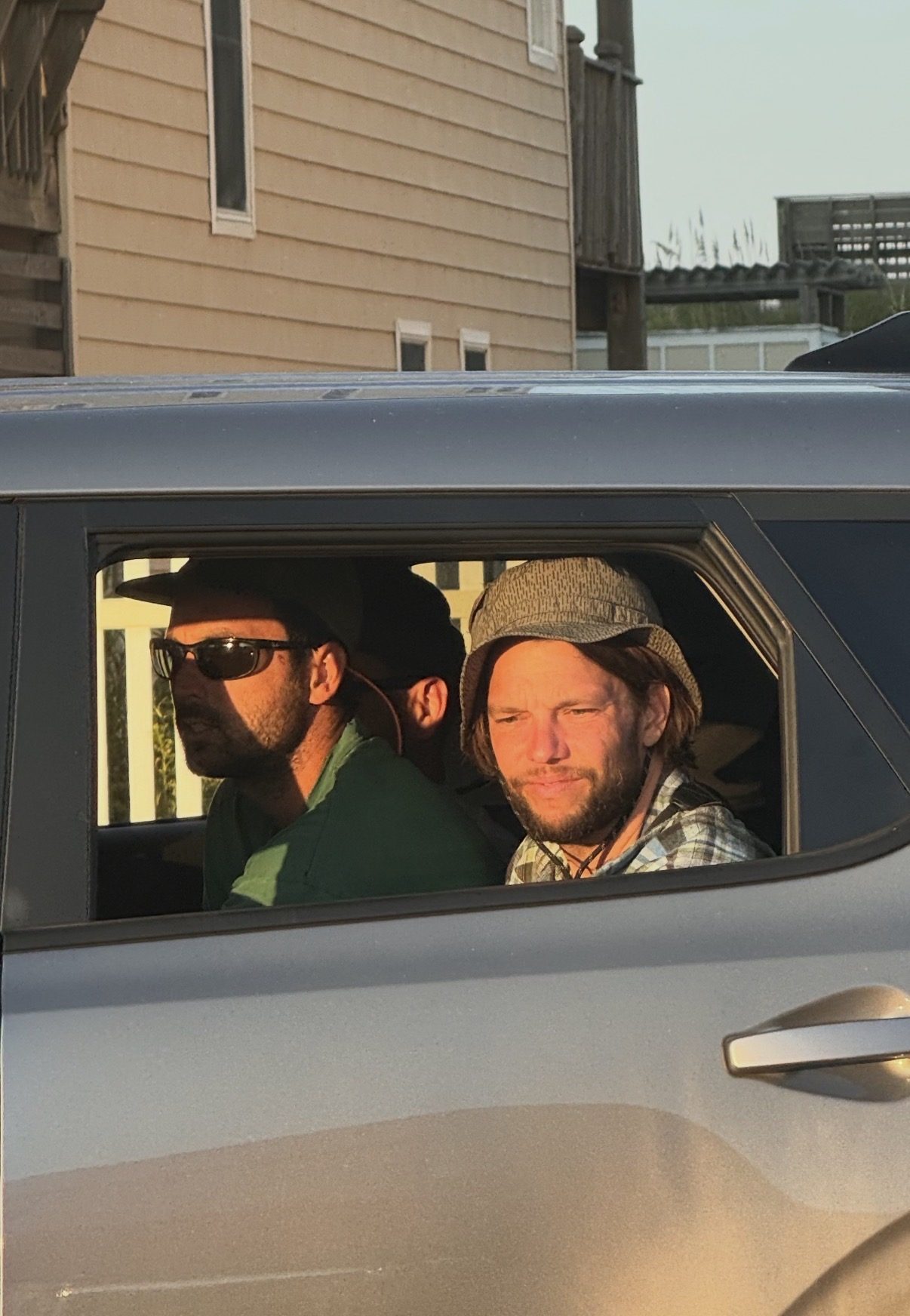
Photographs from the trip show Alex seated in a car, looking out from the passenger window with the expression of a man who has either sold the integrity of the currency or simply wants everyone to stop shouting. It became the unofficial portrait of the Fed chair after the hearing.
“As it’s always been, there’s only a few people who control everything.”
— Zack Hoag
Post-trip commentary only deepened the mythology. “As it's always been, there's only a few people who control everything,” Zack wrote. One alleged participant issued a carefully limited denial: “But I DID NOT rob the federal reserve. I don't even know where Alex lives!”
The economy needed more than a verdict. It needed remediation.
The solution was a cleanup operation conducted through the same casino that had helped spread the contaminated supply. During large CeeLo games, notes were inspected. Counterfeits were removed. Alex reintroduced verified bills from a briefcase, replacing questionable liquidity with recognized reserves. It was quantitative tightening by hand.
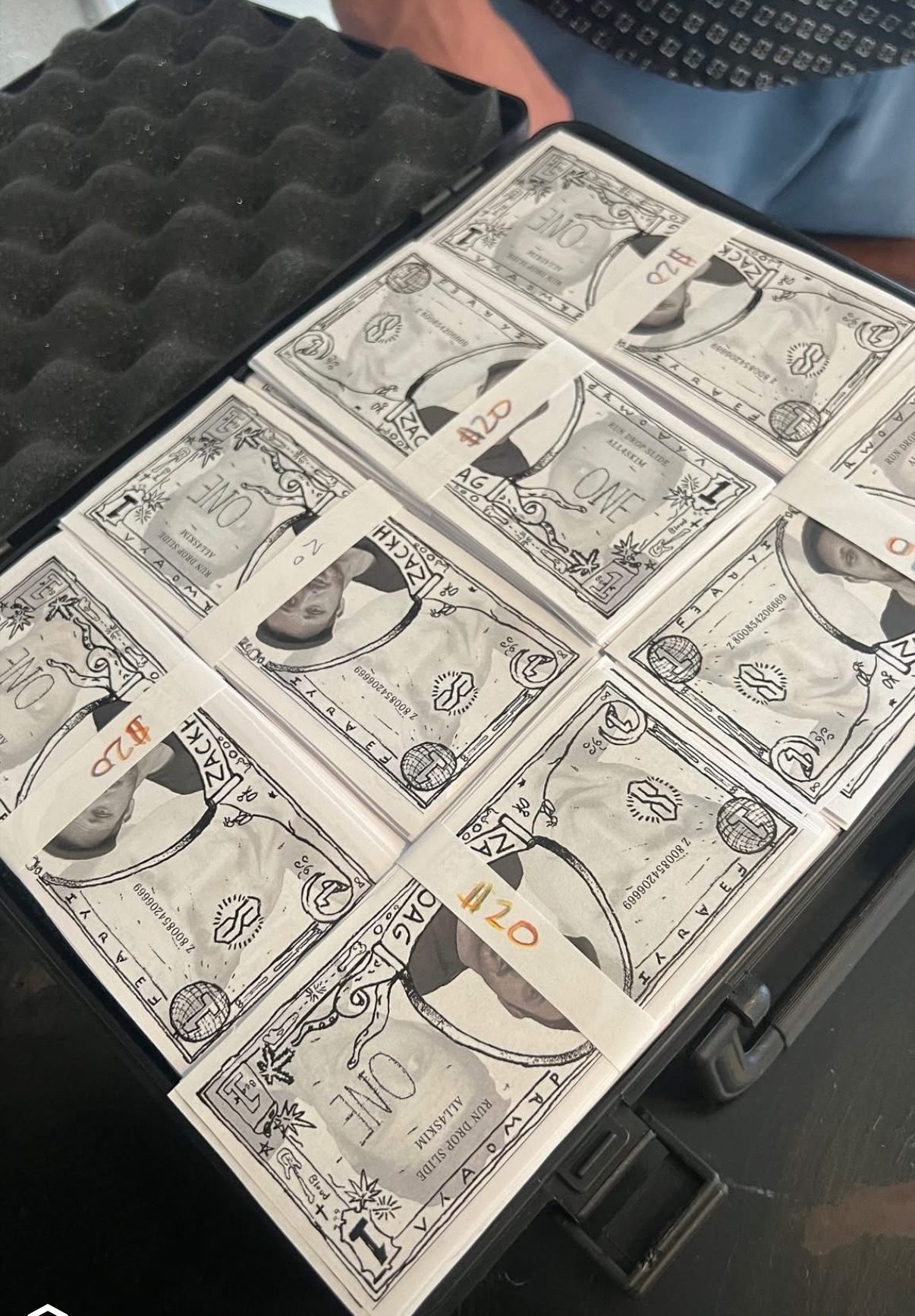
The process could not restore innocence. It could, however, restore enough shared confidence to let the games continue. That distinction mattered. The purpose of the central bank was not to establish historical truth. It was to keep the table open until midnight.
Then the resident paparazzo made his move.
Josh later released the evidence at the most damaging possible moment. It appeared on the house's big screen during what Greyson called “our very public trial.” In the group chat after the trip, he described it as “the damning evidence/blackmail that Josh dropped on the big screen.”
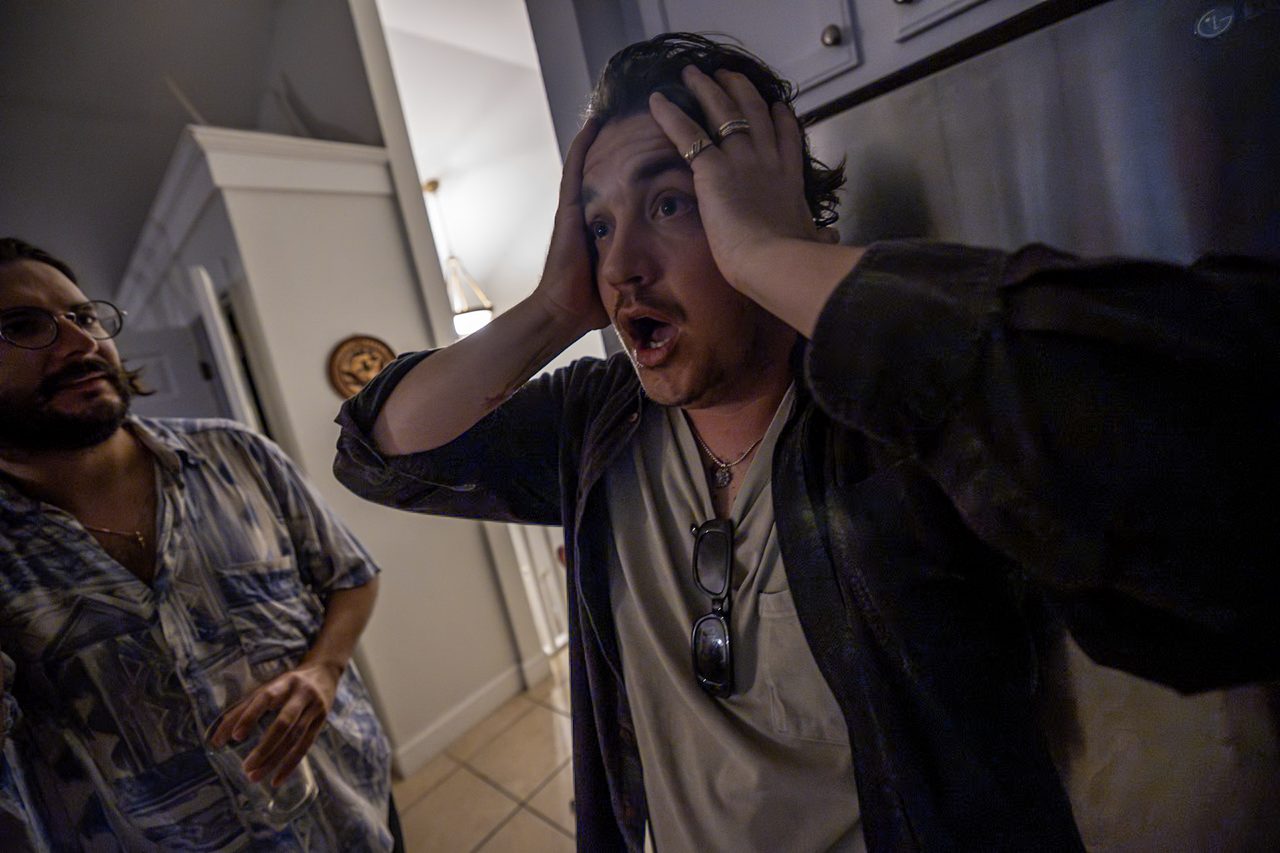
“The damning evidence was dropped on the big screen at the most critical time in our very public trial.”
— Greyson Charnock
But the prosecution had an exposure of its own.
One of the counterfeit conspirators had recorded an earlier conversation about the plan. According to Scanlan, the recording was preserved as insurance in case the operation fractured. It allegedly showed that Josh and Joey were not detached observers, but participants or informed allies. When Josh tried to frame the print-shop runners with photographs, the recording became a form of mutually assured disclosure. No faction controlled the whole archive.
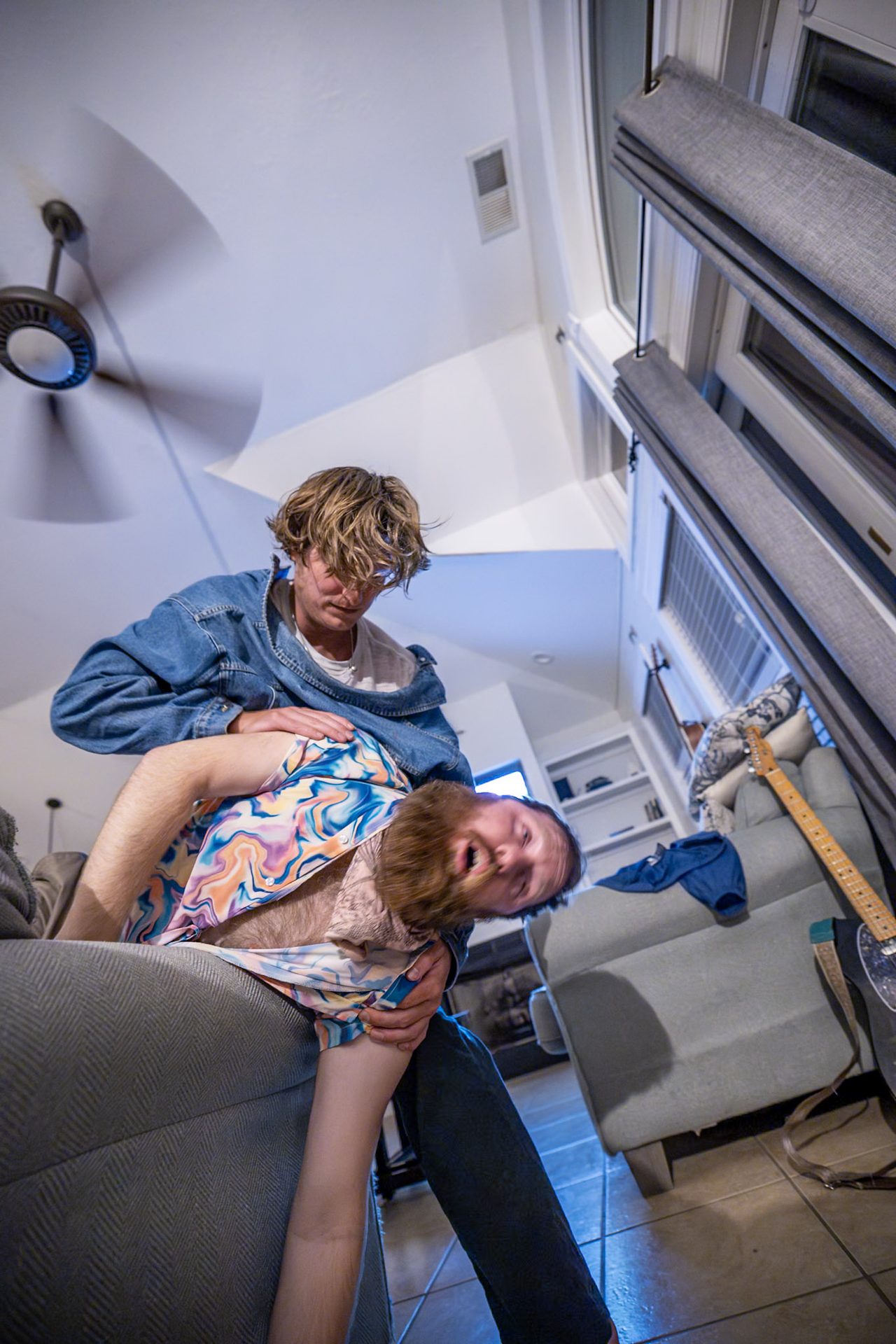
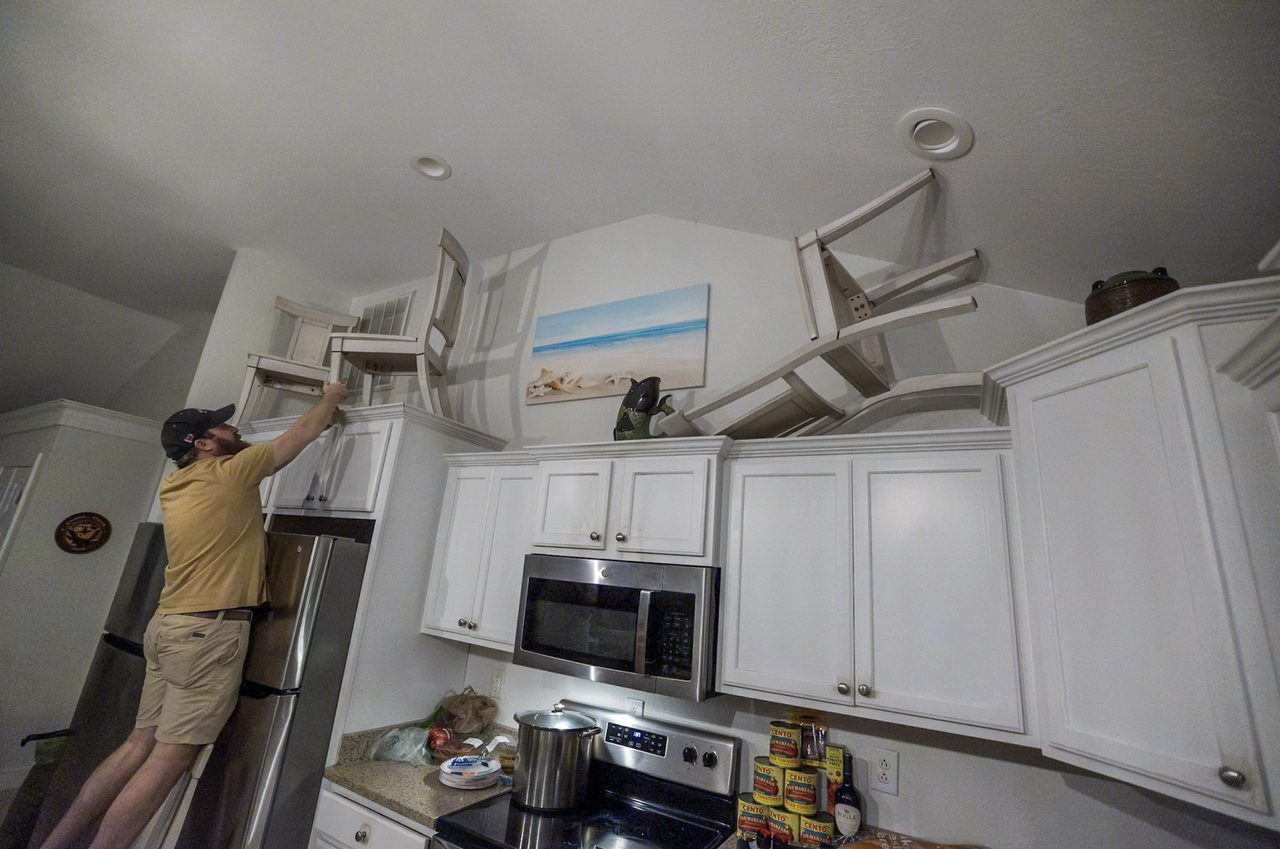
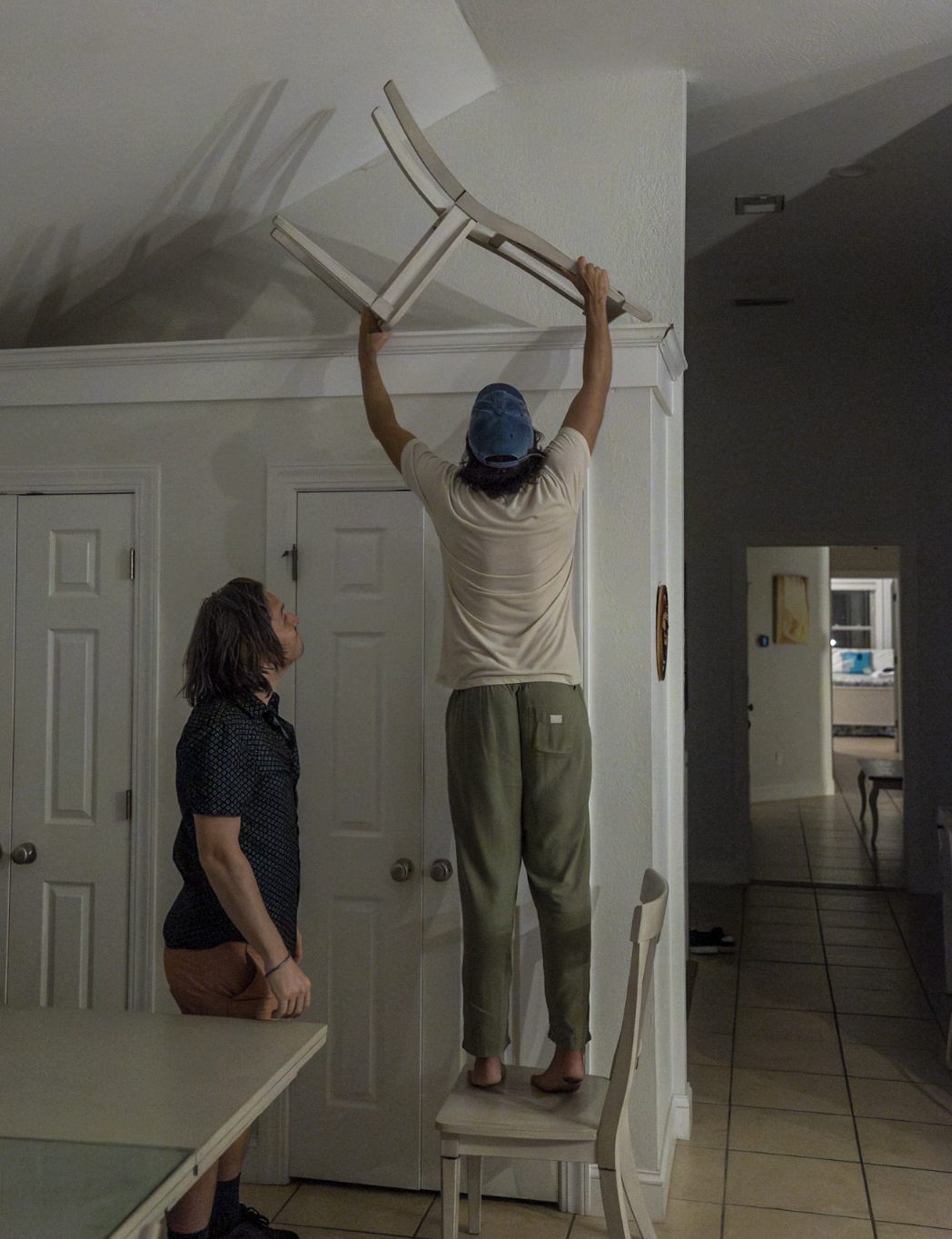
The second revelation did not get a hearing. It got the beach-house version of a riot. Furniture was overturned, allegiances were shouted, and the dispute left the table to spill through the rest of the house. Order was eventually restored; trust was not.
Photographic Dossier
The House Turns Political
Rebellion, spectacle, and after-hours mischief followed the loss of confidence in the people charged with protecting it.
Midnight Settlement
VI. The Last Hand
Every Zack Back had an expiration date.
The rules established a hard close at midnight. When time expired, the games would stop, the stacks would be counted, and the largest final holding would stand. There would be no Monday market, no appeal, and no opportunity to earn back a bad decision after checkout.
That deadline gave the last night its violence. Players made final trades, called in promises, borrowed against future earnings, and returned to the casino for one more attempt at solvency. The cleaned and verified notes gathered into increasingly visible piles.
Then Bryant returned.
The next morning, Steve Smith described the moment in the chat: “Dozzi coming out for the final roll last night.” Blade answered in professional-wrestling commentary: “Bahh God! That's... That's Dozzi's music!”
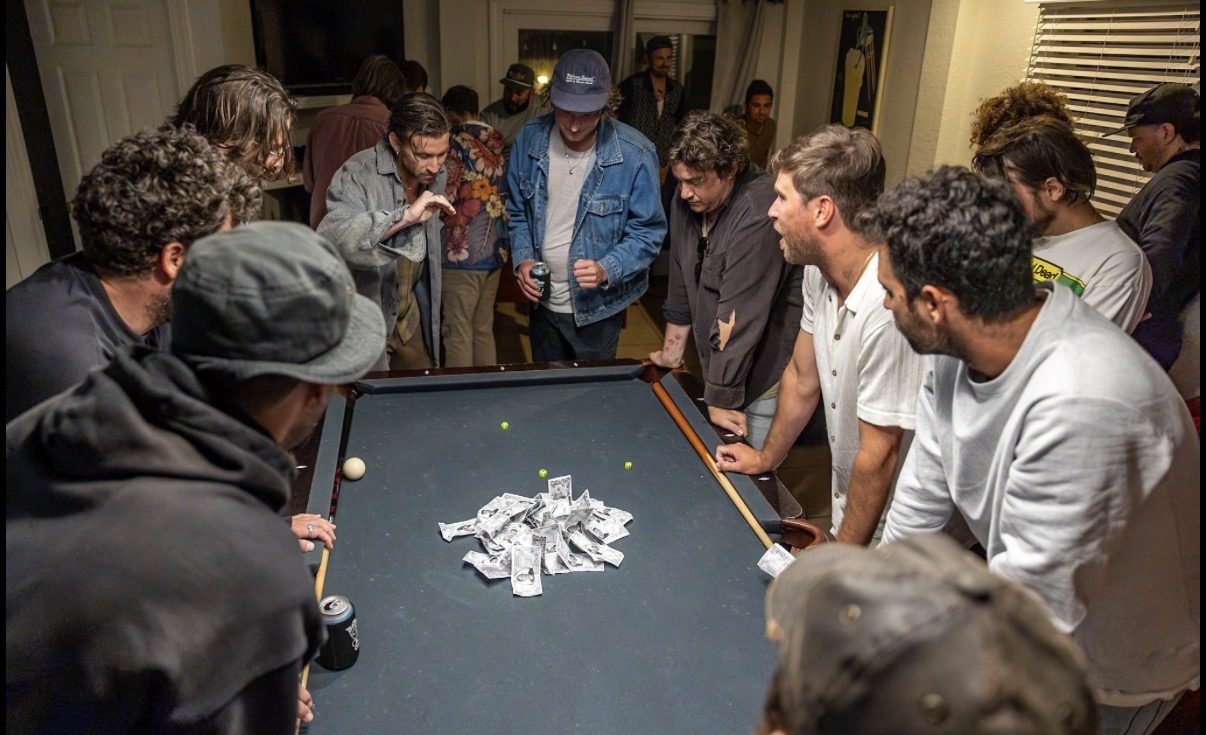
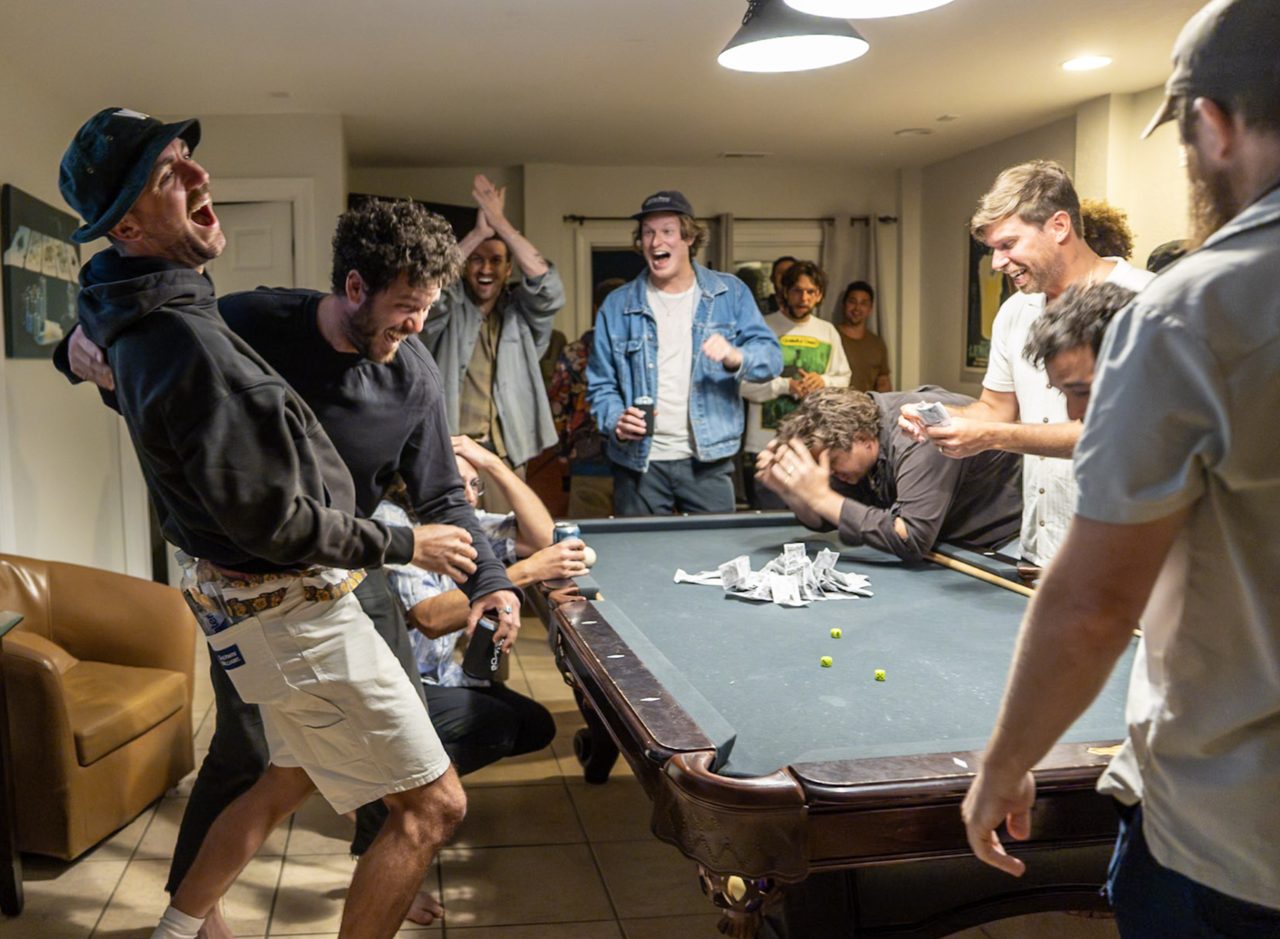
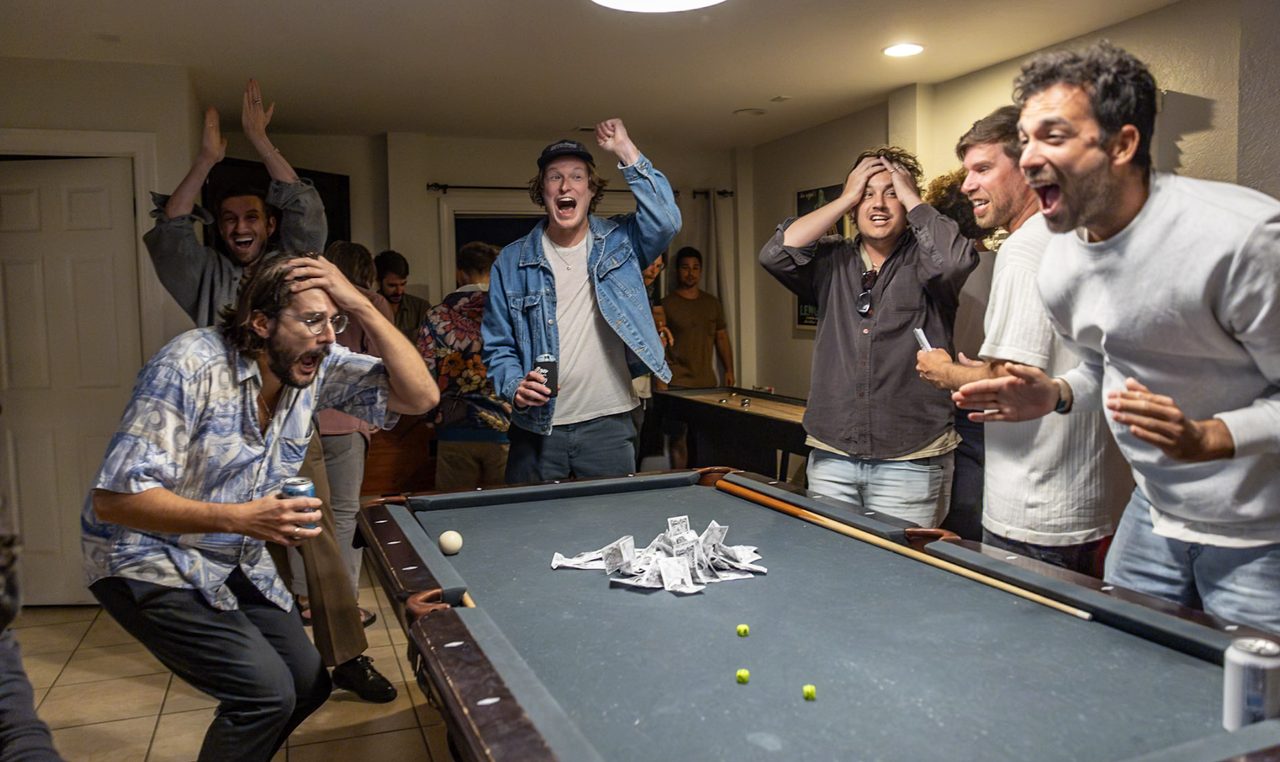
The line was accurate. Bryant's return felt less like joining a game than an entrance. He had risen from a quiet position and materialized at the table for one final bet. In the version preserved by the group, he rolled three twos. Adam followed with three ones, a hand that seemed to freeze the room. Then Zack rolled three sixes.
“Bahh God! That’s... That’s Dozzi’s music!”
— Blade Death on Bryant’s return for the final roll
The reaction was immediate and physical. Men crowded the table. Bills sat in loose mountains. The weekend's economy changed shape in a single throw.
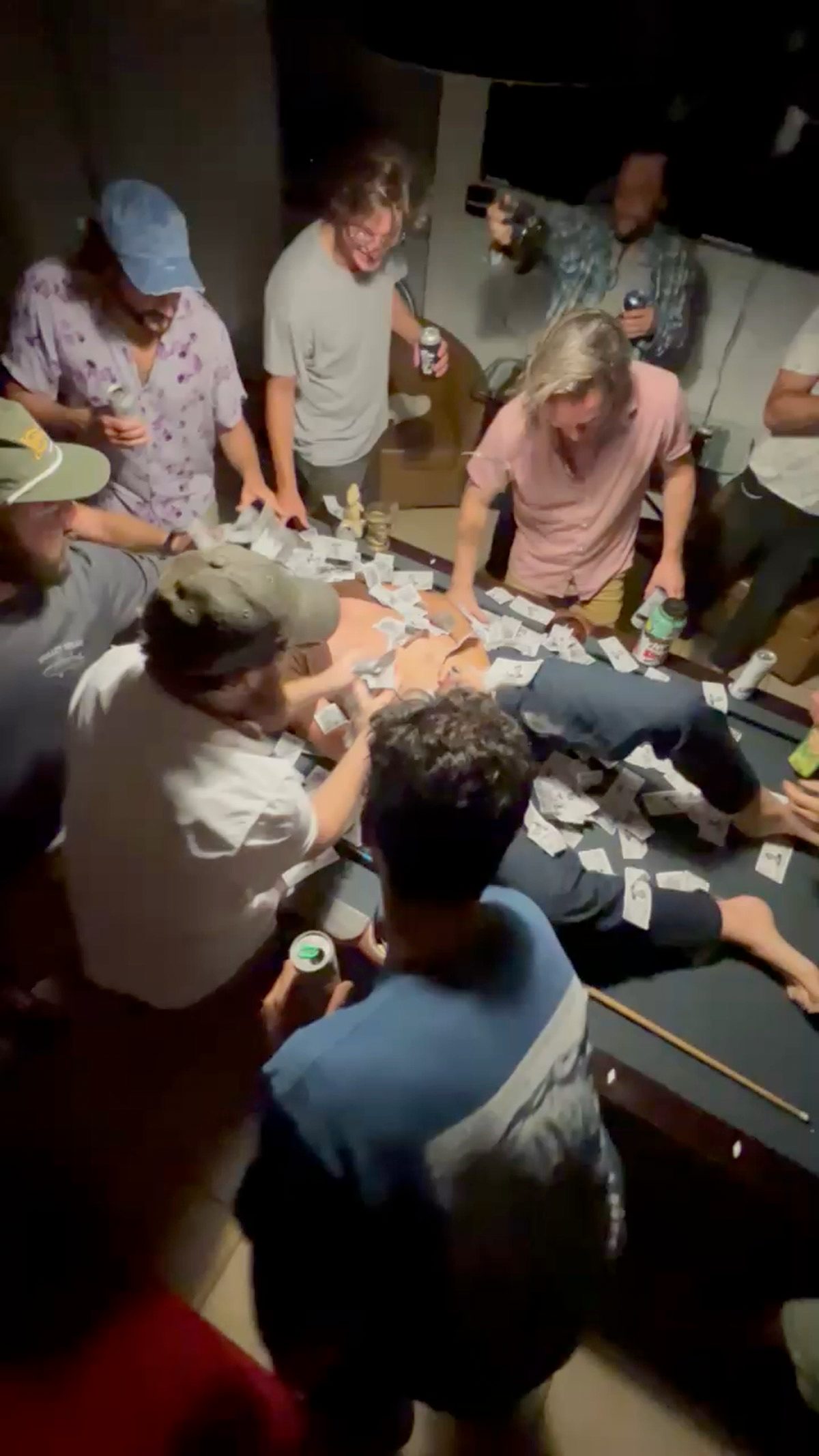
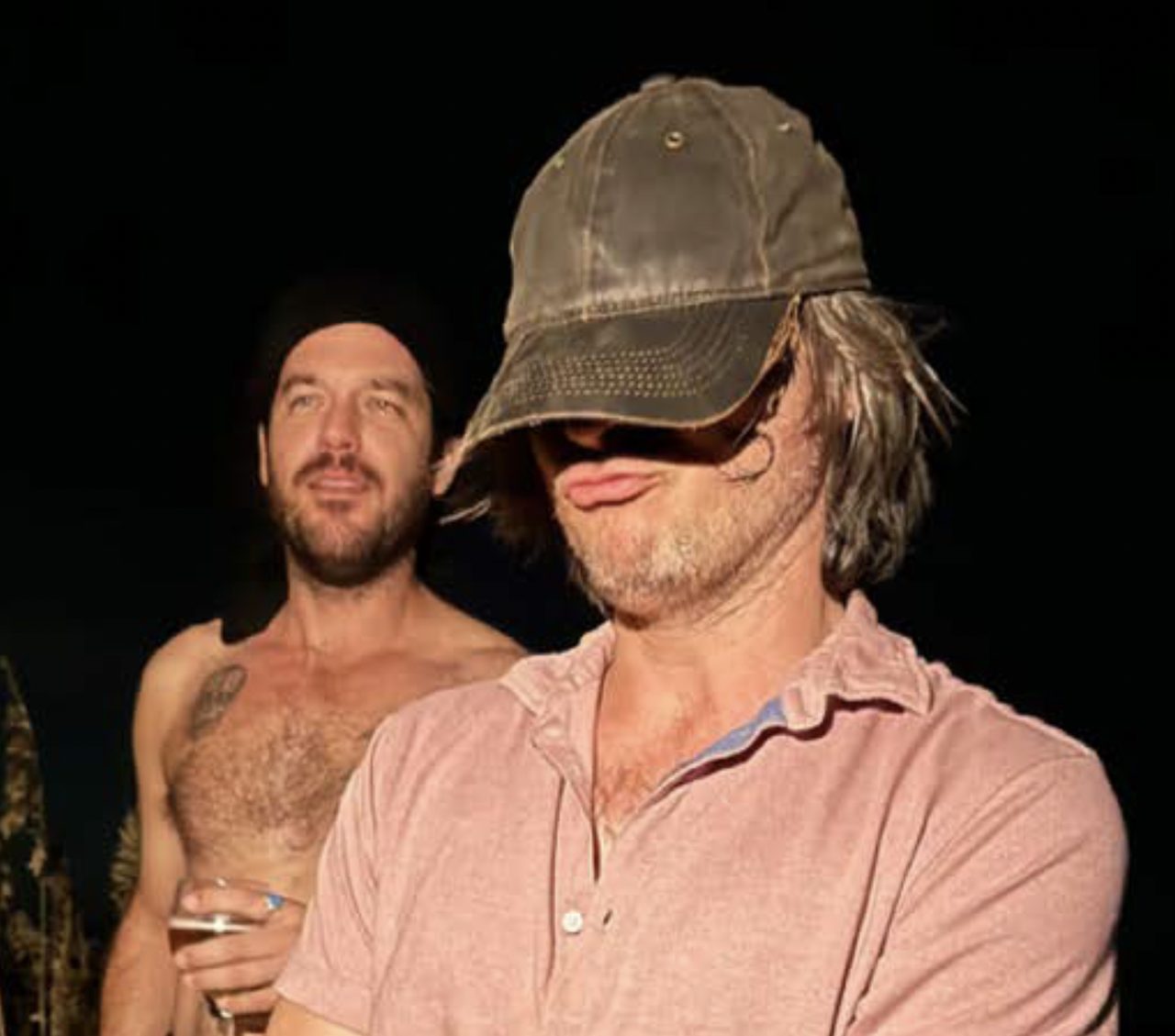
The 666 did not by itself determine the final champion. It became the symbolic hand, the impossible reversal that everyone remembered. When the remaining balances were counted and obligations settled, Austen held the largest reserve. A photograph shows him lifting a thick fan of Zack Backs beside his face, gold bracelet at his wrist, looking less euphoric than quietly vindicated. He had survived labor, speculation, credit, counterfeiting, intervention, and settlement.
Austen was the winner. Zack was the legend.
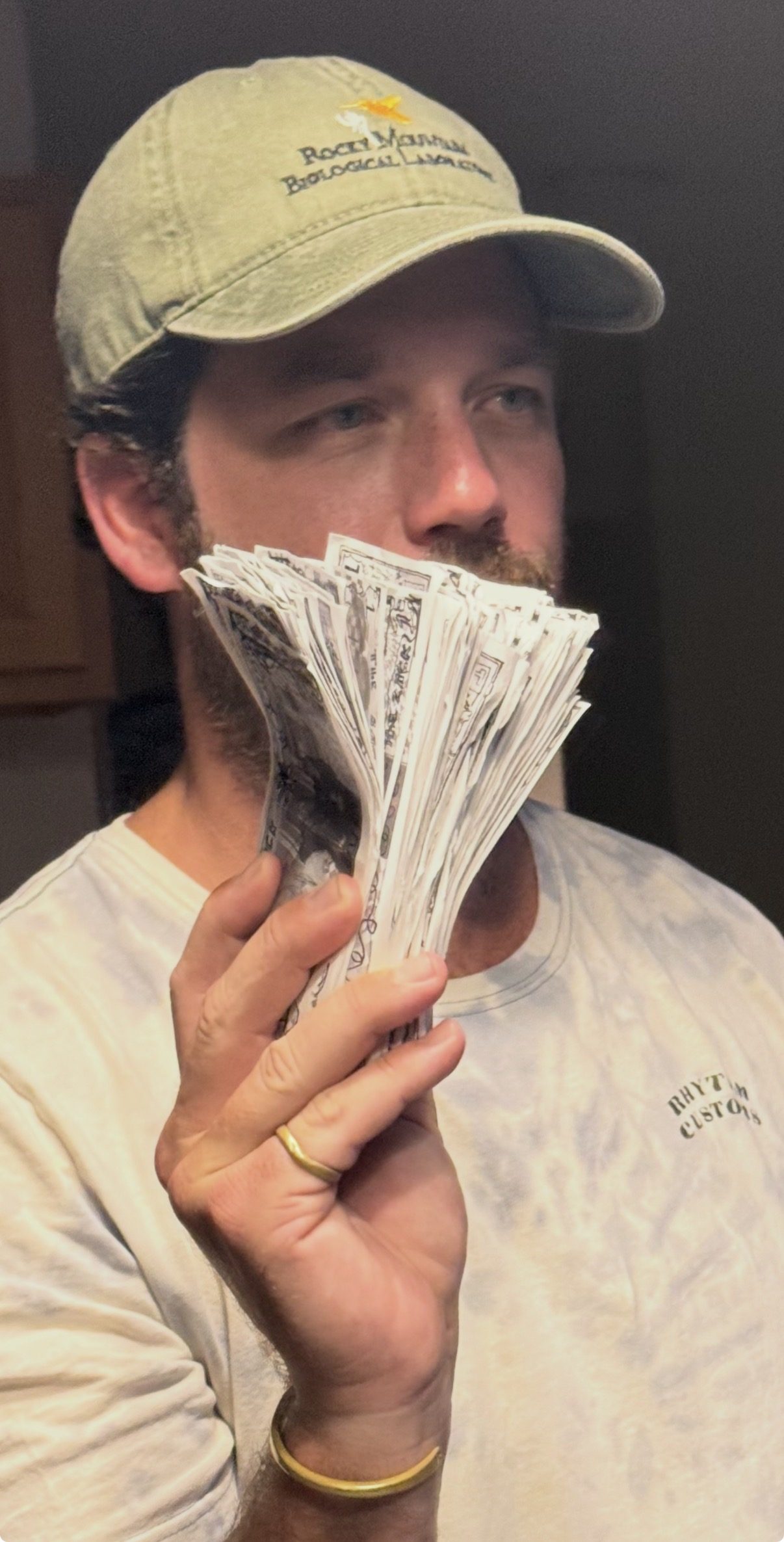
The distinction is important because it explains why the story endured. Markets crown account balances. Groups remember moments. The final ledger belonged to Austen; the myth belonged to the roll.
Afterward, the house did not immediately become quiet. There were jam sessions, karaoke, cigarettes on the couch, beer still circulating, and the peep room continuing its strange programming. The entire weekend had a slightly psychedelic cast, a feeling that the systems inside the house were more real than the ordinary world outside it.
At around 2 a.m., Zack ran toward the Atlantic with a skimboard. Night footage shows the surf illuminated by a moving beam. He enters the water, finds the shore break, and rides through the dark while friends watch from the sand.
It was not a rational victory lap. It was a closing bell.
Bryant’s Hand
A comeback story in motion.
He rolled triple twos.
Adam’s Hand
Triple ones.
It looked unbeatable.
Zack’s Hand
Then came the answer.
Triple sixes.
Instant legend.
Photographic Dossier
The Final Settlement
Bryant’s return, the impossible reversal, the collapse of the pooled position, and Austen’s final verified reserve.
The Jurisdiction Disappears
VII. Liquidity Collapse
Zack Back Index (ZBI) · Five-day session
0.02 unch (0.00%)
- Peak appreciation
- +1,540%
- Peak-day volatility
- 216%
- Circulating units at peak
- ~48,600
- Confidence index, post-finding
- 86 / 100
- Current value
- 0.02
By morning, the Zack Back had lost nearly everything that gave it value.
Checkout instructions called for the house to be vacated around 10 a.m. Cleaning staff arrived early. One participant woke to discover that almost everyone had already gone. Photos show the rental emptied of its crowds, the exterior standing quiet beneath a bright sky, and one remaining figure posed outside. Greyson supplied the caption: “Last boy standing.”
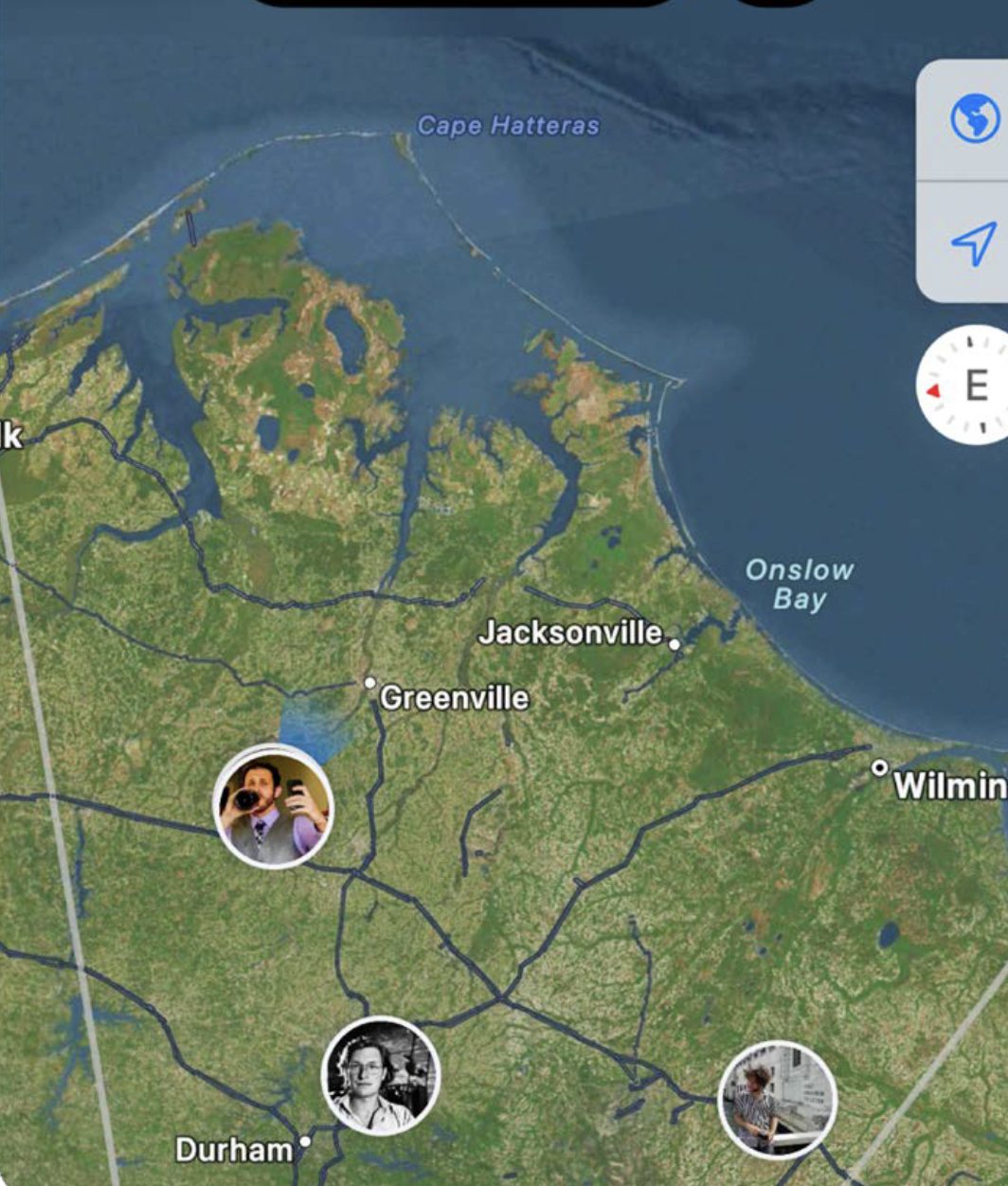
Within hours, the citizens were scattered across airports, interstates, and states. Greyson tracked the dispersal in the chat: Kyle in Michigan, Joey in Buffalo, Ben and Alex approaching Jacksonville, Zack's car near Ocala, Bryant in North Carolina, Blade in Virginia, Bryan in St. Petersburg, and others in California and New York. “The boys have spread waaaaaaaay out, really fast,” he wrote.
Zack answered: “We just out here living our dang lives.”
The Zack Back did not collapse because of inflation, counterfeiting, or regulatory capture, though it experienced all three. It collapsed because its jurisdiction disappeared. The house casino closed. The service economy ended. The doors to the media room no longer controlled a scarce experience. A drink made in Pittsburgh or Tampa did not require settlement in the portrait of Zack Hoag.
The currency ran out of people standing in the same room willing to agree that it mattered.
“The boys have spread waaaaaaaay out, really fast.”
— Greyson Charnock, September 22, 2024
Residual circulation continued. Notes traveled home in pockets and luggage. Zack gave a few to Leah as part of a souvenir package that also included an enormous T-shirt. A participant in Pittsburgh displayed a stack to a bartender and reported that the bartender did not know whether he could accept them. Joey claimed he was up “$150 ZB's” and “$12,000 U.S.D.” before adding, “Love me some ZB's.”
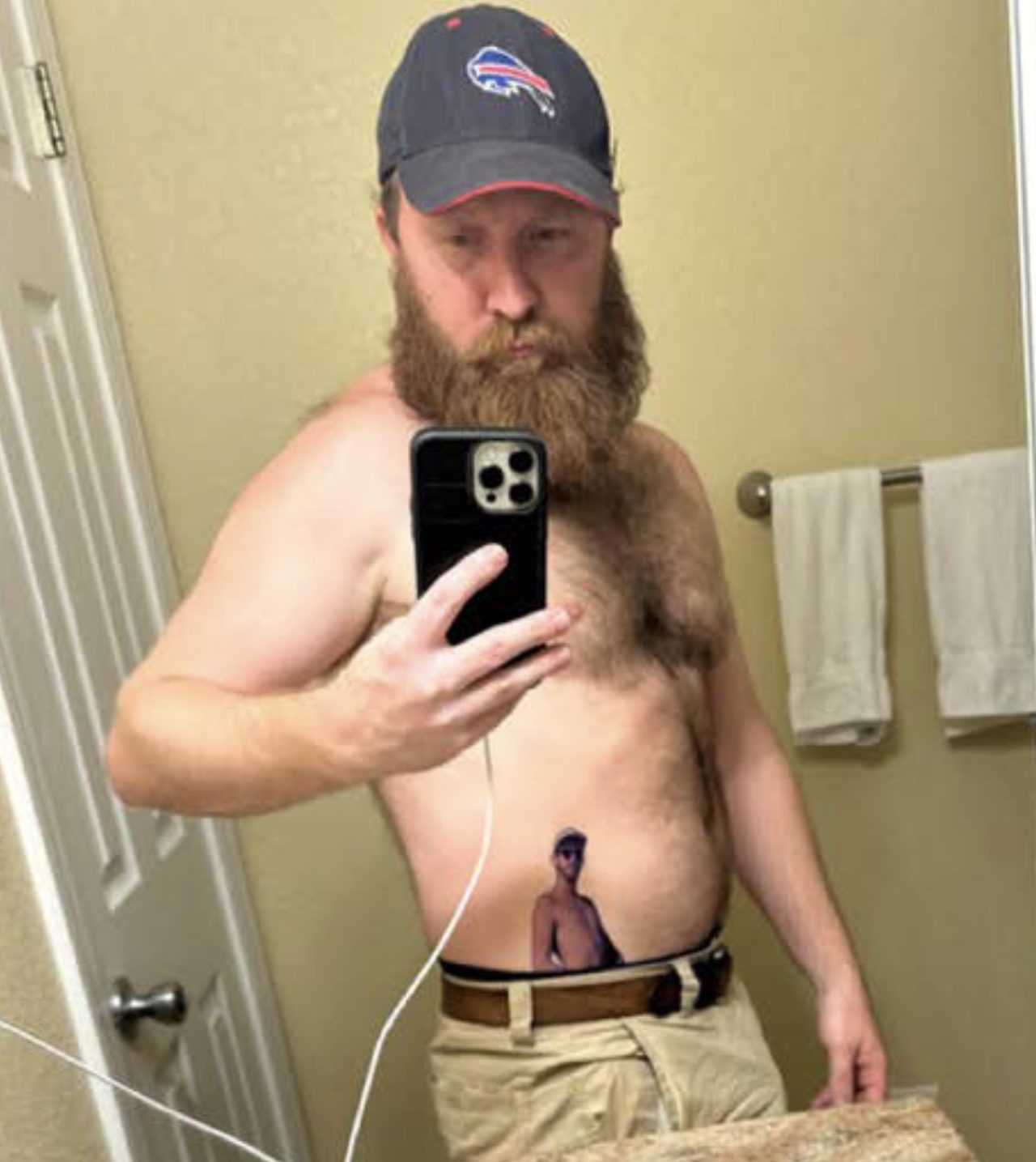
The tattoos also remained. Someone asked the group whether anyone else's would not come off. Ben Lucas replied: “Zack is still on my chest.” One participant said it took a full pint of rubbing alcohol to remove the residue. Another joked that mercuric acid had only revitalized the image. Josh eventually disclosed the key product specification: “Those tats are temporary...ish.”
The group continued speaking in the currency months later. Structured settlements, buyouts, favors, and secondary-market trades were still denominated in backs. The physical market had closed. The mental accounting system remained open.
Hurricane Season
VIII. The Storms After the Market
Three days after checkout, the chat shared a report of another house collapsing into the water along the Outer Banks. The timing made the beach weekend feel suddenly fragile. The men had spent four days treating the Atlantic as playground, backdrop, and stage. Now the coast was again being described as an eroding edge.
Then the larger storms arrived.
Hurricane Helene made landfall in Florida's Big Bend late on September 26 as a Category 4 hurricane. Less than two weeks later, Hurricane Milton struck near Siesta Key on October 9 as a Category 3 hurricane after reaching Category 5 strength over the Gulf. For a group with multiple members in Florida, the chat shifted from hangovers and disappearing tattoos to mandatory evacuation, storm surge, radio comparisons, power outages, and improvised camping at home.
The chat became a storm desk. Chris Condella posted forecast maps as Milton intensified. Patrick Dunn shared the Duke Energy outage map for the Tampa area, so dense with markers that the map underneath nearly disappeared. Josh reviewed it and issued the official damage assessment: “Just a few.”
Then came the camping reports. “Anyone enjoy camping in their house?” one member asked after a night without power. Zack filed his review: “Other than the neighbors generator backfiring directly outside of my window all night, I'd say I slept pretty good.” Brett Schuetz confessed to being on the sending end of the problem: “I feel like a bastard runnin my gen all night.” The room concurred: “It's SO loud.” Zack absolved him: “Haha I'd be doing the exact same thing my man.”
The change in subject did not erase the trip. It folded the trip into a stranger seasonal memory. A fading Zack tattoo was described as acquiring “hurricane elements.” Zack took inventory of what remained of his own: “My chest has a couple specks left on it. Hope they never disappear.” Someone with a pot of meat boiling said it felt like he had never left the beach house. Patrick's radio was said to be “communicating with the actual hurricane.” The jokes were still jokes, but the world outside had become genuinely unstable.
Then the storm collected a real toll. Word reached the chat that Rob Hill's house had flooded: “Rob didn't come out so well,” the report read. “2nd time his house got wrecked in just a few years.” The bit dropped instantly. “Aw dangittt Rob I'm so freaking sorry,” Zack wrote. “We love you Rob! That's heartbreaking man I'm so sorry,” Scanlan added. “Damn Rob, so sorry brother. We love you,” wrote Hess. Ben Lucas: “Rob, love you man. I am so sorry.” For a group whose default register was bits and denominations, the speed of the drop into plain affection was its own kind of data.
Rob surfaced later, gracious and busy: “Thank you fellas. I appreciate you.” He was trying “to beat the water damage” and filing an insurance claim. Zack offered the one consolation available, that experience compounds: “I'm sure you know the ropes going through it a second time. You kindve have a leg up on the whole process, my uncle is doing the same thing. Thinking of you brother.”
No responsible account should pretend the hurricanes were part of the bachelor party. They were not. But memory is not responsible in that way. It attaches weather to emotion, dates to images, and later danger to the last moment before everyone went home. The trip became the final bright, lawless interval before a violent stretch of the 2024 hurricane season.
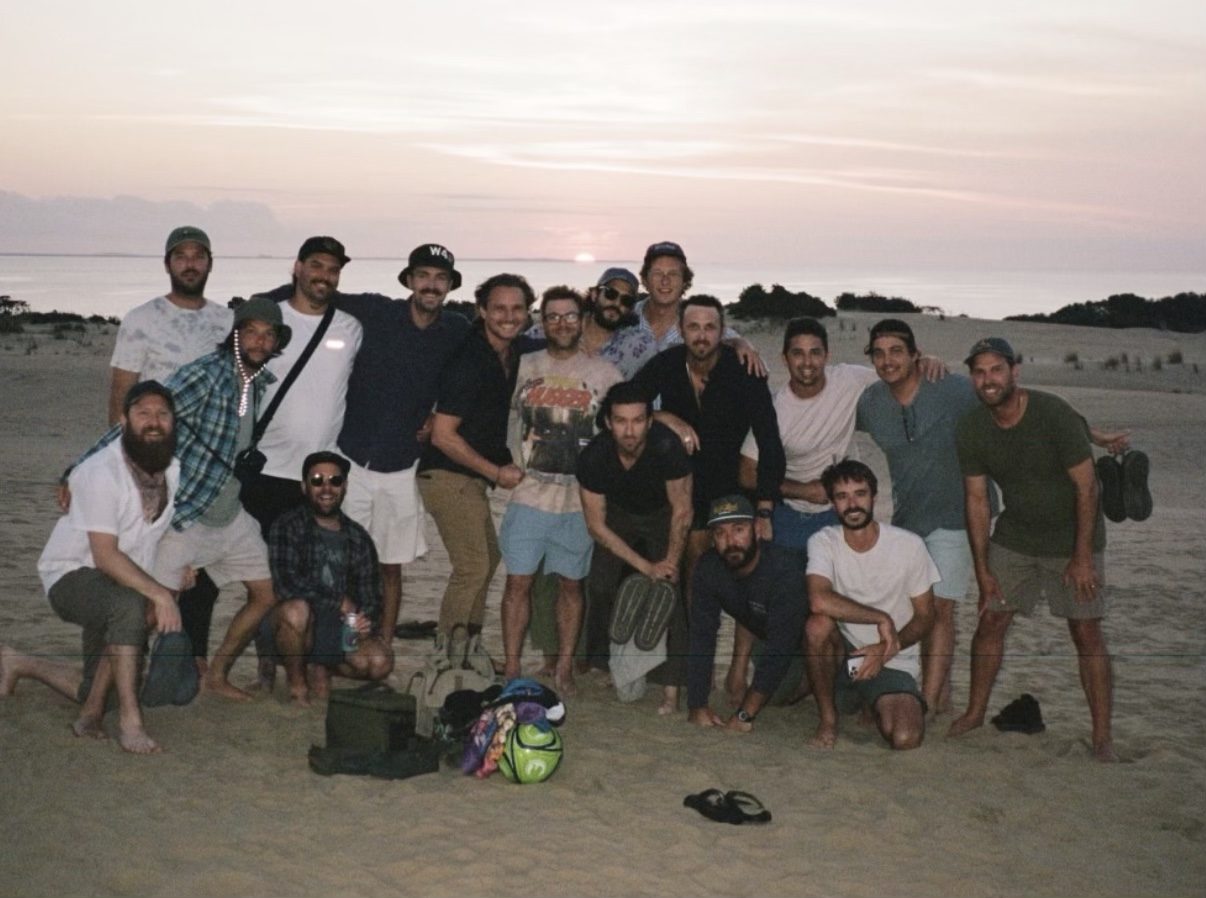
Months later, Alex supplied a group portrait from the dunes. Bryant called it the trip's “last supper.” The image shows the men assembled at dusk, bags and boards on the sand, the sky pale behind them. Josh had already left and Alex was behind the camera, which meant even the definitive portrait was incomplete. That imperfection suited the archive. There was always another angle, another missing participant, another recording someone had saved in case the story turned.
The Afterlife of a Currency
Epilogue: What the Zack Back Bought
The Zack Back was not beautiful because it functioned perfectly. It was beautiful because it made the weekend visible to itself.
A mixed drink became labor. A cigarette became inventory. A private screening became a gated market. A favor became credit. A lie became monetary policy. A photograph became evidence. A recording became insurance. A dice roll became a market event. A night ride through shore break became the close of trading.
The currency exposed the group's existing politics and then exaggerated them. Some people worked. Some gambled. Some lent. Some hoarded. Some printed. Some regulated. Some leaked. Some denied. Some did all of those things in a single night. The system was corruptible because it was human, and resilient for the same reason.
There is no official Zack Back index now. The notes do not trade on an exchange. Their purchasing power at Goombois remains unrecognized. The central bank has no office, no staff, and no known reserve policy. Yet the denomination still appears in the chat whenever the group needs a shorthand for value that is social, ridiculous, and understood only by them.
Nearly two years later, the story is still being told because the currency bought something real. It bought participation. It forced the solvent to notice the broke, the lazy to find work, the powerful to declare themselves, and the accused to build a defense. It gave the weekend stakes without making the stakes serious enough to destroy the friendship beneath them.
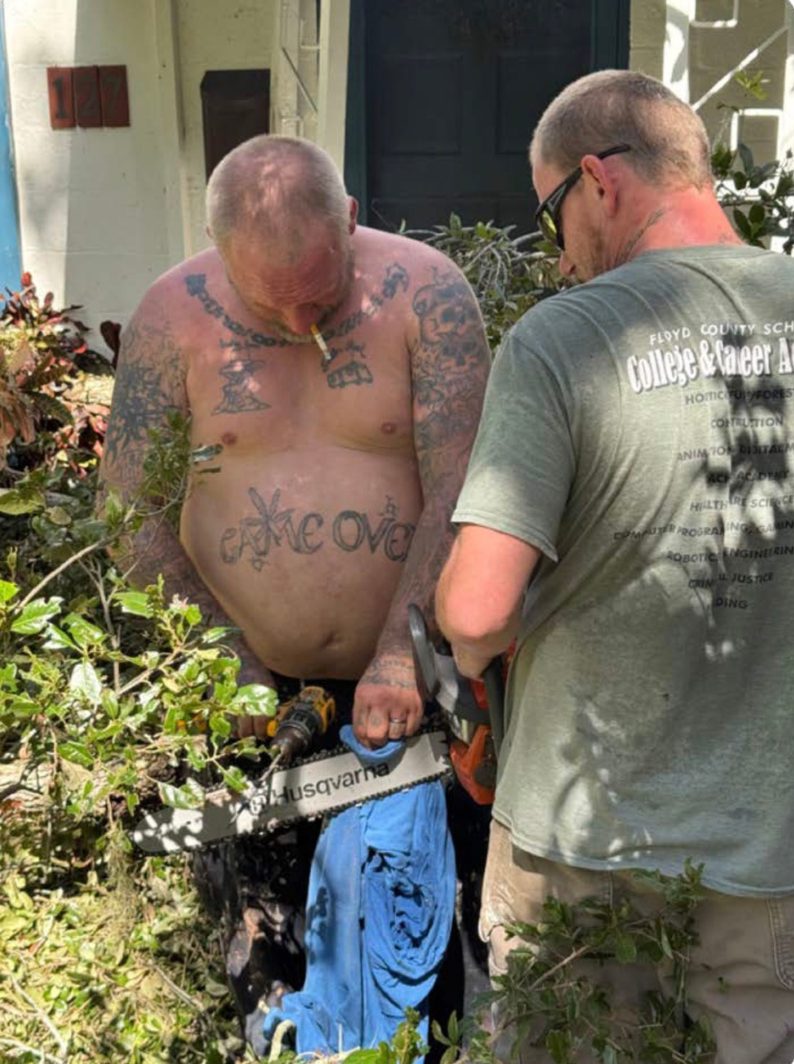
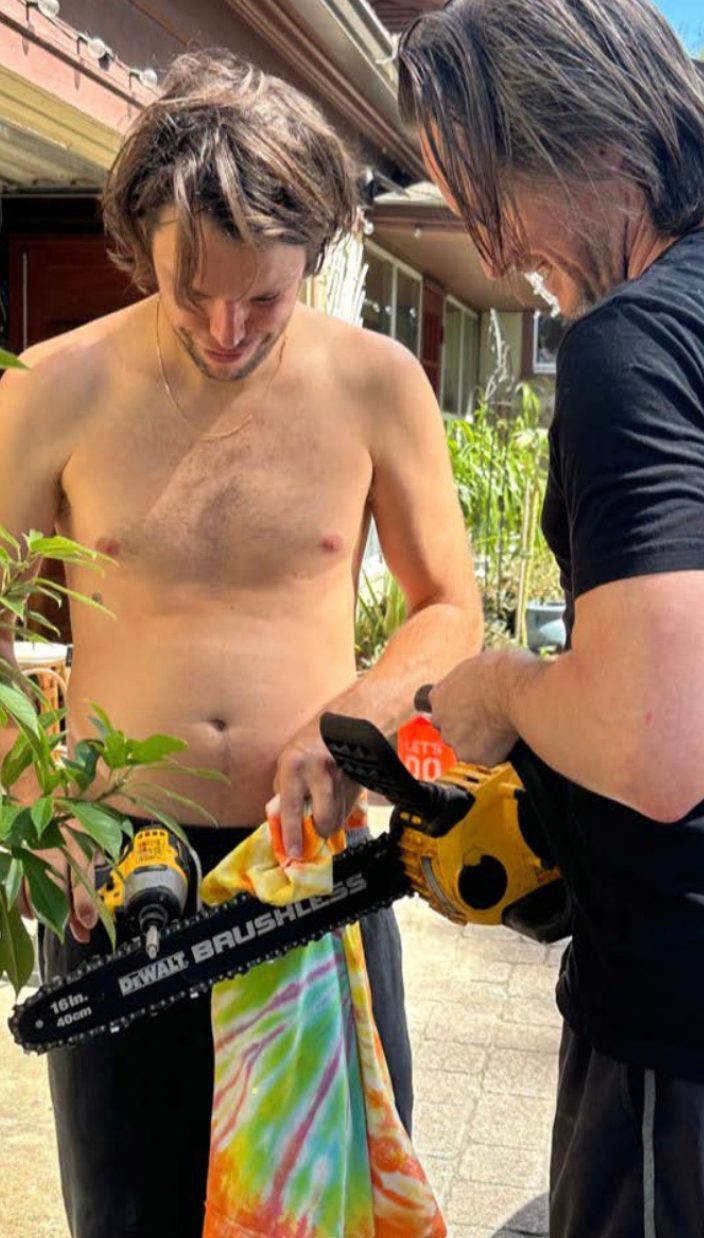
The archive even kept growing. In the cleanup weeks after the storms, Bryant surfaced a photograph of two strangers clearing debris — drill in one hand, chainsaw in the other, and, tattooed across one man's stomach, the words GAME OVER. His caption ran two words past unnecessary: “Game over fellas.” When the thread pressed him on the subject's technique, Bryant declined to editorialize: “I'm not gonna be the person who tells a first responder what they can and can't do.” Days later Alex, behind the camera as always, answered with a staged recreation: two members of the delegation shirtless in a driveway, drill and chainsaw in hand, a tie-dye rag standing in for wardrobe. “Life imitates art,” Bryant wrote. Zack supplied the only review the piece required: “It's beautiful.”
The economy is closed. The archive is not.
And somewhere, probably in a drawer beside an old temporary tattoo and sand that should never have made it through airport security, a Zack Back is still waiting for the market to reopen.
“I have a structured settlement but I need backs now.”
— Bryant Nardozzi, three months after the market closed
Sources and Method
Reporting Note
This feature is based on a five-part export of the contemporaneous group message thread, participant recollections supplied in 2026, and the group's photographic and video archive. Direct quotations from the chat have been lightly edited only for capitalization and punctuation. Some events, including the print-shop operation, the recorded collusion conversation, the mechanics of the cleanup, and the final CeeLo sequence, are reconstructed from multiple participant accounts and surviving images. The references to Hurricane Helene and Hurricane Milton were fact-checked against official National Hurricane Center and National Weather Service records. The illustrated edition incorporates all 59 photographs selected and captioned by participants from the trip archive.
One weekend. One currency. Zero backing. Infinite memories.